Mushroom tiles with elephant skin texture help cool buildings
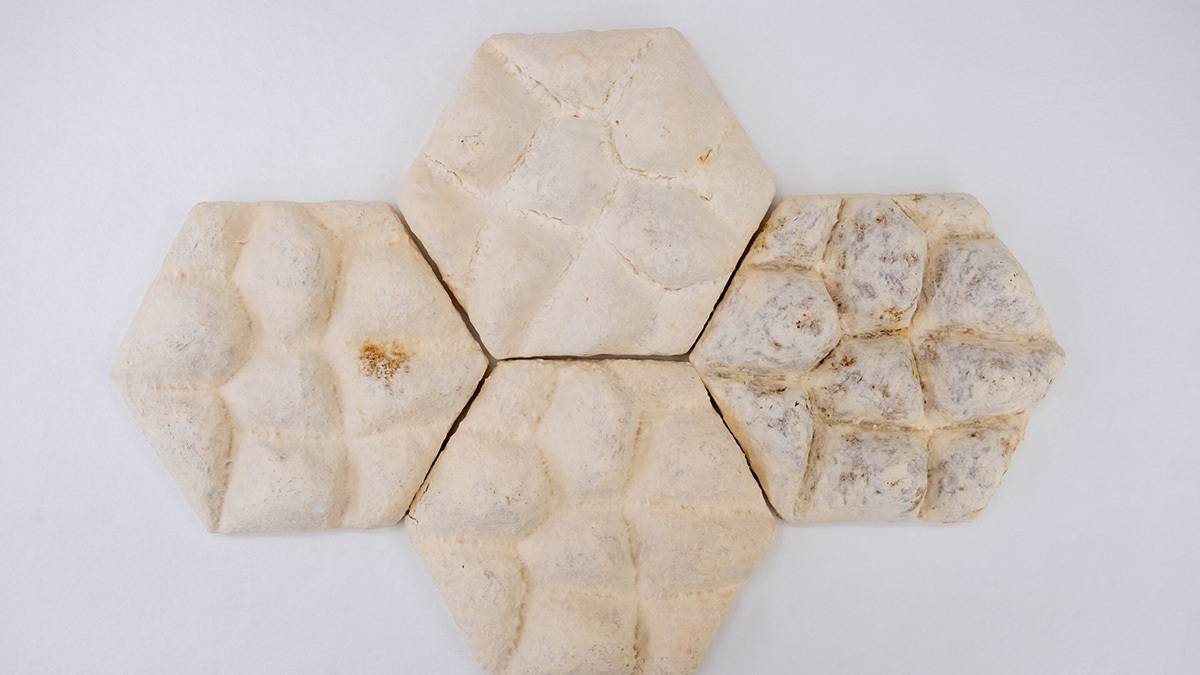

A group of scientists at Nanyang Technological University (NTU), Singapore, developed mushroom bricks to help cool buildings more effectively, Phys reported on April 2. These bricks are made from mycelium - the root structure of fungi, also known as mycelium - and organic waste, which is more environmentally friendly than traditional building materials. In particular, the tile surface simulates the texture of elephant skin, imitating their natural cooling process in hot climates.
Elephants do not have sweat glands. Instead, they regulate body temperature based on the crevices and wrinkles in the skin - a texture that increases water retention and cooling through evaporation. The research team applied this natural cooling mechanism to make mushroom bricks, which help regulate temperatures in buildings, especially in hot climate areas.
Composite materials bonded to mycelium are created by growing mushrooms on organic materials such as sawdust or agricultural waste. As the fungus grows, it bonds with organic material into a solid, porous composite material. In the new study, a team of NTU scientists used oyster mushroom mycelium (Pleurotus ostreatus) and bamboo scraps collected from a furniture store.
These two ingredients are mixed with oats and water and then packed into a hexagonal mold with an elephant skin-inspired texture designed by biomimicry and ecology design company bioSEA. The mushroom bricks were placed in the dark to grow on their own for about two weeks, then removed from the hexagonal mold and continued to grow on their own for another two weeks under the same conditions.
Finally, the bricks are dried in the oven at 48 degrees Celsius for three days. This final step removes any remaining moisture, preventing the mycelium from growing further.
In testing, rugged mushroom tiles cooled 25% more effectively than flat tiles. When exposed to simulated rain, they even increased their cooling efficiency by up to 70%. This shows that rugged mushroom bricks are likely to be suitable for tropical climates in reality.
"Insulation materials are increasingly being incorporated into the walls of buildings to improve energy efficiency, but most of them are synthetic materials and cause environmental consequences throughout their life cycle. Composite materials bonded with mycelium are biodegradable materials with high porosity, making them good insulation materials," said Associate Professor Le Ferrand at NTU.
Although the cooling ability has been proven, application to real construction projects will require the research team to continue to improve mushroom bricks. They are looking to increase the mechanical stability and durability, while also increasing the production scale of these bricks.
Thu Thao (According to Phys)