Honor director: 'AI is not just for high-end smartphones'
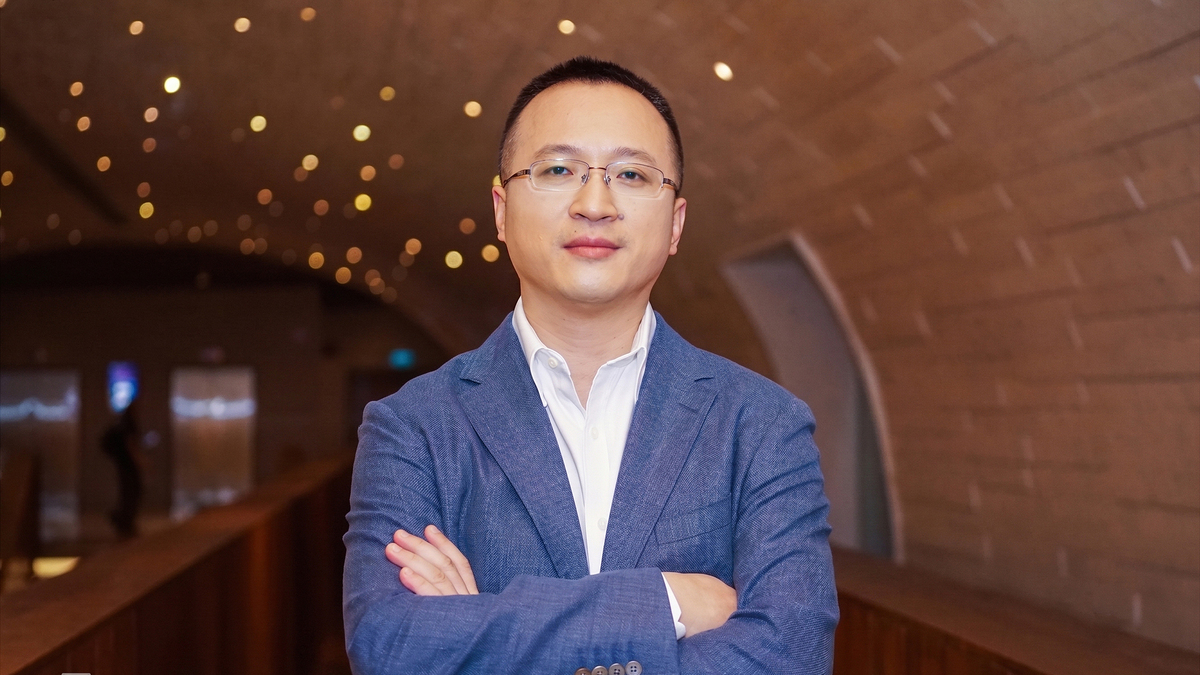
Mr. George Zheng, Director of Southeast Asia of Chinese smartphone company Honor, shared with VnExpress about the trend of equipping "local" AI on mid-range phones, as well as assessing the potential of the Vietnamese smartphone market.
- The smartphone industry is racing to process AI data directly on the device. What are the core competencies for AI to truly create value instead of just demonstrating technology?
- The core of AI is human-centered, giving intelligence both IQ and EQ, helping people adapt, develop and enjoy a better life in a constantly changing world. We call this Augmented Human Intelligence (AHI).
AHI needs the coordination of three forms of intelligence, including Personal Intelligence, which is an AI assistant attached to each user's device; Universal intelligence, the "common brain" of humanity, brings global knowledge closer to each person; and Edge intelligence, such as robots and electric vehicles, plays the role of human "eyes" and "hands" in the physical world. When all three operate together, the boundaries between humans, the digital world and the physical world will gradually be erased.
We believe AI needs to be widely available on smartphones, not just for high-end products. However, the biggest barrier when bringing advanced AI to many price segments is the balance between processing performance, power consumption and cost.
Our direction is hybrid AI - a hybrid architecture that combines device and cloud, by taking advantage of on-device processing capabilities for tasks that require privacy, security and instant response, while also exploiting the power of cloud computing for tasks that require greater processing capacity. For example, on the Honor 600 series, features that require large processing resources such as AI Eraser, AI Image to Video 2.0, AI Super Clarity and AI Super Zoom are processed in the cloud, while lighter tasks are performed directly on the device. Thanks to that, users hardly experience device overheating or battery drain quickly, but can still have a seamless experience.
- As AI becomes more and more popular on mid-range smartphones, what determines the user experience?
- Compared to understanding how AI works, in my opinion, what users really care about is whether AI makes daily tasks easier, that the smartphone correctly understands their intentions, responds quickly and helps complete the job with less effort. From here, the smartphone operating system also transforms to become a more proactive and personalized interaction platform, in which AI agents play an increasingly important role in the transformation process.
For Southeast Asian users, the apps most likely to change usage behavior are primarily related to solving high-frequency daily needs in a simple and intuitive way: intelligent communication, easier-to-use content creation tools, and useful photography experiences.
- During operation, AI often has to access personal data, what is the limit to balance usefulness and privacy?
- Protecting privacy should be a top priority. Sensitive personal data should be handled on-device whenever possible. Users should always be in control of their own data and privacy. This requires integration into the AI architecture from the core platform, in addition to ensuring product solutions are fully compliant with laws and regulations in each market.
- What do you think about the trend of bringing AI agents to smartphones?
- We believe this is the most appropriate time, when the large language model (LLM) has reached the threshold of capacity needed to reliably understand user intent, the hardware capacity on the device is strong enough to handle local AI effectively, as well as the application and service ecosystem is ready for deep AI integration.
Technically, a personal AI agent for mobile devices based on a graphical interface is a useful direction for users. They complement the existing app ecosystem by enhancing the experience, while developers can continue to upgrade service models or new features.
We also think that graphical user interface (GUI)-based AI and application programming interface (API)-based AI will coexist side by side: one providing intuitive interaction, the other allowing deeper integration at the system level.
- In your opinion, how much does AI contribute to the competitiveness of a smartphone?
- The fundamental factors that make a good smartphone are still photography ability, performance, battery life, screen quality and reliability. AI helps make each of those experiences smarter and more personalized.
AI enhances the way users capture content, interact with systems, access services, and enjoy cross-device experiences. This technology does not replace the above fundamental elements, but becomes an intelligence layer that amplifies their value.
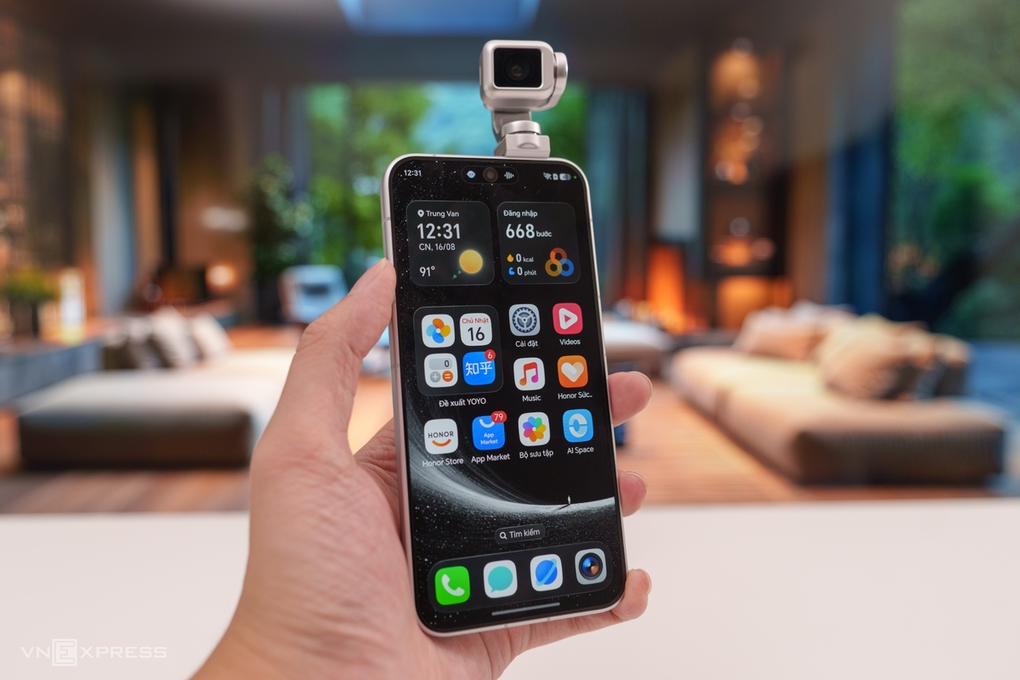
For example, we demonstrated the world's first Embodied AI Robot Phone with built-in photography capabilities, providing a natural and expressive way to interact with AI.
Robot Phone can be considered a breakthrough in smartphone product form that we aim for rather than a technology demonstration. By combining embodied AI interactivity with photography, the product is the beginning of the future of imaging we envision taking place in the next five years.
- Vietnam is promoting digital transformation and AI development. What opportunities will this open up for smartphone manufacturers?
- Vietnam's digital transformation process is fundamentally changing the role of smartphones in this market. From a mere communication tool, the phone gradually becomes a smart center that helps users manage many aspects of daily life.
That shift opens up significant opportunities for manufacturers who can integrate digital services with on-device AI technology seamlessly and securely. Brands that offer the most convenient, secure, and personalized experiences will stand out. We are building an open AI device ecosystem through the Honor AI Connect Platform, expected to integrate more than 20,000 AI services by the end of 2026. This open approach allows collaboration with partners in Vietnam to bring relevant AI services directly into the smartphone usage experience.
We also focus on two core aspects in the Vietnamese market: brand awareness and the trend of moving to the higher-end segment - indicators that show whether the growth momentum is truly sustainable, and whether consumers really recognize and trust Honor as a brand, not simply a product.
- Among Southeast Asian countries, what characteristics of the Vietnamese market make Honor have to build a unique approach?
- Vietnam is a dynamic market with a group of young, digital technology-savvy consumers. Gen Z and Millennials play a key role in shaping trends, and they have high expectations for factors such as cameras, battery life and screen quality.
We see growing interest in high-end smartphones, however, Vietnamese consumers want to experience the product directly before making a decision. This is quite different from some markets, where online reviews can be a deciding factor in purchasing behavior. Therefore, localization plays an important role for companies in the Vietnamese market.
From here, we focus on optimizing the product to be compatible with popular applications, from Vietnamese AI experience to NFC support on VNeID; Collaborate with key retail partners; create a more direct experience so consumers can try out AI features and feel real value in everyday life; and strengthen cooperation with domestic carriers and distribution partners.
Vietnamese consumers have high expectations for both innovation and practical value. They are willing to experience new technology, and also want the product to bring practical benefits in life. We do not see this as a paradox. AI needs to be more widely available, not just for high-end device users.
Bao Lam - Tuan Hung