Human limits revealed through robot sprint record
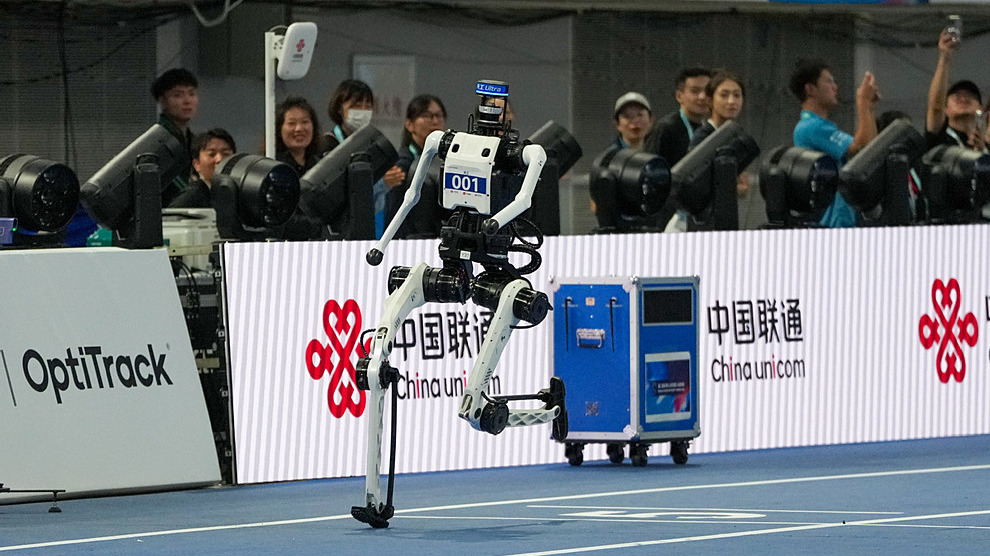
At the World Humanoid Robot Games (WHRG) taking place in Beijing on August 22-26, China's Tiangong Ultra humanoid robot reached an average speed of 42 km/h and completed a 100 m running distance in 8.64 seconds, far surpassing the world record of 9.58 seconds of athlete Usain Bolt.
"This is a huge step forward in technology, when a humanoid robot can balance and sprint at a speed that surpasses humans," commented Jung Moon-hyun, a professor of sports science at South Korea's Chungnam National University.
Some experts also say that the difference between Bolt's world record in 2009 and the competition at WHRG shows the strength of robots, although there are many areas where they are still inferior to humans, typically perception and decision-making ability.
Slow start
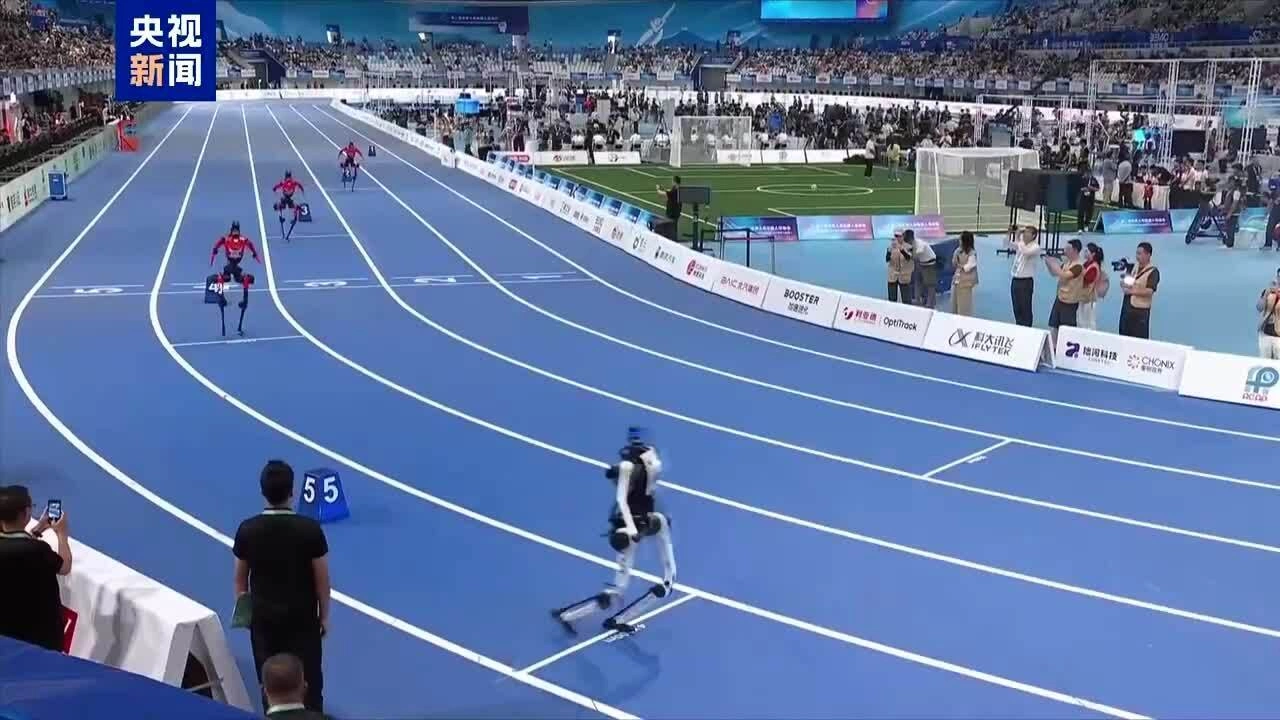
During the starting phase, Usain Bolt exploded with a reaction time of only 0.146 seconds. The starting block allows athletes to generate horizontal thrust and accelerate from the beginning of the race.
In contrast, robots like Tiangong start from an upright position. In the first round, it also waited nearly a second before starting to run, seemingly because it could not register the starting signal.
"If you use a starting block, I think the robot will be much faster," said Iain Hunter, a professor of exercise science at Brigham Young University and a sports scientist at the national athletics management organization USA Track and Field.
Beijing Humanoid Robot Innovation Center (BHRIC), developer of Tiangong Ultra, said they have adjusted many parts of the robot's upper body and waist to reduce mass and limit energy consumption to move the body when running.
"We also improved the robot's motor, range of motion and control software," said Guo Yijie, manager of the humanoid robot innovation department at BHRIC.
As a result, while short runs at an extraordinary pace helped Bolt complete the 100 m race in 41 steps, Reuters analysis showed that Tiangong needed more than 50 steps but at a much faster pace.
Park Suhan, a robotics professor at South Korea's Kwangwoon University, said the robot's running gait reflects the motor's maximum capabilities, not an attempt to simulate human running.
Parunchaya Jamkrajang, a sports scientist at Mahidol University in Thailand, said the small, bumpy steps may have helped the robot keep its balance. "They try to increase their speed, but they will fall if their stride is too wide," she said.
No physiological barriers
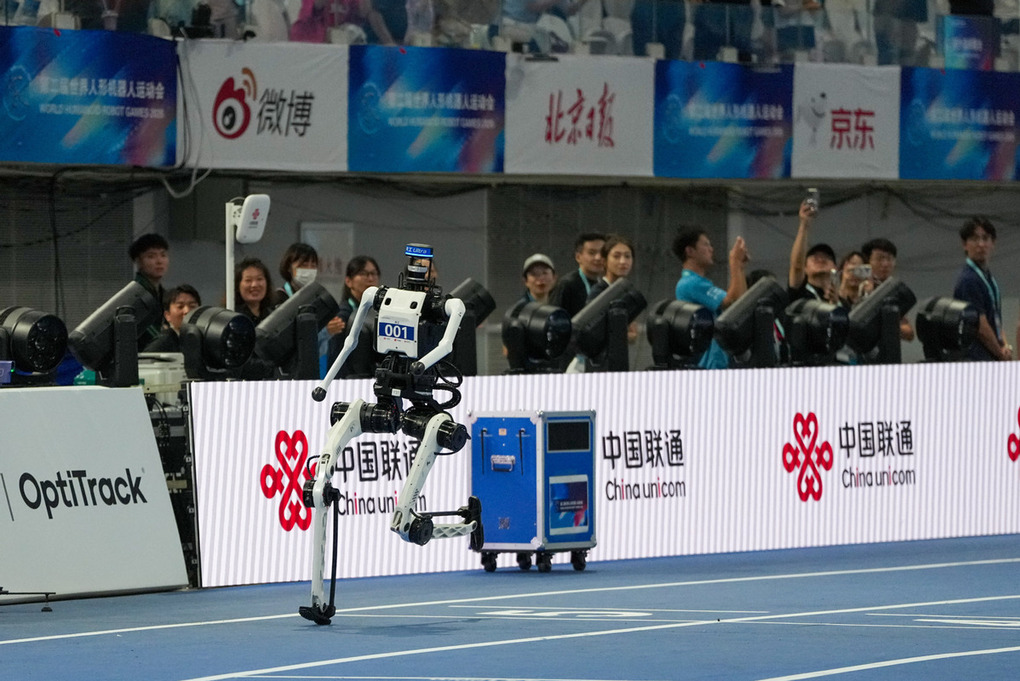
Humans sprint by combining muscles and tendons around flexible joints. The ankles, knees and hips absorb force and return some of it with each stride. The robot generates power to run much faster through an electric motor and gearbox.
"The electric motor only creates pure rotational motion. It does not need to create traction and elasticity like a muscle. It can be installed directly into the moving joint," said professor Park Hae-won, leader of the humanoid robot laboratory at the Korea Advanced Institute of Science and Technology (KAIST).
Even the world's top sprinters will lose strength and slow down in the last 20 meters due to neuromuscular fatigue. "Tiangong shows no signs of slowing down. The robot is not subject to such limitations and can maintain constant speed," commented Matt Bundle, a biomechanics expert at the University of Montana in the US.
However, images from the race show Tiangong maintaining top speed throughout the course, before crashing into the pad at the end of the run. "It would be meaningless if people reached maximum speed and suffered serious injuries just because they couldn't stop," Bundle said.
Scientist Jamkrajang agrees, saying that robots with the ability to make independent decisions or change direction in the future will be much more impressive than simply maximum acceleration. "Changing direction, or making decisions while running like 'I won't crash into that place', as well as slowing down. That's something we haven't seen in robots," she said.