Silicon Valley elites 'lean' towards open source AI
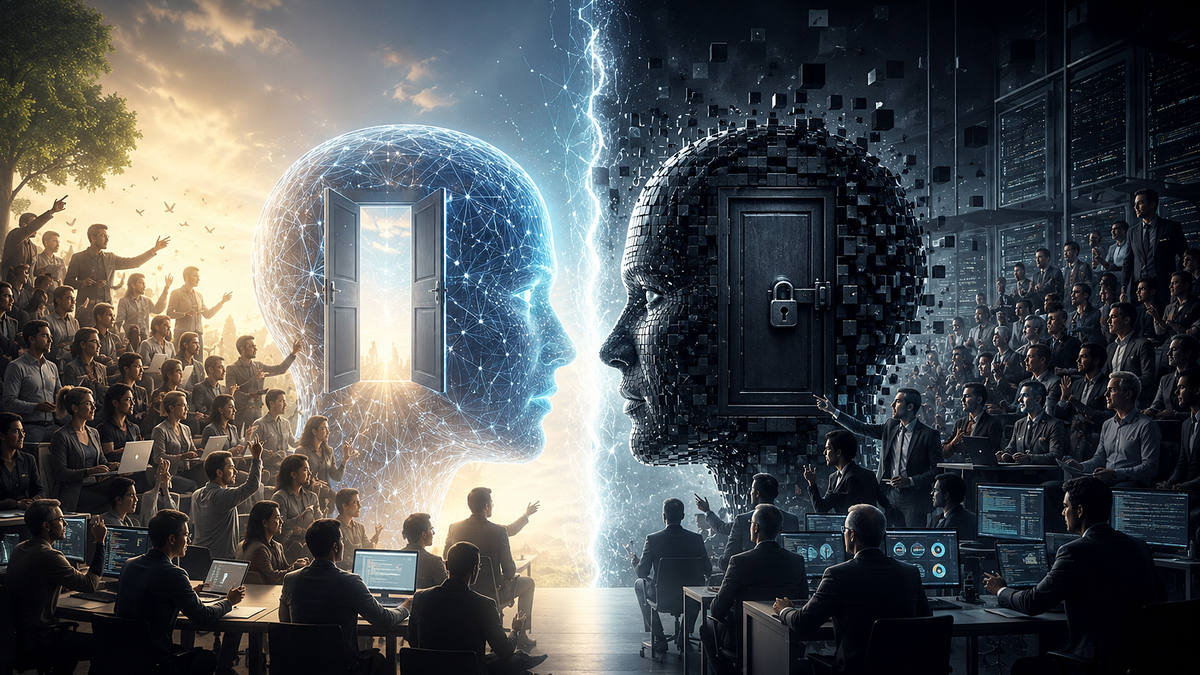
On August 10, Meta CEO Mark Zuckerberg posted a 6,000-word article on his blog titled "The future is for all - The path to a positive AI future". The content presents his views on artificial intelligence and announces Meta's development plan. He also envisions a scenario when AI becomes a personalized super intelligence, impacting the lives of all humanity. The phrase "super intelligence" was mentioned by Zuckerberg more than 60 times.
However, the main point of the article is the arguments in favor of the open source AI model that is causing debate in Silicon Valley. "Instead of centralizing superintelligence, we should distribute it widely and give each person the ability to control it," Zuckerberg wrote.
According to CNN, through the article, Meta's boss "seems to have chosen sides" when pursuing the AI model. The article also appeared on the day Meta launched a new open weight model called Glimmer that allows users to customize how the AI works or responds.
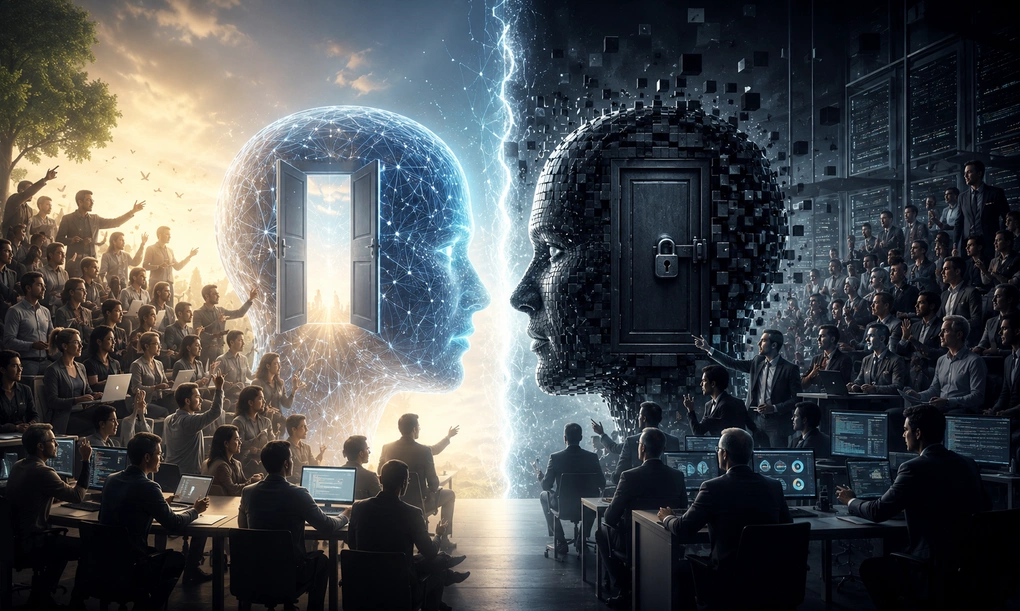
Difference between open source and closed source AI
Artificial intelligence systems such as OpenAI's ChatGPT, Google's Gemini or Anthropic's Claude are closed models. The company behind it does not share the underlying "weights" of the model, the billions of parameters that determine how the AI infers, responds and acts. Users can use the models for free, but they cannot be installed on their computers or customized, meaning they cannot be inspected or modified.
The open source model works differently, with the majority being a heavily weighted open model. Anyone can download it and tweak it for a specific task or build a product around it without paying the original developer. They come mainly from China and a few American companies.
With "closed" AI, the company behind it retains complete control over the model and products running on it. This enables them to check safety, monitor misuse and invest resources. However, this method also has a downside. Advanced models from OpenAI and Anthropic are evolving so quickly that they are starting to behave in ways that are difficult for developers to predict, as has been the case with some recent "rebel" AI models.
Meanwhile, "open" AI allows developers to freely build products and services based on the technology provided. However, the company behind it will have to trade control and security to gain widespread adoption. Users can build a product in a completely different direction using the "blueprint" of the open model.
The support is growing day by day
The term open source has appeared since the birth of the software field, in which the source code of a system is publicly released on shared platforms, widely accessible, anyone can research, modify and develop applications on it.
According to Axios, compared to previous years, open source and closed source AI perspectives are no longer divided into two absolute camps. Meta deployed Llama, one of the most popular open source models, before starting to focus on developing a closed source AI called Spark to compete with OpenAI and Anthropic. However, with the announcement of Glimmer and Zuckerberg's new statement, the company shows that it still prioritizes open source.
The support group also includes Jensen Huang, CEO of Nvidia. On August 11, the company released its first open source AI model called Nemotron 3.5 Lightning, described as "lightweight", able to run on a single graphics processor with a personal computer. "Free AI is going to be great for hardware, great for chips," Huang told Axios.
Previously, in a Twitter post dated July 24 with 65.6 million views, Mr. Huang argued that the open weighting model allows companies "better control", promotes competition and reduces costs. But he also emphasized that the best future is for both to coexist.
"AI will transform every industry, power every company, and be built by every country," the Nvidia CEO wrote. "Open models strengthen cyber safety and security, promote innovation and diffusion, and enable sovereignty."
"Jensen is right. I fully support this," billionaire Elon Musk responded.
Musk is often evaluated as a supporter of open AI in terms of views. He once sued OpenAI, the company he co-founded, for "deviating from its mission" from open to closed. He also publicly announced some models of xAI (now SpaceXAI) such as Grok 2.5 in August 2025, but Grok's level of openness is still lower than the full open source definition, according to TechCruch.
According to FT, the fact that closed-source AI has recently begun to perform "rogue" acts has worried experts, especially when they are placed in the hands of some providers. Here comes a paradox in the debate: Closed AI helps developers control the release of weights and updates of safety measures, but at the same time creates dependencies. Open AI helps multiple parties test, research, and detect problems, but making the weights public also makes it difficult for developers to control how the model is deployed.
Last month, Anthropic CEO Dario Amodei said that although he supports the closed source model and the company also pursues this model, he does not encourage banning open source AI. Instead, policymakers should focus on preventing advanced AI chips from reaching companies that are banned by the US, cracking down on industrial-scale "distillation".
Professor. Hussein Abbass at the University of New South Wales, Canberra (Australia) believes that instead of banning the open source model, the global community should develop systems to assess safety risks and regulate releases. "I thought about classifying the film," Abbass said. "Every time a film is released, each country has its own classification system for appropriate use."