'Hanoi must pioneer in building an economy based on knowledge, data, and creativity'
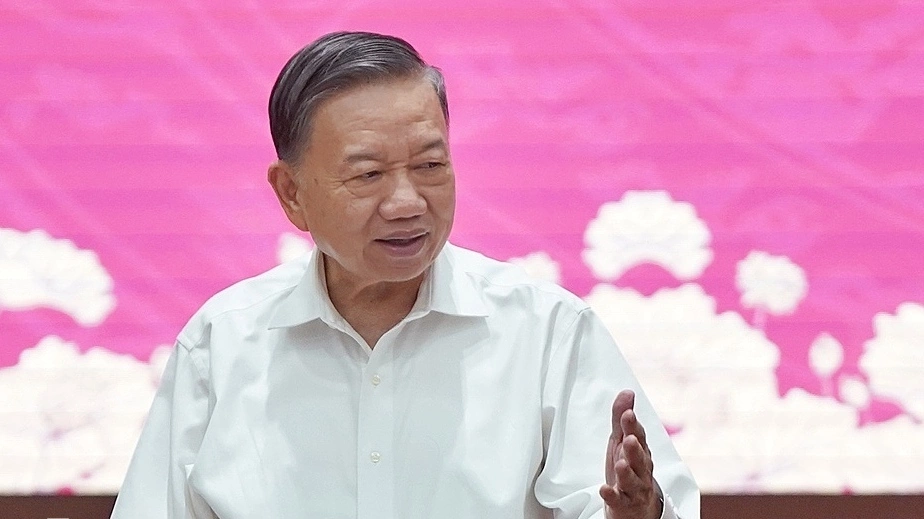
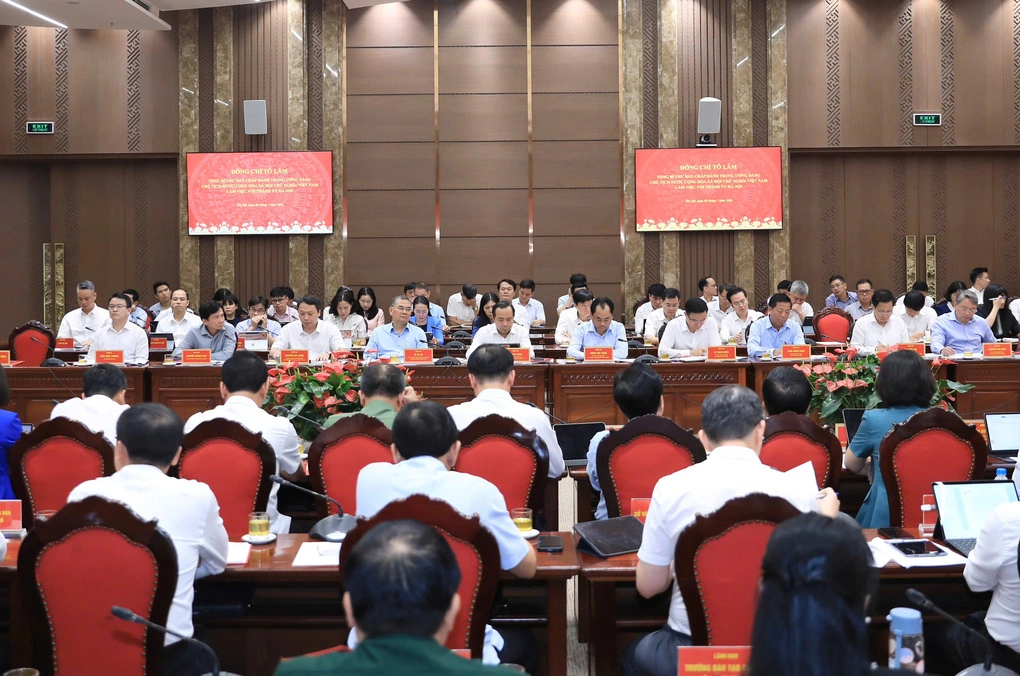
Working with the Hanoi Party Committee on the afternoon of July 8 on the status of implementing tasks in the first 6 months of the year, solutions to complete the 2026 goal and implementing Resolution 02 of the Politburo on building and developing the Capital in the new era, General Secretary and President To Lam recognized the results the city has achieved in the context of simultaneously implementing many major tasks.
According to him, Hanoi has shown a proactive, determined spirit and desire for development, especially in perfecting institutions, promoting infrastructure, administrative reform and reorganizing the development space. However, the city needs to look straight at the limitations when growth has not reached the set scenario, the gap to the yearly target is still large; The capital's large resources have not been fully transformed into growth; The spillover effect of public investment is not adequate; The private economic sector has not yet developed its full potential; New growth drivers are not enough to create changes in economic structure, while many bottlenecks in human and urban life are still slow to be resolved.
Emphasizing that the last 6 months of the year are decisive, the General Secretary and President asked the City Party Standing Committee to focus on leading the implementation of the double-digit growth target, but not chasing growth at all costs. The city needs to rebuild growth scenarios for each industry, field, area and major project; We cannot operate on an average, evenly or wait until the end of the quarter to evaluate, but we must closely monitor and clearly determine output targets, progress and responsibilities of each agency and individual.
He requested that tasks that create results in 2026 must be implemented drastically, while tasks that create capacity for 2027 must be prepared in advance in terms of policies, resources, human resources and implementation organization. "Grow rapidly but not at the expense of the environment, quality of life, social security and management discipline," the General Secretary and President emphasized.
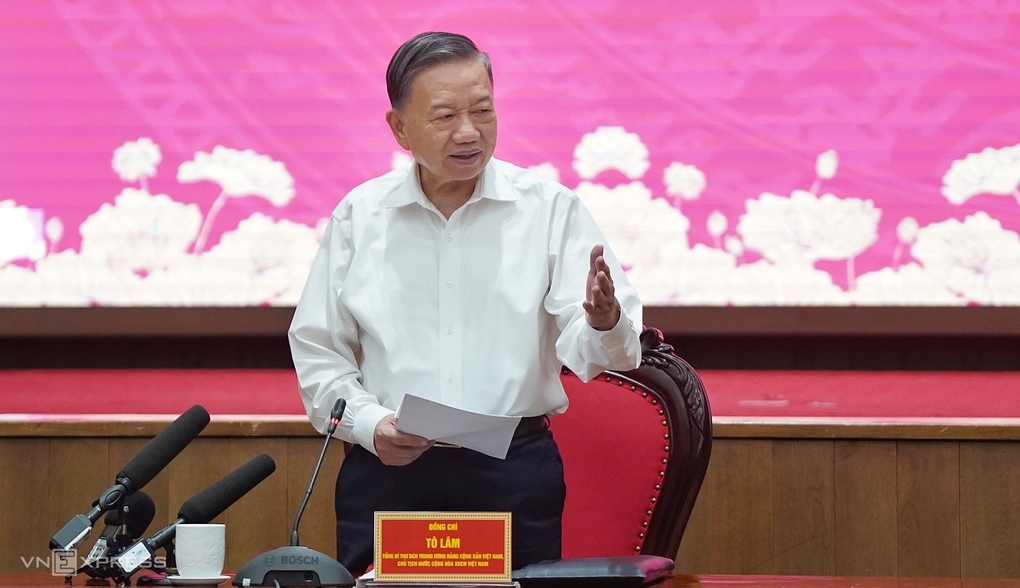
According to the head of the Party and State, Hanoi must conduct a substantive review of development resources, including land, public assets, investment capital, resettlement funds, technical infrastructure, social infrastructure, high-quality human resources, data and science and technology. The city must clearly know which resources are working, which resources are being used ineffectively, and which resources are "frozen"; Which industries and fields can be accelerated, which products can be promoted, we must focus on handling immediately.
He believes that freeing up congested resources is Hanoi's biggest growth potential. We cannot allow "freezing of resources", delays, and wasted development opportunities; Do not let headquarters, public land and public works be abandoned while the city still lacks resources for education, health, culture, housing and urban infrastructure.
For key projects, Hanoi must focus heavily on site clearance, investment disbursement and implementation; Prioritize belt routes, bridges over the Red River, urban railways, flood-proof infrastructure, wastewater treatment, solid waste, housing and regional connection axes. The General Secretary and President emphasized that land clearance is the responsibility of the entire political system, and must be associated with resettlement, schools, healthcare, livelihoods and better living conditions for people in new places.
Some key projects in Hanoi are great opportunities but also pose many potential risks during implementation and operation. The city must synchronously develop transport infrastructure, schools, hospitals and essential social institutions along with housing, stadiums, Olympic villages and service works; public and transparent land fund, land price, financial obligations and mechanism to regulate increased land value. In addition, the Capital needs to prioritize resettlement, rebuilding livelihoods and public infrastructure, and have a plan to effectively exploit sports, cultural and commercial facilities.
According to the General Secretary and President, Hanoi must promote more strongly the role of the business, service, trade, tourism and consumer sectors; create breakthroughs in science, technology, innovation, digital transformation and high-quality human resources. The capital must take the lead in building an economy based on knowledge, data and innovation; Boldly pilot financial support for high-tech enterprises in the Capital.
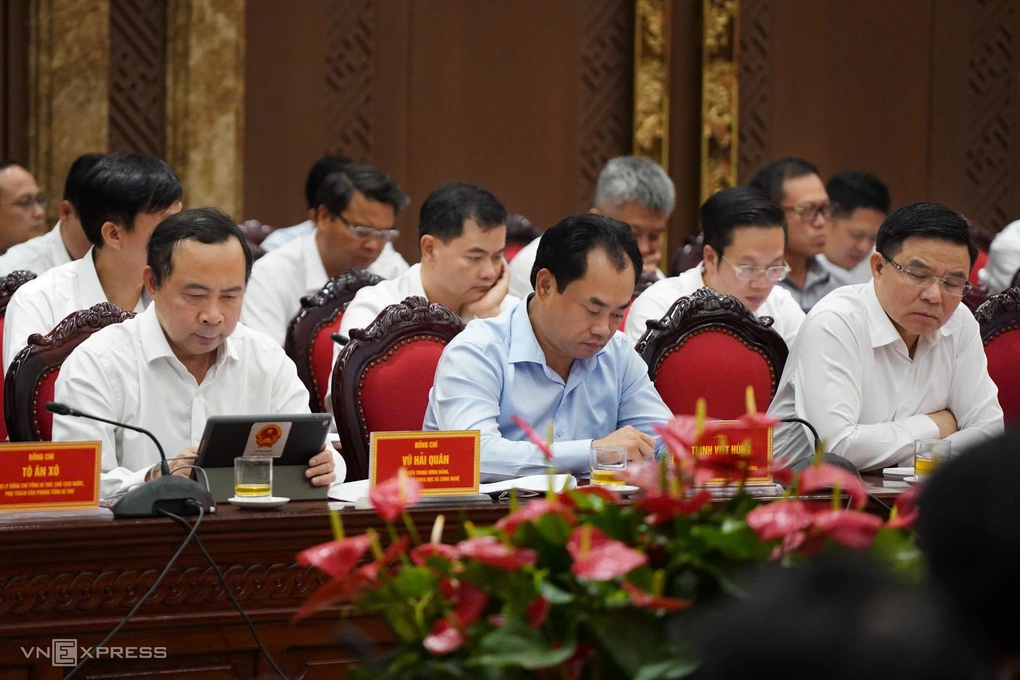
Along with economic development, the city needs to focus on solving people's essential problems such as traffic congestion, flooding, air pollution, wastewater and garbage treatment, food safety, urban order, schools and hospitals. It is impossible to solve everything in a short time, but the selected problems must be handled thoroughly, with clear output results so that people can feel the change in their daily lives.
Regarding education, Hanoi is required to prepare well for the 2026-2027 school year; proactively review the needs of schools, teachers and facilities, especially in rapidly growing population areas, new communes and wards and places with many workers and laborers; Control unreasonable costs for parents; reorganize the school network; Effectively deploy policies to support boarding meals, ensure school safety, gradually build digital schools and pay more attention to children in difficult circumstances.
The General Secretary and President also requested Hanoi to strengthen regional links and coordinate with ministries, central branches and localities in the Capital Region; Proactively propose necessary mechanisms and projects, not allowing each locality to develop individually, reducing investment efficiency and the spread of the Capital.
He emphasized that Hanoi must achieve the highest goal in 2026, and at the same time prepare early for 2027 and the period 2026-2030. Tasks that determine growth in 2027 such as project portfolio, investment capital, site clearance, investment procedures, planning, land fund and human resources must be prepared right from the second half of 2026, not to start processing until the new year.
Concluding the meeting, the General Secretary and President proposed that the entire political system of the Capital work with a greater sense of urgency, responsibility and determination. Hanoi must grow faster but the quality of development must be better; more modern but still retains the cultural depth and identity of the Capital; become richer and stronger, but all people enjoy the fruits of development; At the same time, pioneering the creation of new models, new ways of doing things and new motivations that can spread throughout the country.
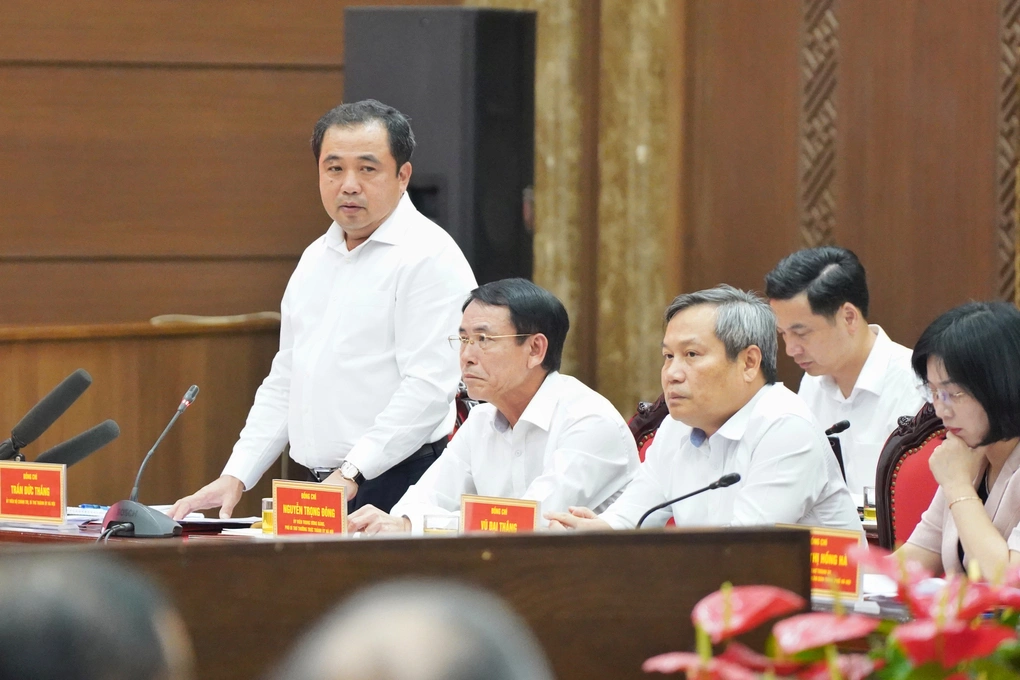
Accepting the instructions, Secretary of the Hanoi Party Committee Tran Duc Thang affirmed that the Standing Committee of the Hanoi Party Committee will be determined to act with the highest efforts, striving to complete the socio-economic targets set by the city in 2026. The city will also create position and strength for steady growth in the next period, so that the people of the Capital can enjoy the fruits of the development process.
Previously, reporting at the meeting, Chairman of Hanoi People's Committee Vu Dai Thang said that GRDP in the first 6 months of the year increased by 8.22%; Total social investment capital reached more than 250,000 billion VND, an increase of 14.1%; Budget revenue reached more than 400,000 billion VND, equal to 62.2% of the estimate; Public investment disbursement reached more than 63,000 billion VND, an increase of more than 112% over the same period. The city has also resolved 39 out of 51 traffic congestion points, ranking first in the country in high school graduation rate and second in average score on the 2026 high school graduation exam.
However, Hanoi assesses that the achieved results are still not commensurate with the potential, position, resources and specific mechanisms assigned by the Central Government. The city identifies a GRDP growth target of 11% or more in 2026 as a key political task and does not adjust towards a lower direction.
Luu Quy