Hanoi continues to lead the country in innovation

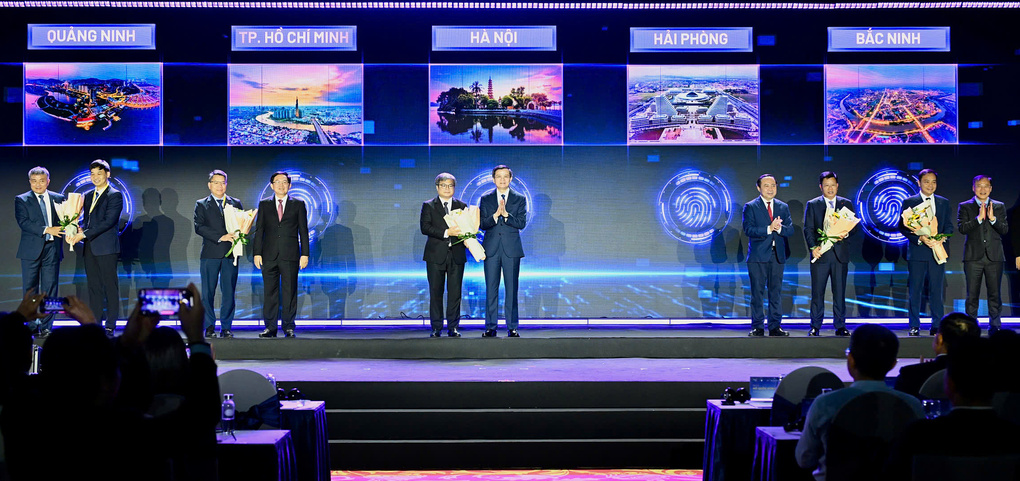
The results were announced at the National Innovation Festival Celebration on the morning of October 4, with Hanoi being the highest ranked locality. This is the fourth consecutive year that Hanoi holds the leading position in the country after 2025, 2024 and 2023.
This year, Hanoi leads 18/52 component indexes similar to last year, including indicators on research and development (R&D) and innovation such as human resources and R&D spending, number of science and technology organizations, proportion of enterprises with R&D activities, proportion of enterprises with innovation activities and intellectual property outputs such as inventions, utility solutions, plant varieties, trademarks, industrial designs or poverty reduction and indicators. human development numbers...

The top 10 localities in the country are Hanoi, Ho Chi Minh City, Hai Phong, Quang Ninh, Bac Ninh, Hue, Da Nang, Thai Nguyen, Tay Ninh and Hung Yen, respectively. Of which, Ho Chi Minh City leads 12/52 component indexes, with input indexes such as science and technology organizations, general infrastructure, credit to the private sector, microfinance, business density, rate of businesses with R&D activities, rate of businesses with innovation activities, newly established businesses and some intellectual property products leading with Hanoi.
Quang Ninh ranked third in the number of leading indicators with 5/52 component indexes, including digital infrastructure, credit for the private sector, investment projects in industrial clusters, OCOP (one commune one product model) and poverty reduction speed.
PII is a Vietnamese initiative, built based on ideas from the Global Innovation Index (GII). According to the Ministry of Science and Technology, the construction of the PII 2026 index is in accordance with international standards as well as in accordance with the process that has been successfully implemented in previous years, and is reviewed and adjusted based on the current data status, practical context, and characteristics of localities. Some minor adjustments in data sources and component index calculations have also been made in accordance with international practices without affecting the general structure of the index framework and general calculation method.
The 2026 PII index has a total of 52 component indices, divided into 7 pillars. In particular, the 5 input pillars reflect factors that create favorable conditions for socio-economic development based on science, technology and innovation. The two output pillars reflect the impact of science, technology and innovation on socio-economic development.
Data to build PII 2026 is collected from two sources, including official statistics and state management data from ministries, state management agencies, and central organizations (40/52 indicators); and the second source is collected and provided by localities - accompanied by supporting documents (with 12/52 indicators).
According to the Department of Innovation, PII is being used more as a management tool. By September, 29 out of 34 localities had issued PII improvement plans. Some localities have established science and technology tasks to research solutions to improve growth indicators or models based on science, technology and innovation.
From the results of the annual PII index, localities can look at each group of indicators to determine whether they are lacking infrastructure, human resources, capital, business-institution links or the ability to create knowledge products.

Vietnam is currently one of four countries that build a local innovation index based on GII, along with Brazil, Colombia and India. According to Deputy Minister of Science and Technology Hoang Minh, Vietnam's construction of the PII index is highly appreciated by the World Intellectual Property Organization (WIPO). WIPO considers Vietnam a model for other countries around the world to learn in building a local innovation assessment index based on the GII index. WIPO also noted that "there is a lot to learn from Vietnam's experience in building the PII index".
Bao Lam