Hanoi faces the need to turn science and technology into a new growth engine
At the Preliminary Conference summarizing one year and six months of implementing Resolution 57 of the Politburo on breakthrough development of science, technology, innovation and digital transformation, held in early July, General Secretary and President To Lam assessed that many localities have begun to find ways to suit their conditions with specific tasks. In particular, Hanoi is mentioned with the implementation of the HanoiWork shared digital platform - an example of how to concretize Resolution 57 from practical governance requirements.
Behind that result is the process of implementing Resolution 57 in the direction of linking science and technology, innovation and digital transformation with innovating the city's growth model. However, besides what has been done, Hanoi's development in the field of science and technology is still considered "not commensurate with its potential".

Twitter is the foundation for a new growth model
At the working session of General Secretary and President To Lam with the Standing Committee of the Hanoi Party Committee on July 8, Vice Chairman of Hanoi Nguyen Van Phong emphasized that the city positions science and technology, innovation and digital transformation as one of the core pillars to promote growth model transformation.
In that direction, Hanoi is considered to have a number of advantages such as high-quality human resources, a system of leading universities and research institutes, and a large science and technology market and consumer market.
The city developed a program to implement Resolution 57 with more than 600 tasks for each industry, each agency and unit; set a goal of the digital economy accounting for about 22% of GRDP this year and increasing to 35% by 2030. To realize that goal, Hanoi chose to start from perfecting institutions. Based on the Capital Law and Resolution 57, the city issued eight thematic resolutions on science and technology, innovation and digital transformation, and also developed policies on controlled testing mechanisms (sandbox), venture capital funds, attracting talent and supporting research and technology development.
In parallel with perfecting the mechanism, Hanoi focuses on innovating governance methods on a digital platform. According to Mr. Nguyen Van Phong, "all solutions must be based on data and solid scientific foundations", from making executive decisions to resolving bottlenecks in development.
This viewpoint is concretized through the implementation of the HanoiWork platform to manage work progress in real time, associated with OKRs and KPIs; At the same time, develop the iHanoi platform as an interaction channel between the government and the people.
Currently, HanoiWork has been deployed with 178 workspaces and more than 85,098 activated accounts, allowing real-time tracking of the progress of more than 191,610 tasks. The city also announced 93 open data sets, completing electronic health records for nearly 99% of the population, and data on nearly 3.3 million plots of land.
"The city fundamentally changed its management method from the traditional 'administrative assignment' to 'digital management based on goals, progress, products and data'," the city's report said.
Another highlight in Hanoi's implementation is connecting research resources with practical needs. Mr. Phong said the city has identified 30 major problems in fields such as transportation, environment, health, education and urban governance to order from universities, research institutes, experts and technology businesses. To date, more than 100 research proposals have been submitted.
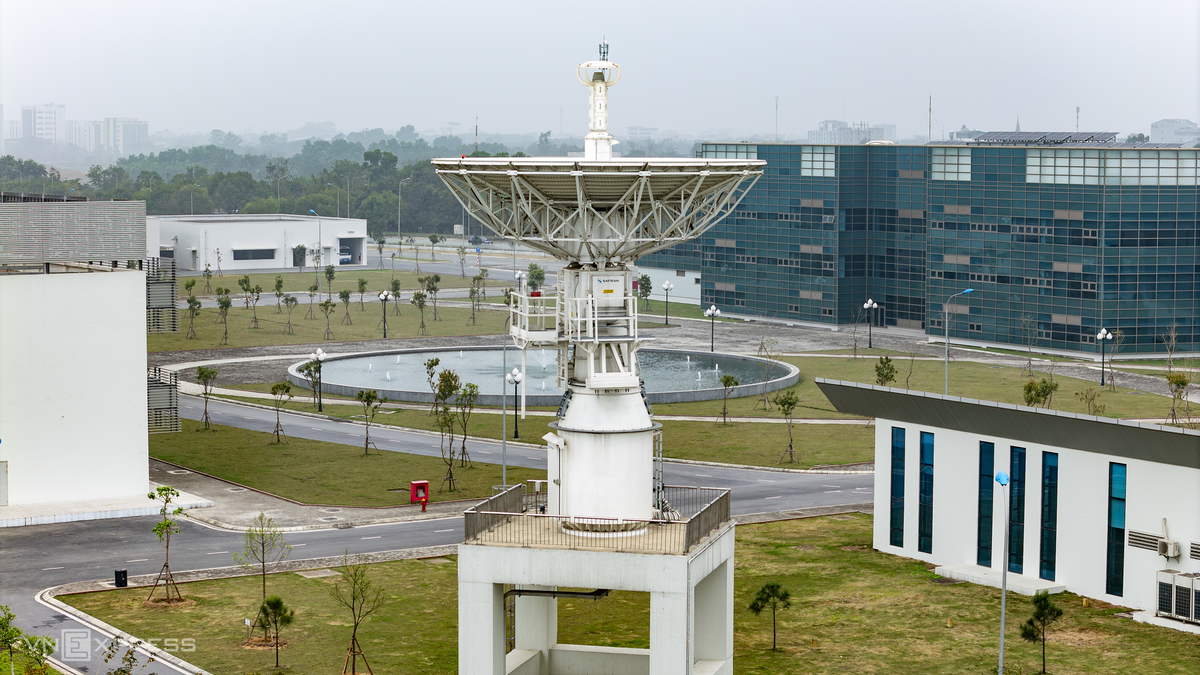
Along with that, Hanoi established an innovation company, connecting research, incubation, business development and technology market activities. The city also invested in developing key laboratories, accelerating the planning and reorganization of operations of Hoa Lac Hi-Tech Park to create an important technology growth pole for the city, accelerating the progress of FPT's centralized digital technology park.
The locality also achieved a number of achievements in science and technology and innovation, such as having 12,377 applications for industrial property registration, accounting for over 31% and leading the country, with 13,366 protection titles granted; launching Technology Exchange (HANOTEX) and Digital Transformation Market; Meet with major domestic and foreign technology companies to receive and transfer Vietnamese language models, build high-performance computing centers and solve traffic and smart planning problems.
Science and technology must become a real growth driver
Noting the results Hanoi achieved, General Secretary and President To Lam also assessed that this new growth driver is "not enough to change the structure of the economy". According to him, the city has great advantages in knowledge, science - technology, education, health care, finance, culture, tourism and consumer markets, but the number and scale of science and technology enterprises and the pervasiveness of new driving forces are not commensurate with the potential.
"Hanoi must clearly answer how much fields such as digital economy, artificial intelligence, semiconductors, cultural industries, green finance, healthcare and high-quality education are contributing to GRDP; how many leading businesses, real projects and competitive products there are," he said, emphasizing that science, technology, innovation and digital transformation must become real growth drivers, not just policies.
At the preliminary conference on Resolution 57, General Secretary and President To Lam also assessed the general picture of implementing the current Resolution as: the policy is clear, the institutions have gradually been improved, resources have been allocated, political determination is high, the spirit of action has been aroused, but "the actual results are not adequate".
He requested that the implementation of the Resolution in the coming period must focus on creating results, shifting strongly from building mechanisms to creating products, from completing tasks to creating value, from preparing conditions to directly contributing to national development.
During the working session with Hanoi, he also proposed that the city take the lead in building an economy based on knowledge, data and creativity, accelerating standardization, connecting and exploiting shared data to directly serve operations, growth forecasting, public investment monitoring, land management, procedural settlement and social security assurance. He suggested that Hanoi boldly pilot financial support for the capital's high-tech enterprises that have 100% localization and can export to markets in developed countries.
According to city leaders, in the coming period, Hanoi will continue to develop an ecosystem from human resource training, high-tech parks, technology trading floors to venture capital funds, and at the same time bring technology into advantageous fields such as cultural industry, tourism, craft villages, e-commerce and smart transportation. The overarching goal is to make science, technology, innovation and digital transformation the driving force for economic restructuring and innovating the capital's growth model.
"Digital transformation, data and innovation must be the nucleus of the operating method of the political system, aiming to better serve the people, businesses are created with better development conditions, and urban areas are managed more intelligently, creating a foundation for high, sustainable growth of the Capital," Vice Chairman of Hanoi Nguyen Van Phong affirmed.
Luu Quy