The journey of perfect sound: the story of Sennheiser HE 1 priced at 1.7 billion VND.

In the world of sound, where every note can touch the human heart, there is a masterpiece that is born not just to be heard, but to be felt. That is Sennheiser HE 1, also known as Orpheus HE 1, a headphone model known as Sennheiser's uncompromising masterpiece. Launched in 2015, HE 1 is not only a technological device, but also a symbol of passion, perseverance and the desire to conquer the limits of sound. Its value does not lie in the huge figure of 59,000 USD (the price in Vietnam when launched in 2017 was 1.7 billion VND), but in Sennheiser's more than 70-year historical journey, where every detail tells a touching story about people who have devoted their lives to bringing music closer to our souls. Go back in time to 1945, when World War II had just ended. In a small town in Germany, Fritz Sennheiser, a talented electronic engineer, founded the company Laboratorium Wennebostel (later renamed Sennheiser Electronic GmbH & Co. KG). Initially, the company only produced microphones and measurement equipment, but their passion for audio led them to enter the field of headphones and speakers.

Sennheiser's first headquarters were in Hanover in 1945, where they designed their first microphone. The 1950s and 1960s saw Sennheiser pioneer products such as the first wireless microphone in 1958, opening up an era of free performance for artists. In 1968, they launched the HD 414 – the world's first open-back headphone model, selling more than 10 million units and becoming a symbol of comfort and natural sound quality. This is not only a technical achievement, but also a touching story of how Sennheiser has brought music closer to millions of people, from street artists to professional studios. Over the decades, Sennheiser has constantly innovated, from the IE 800 wireless headphones in 2012 to specialized sound systems for movies and music, always maintaining the philosophy: Sound must be authentic, must touch emotions.

In 1968, Sennheiser launched the HD 414, the world's first open-back headphones, which remain the best-selling large-sized headphones of all time. But the pinnacle of this journey must be the Orpheus line - the symbol of perfection. In 1991, Sennheiser introduced the Orpheus HE 90, their first electrostatic headphone model, with a vacuum tube amplifier. Priced at $16,000 at that time (equivalent to $35,000 today), HE 90 was only produced in 300 pieces, each handcrafted. This is the result of 10 years of research, led by engineer Axel Grell, who has devoted his passion to overcoming technological limits. HE 90 not only reproduces sound with absolute fidelity, but also delivers a profound emotional experience: Bass is as deep as the whisper of the ocean, mid is as smooth as an angel's voice, and treble is as clear as crystal. Many audiophiles recall that, when wearing the HE 90, they were transported back to childhood memories, where music was the only source of comfort during difficult days. However, after 300 units, Orpheus seemed to disappear, leaving the sound world with regret.

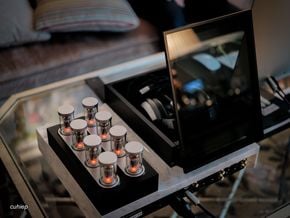
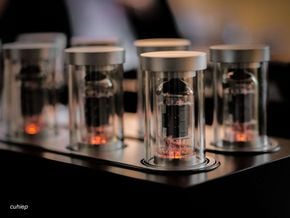
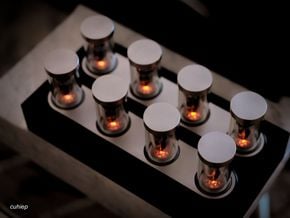
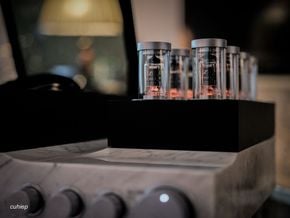
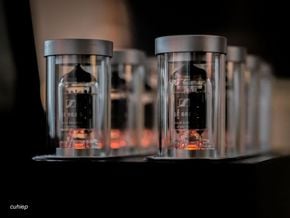
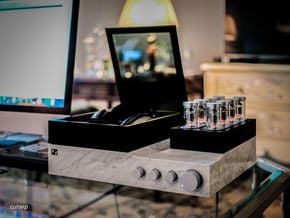
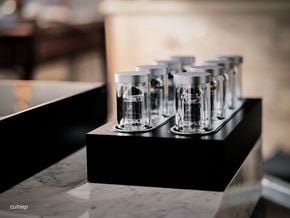
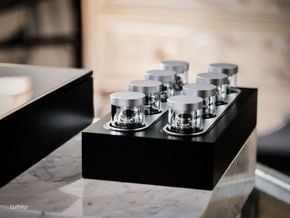
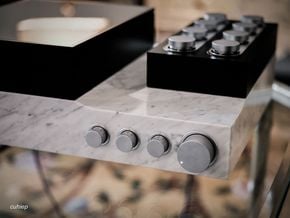
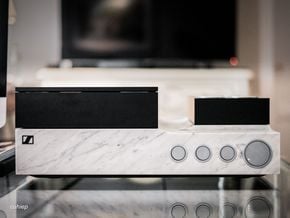
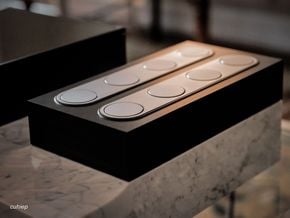
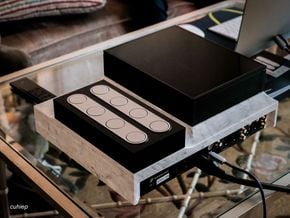
In 1991, Sennheiser introduced the Orpheus HE 90, their first electrostatic headphone model, with a vacuum tube amplifier for $16,000. Then in 2015, like a miracle, Sennheiser revived Orpheus with HE 1 - an upgraded, more perfect version. Developed over 10 years, under the direction of Axel Grell and a team of 30 engineers, HE 1 is a testament to tireless perseverance. They have overcome countless challenges: From manufacturing a platinum-coated speaker membrane that is only 2.4 micrometers thick (thinner than a human hair), to integrating a Class A MOS-FET amplifier right in the earcup to minimize noise. The main amplifier is made from Carrara marble - the same stone used for Michelangelo's David statue - which is not only beautiful but also helps to dissipate heat perfectly, with 8 vacuum tubes that automatically emerge when the machine is turned on, like an art performance. The DAC system supports 24-bit/192 kHz, diverse connectivity from USB to XLR, and frequency response from 8 Hz to 100 kHz – far beyond human hearing, ensuring not a single note is lost.

HE 1's journey is not just about technology, but also about people. Fritz Sennheiser once said: "Sound is the bridge to the heart."

An audiophile on Reddit shared: "When listening to HE 1, I feel like I can meet my late father again through his favorite music. It's not a sound, but a living memory." Manufactured by hand at the factory in Wedemark, Germany, HE 1 only makes about 250-300 units per year, each unit taking hundreds of hours of labor. The price of $59,000-75,000 (customizable) makes it the most expensive headphone in the world, but the real value lies in its exclusivity: This is a gift for those for whom music is life. Sennheiser does not sell the HE 1 as a product, but as a legacy – each owner is invited to the factory to witness the manufacturing process, creating a deep emotional connection.


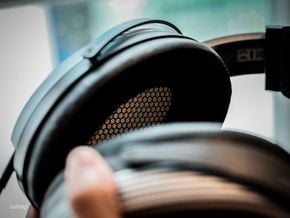
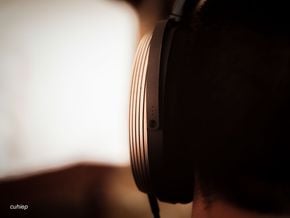
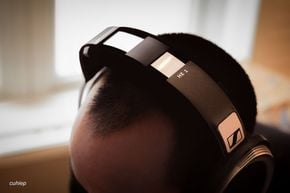
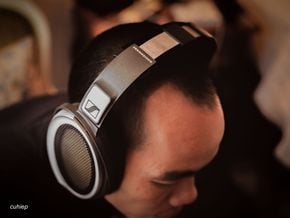
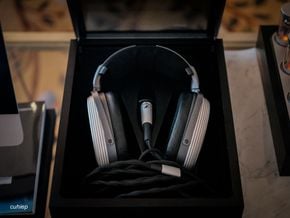
The headphones weigh just 480g, with premium leather earpads and anodized aluminum frames, providing cuddling comfort. Gold-ceramic coated electrodes reduce harmonic distortion to just 0.01% at 1kHz - the lowest level ever recorded, making the sound "surreal".

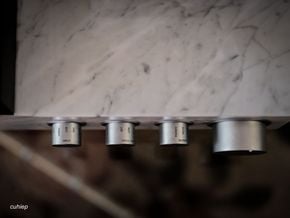
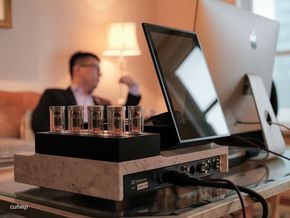
The main amplifier is made from Carrara marble - the same stone used for Michelangelo's David statue - which is not only beautiful but also helps dissipate heat perfectly.

8 vacuum tubes automatically emerge when the machine is turned on, like an art performance.


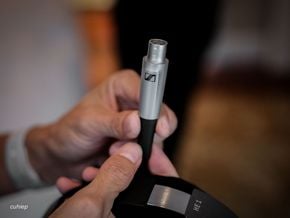
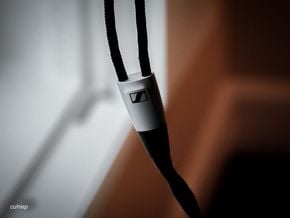
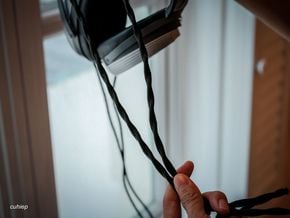
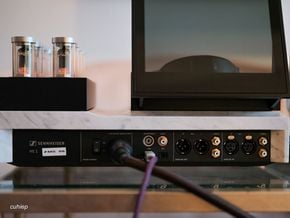
The DAC system supports 24-bit/192 kHz, diverse connectivity from USB to XLR, and frequency response from 8 Hz to 100 kHz – far beyond human hearing, ensuring not a single note is lost. Actual images of Sennheiser HE 1