The journey of decoding the molecular mystery of the winner of the Nobel Prize in Chemistry 2026
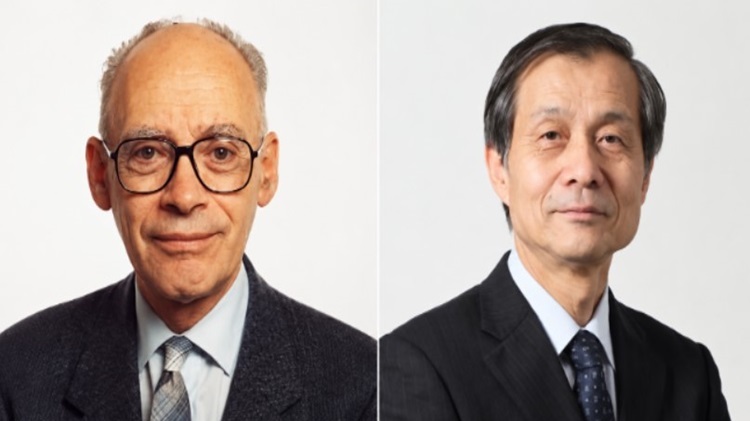
Two French and Japanese researchers were awarded the 2026 Nobel Prize in Chemistry on October 7 for discoveries that changed the process of organic synthesis, providing clues to help explain one of the oldest molecular chemical mysteries.
Many molecules in nature exist in two forms that are identical in composition but are mirror images of each other (just like the human right hand and left hand, although seemingly symmetrical, cannot overlap completely). According to Scientific American, when scientists synthesize substances in the laboratory, the reaction usually produces a mixture of 50% "left-handed" form and 50% "right-handed" form. However, resurrection is extremely "biased". For example, all the amino acids that make up proteins in the human body almost exclusively use the "left-handed" form, and DNA always twists in the "right-handed" form. Why life in nature chooses only one form instead of both is a mystery that has lasted more than a century.
Henri B. Kagan and Kenso Soai have spent decades studying why life favors one reflective form of a molecule over the other. Their separate discoveries eventually revealed that initially small imbalances could be amplified until the chemical reaction produced almost only one form of the molecule. This has important implications for organic synthesis because one form may provide the desired therapeutic effect in drug production but its mirror form is ineffective or causes unintended effects.
Henri Kagan was born in 1930 in Boulogne-Billancourt and studied at the Sorbonne before receiving his doctorate from the College de France in 1960. According to Anadolu Ajansı, he spent nearly four decades at the University of Paris-Sud, now part of the University of Paris-Saclay, and became one of the leading names in the research of asymmetric catalysis (using a catalyst to create large quantities of a more reflective form of a molecule than the remaining).
Một trong những đóng góp ban đầu quan trọng của ông là phát triển DIOP, phân tử có hình dạng đặc biệt, gọi là phối tử đối xứng. Khi kết hợp với chất xúc tác rhodium, nó cho phép phản ứng hóa học tạo ra dạng phản chiếu phân tử mong muốn với tỷ lệ cao. Phương pháp của ông đã ảnh hưởng đến nhiều thế hệ nhà hóa học, thúc đẩy phát triển nhiều chất xúc tác liên quan sử dụng trong hydro hóa bất đối xứng và nhiều phản ứng khác trong sản xuất dược phẩm.
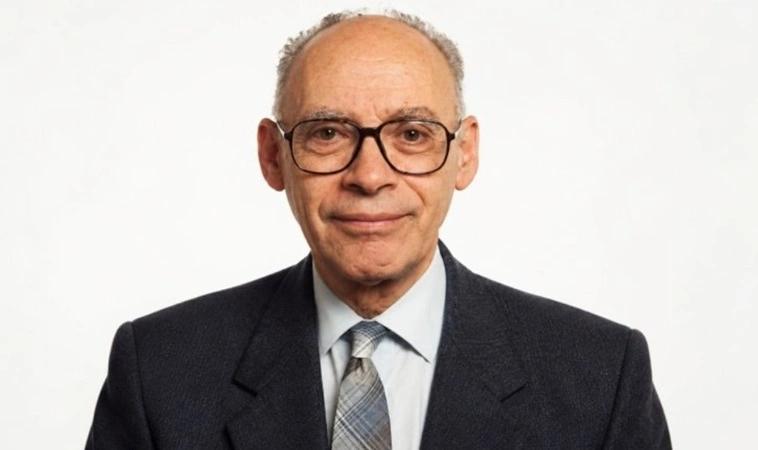
The breakthrough that helped Professor Kagan become the Nobel Prize winner was born in 1986 when he demonstrated the nonlinear effect. Scientists once expected that the "asymmetry" of the products in a reaction would directly correspond to the asymmetry of the catalyst. However, Professor Kagan demonstrated that this relationship can be nonlinear: even a small difference in catalyst can produce an asymmetric product with excess excess. The discovery provides chemists with both a practical method for amplifying molecular asymmetry, and a new approach to studying how catalysts interact with each other during reactions.
At the age of 95, Professor Kagan has received many top awards in chemistry, including the Wolf Prize for Chemistry in 2001 and the Franklin Institute's Bower Prize in 2005. He was also elected to the French Academy of Sciences and knighted.
Kenso Soai was born in 1950 in Hiroshima, Japan, and received a doctorate in organic synthesis from the University of Tokyo in 1979 under the guidance of famous chemist Teruaki Mukaiyama. He then worked with stereochemistry expert Ernest Eliel at the University of North Carolina at Chapel Hill before joining Tokyo University of Science in 1981. He became an associate professor in 1986 and a professor in 1991.
Building on the broader idea of asymmetric amplification, Professor Soai pursued the ambitious goal of creating a reaction in which the product self-catalyzes to create more of itself. This process is called asymmetric autocatalysis. When small amounts of one type of molecule are present, it accelerates the creation of more molecules of the same type, reinforcing the initial imbalance with each cycle.
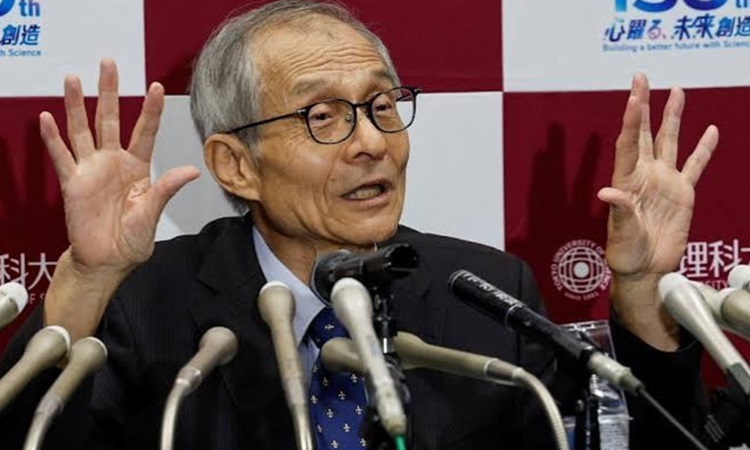
AFP said that in 1995, Professor Soai announced the first reaction with the potential to create the final product almost entirely in a single molecular reflection form. By 2003, he successfully performed the reaction from substances that initially had no asymmetry, but created only one form of reflective molecule (99.99%). The process was named the Soai reaction and became one of the most famous demonstrations of organic chemistry.
Professor Kagan's nonlinear effect shows that molecular asymmetry can be amplified. Professor Soai then demonstrated that the self-reinforcing chemical system is capable of producing and replicating molecules in a reflective form. Taken together, their findings have helped reshape scientists' understanding of how molecular asymmetry is created, reinforced and propagated.
Thanks to this discovery, chemists can design more selective reactions to produce drugs, flavors and advanced materials. The two researchers' work also provides a laboratory model for understanding why life on Earth uses only one reflective form of the molecule.
Theo International Business Times, giải Nobel Hóa học năm 2001 được trao cho K. Barry Sharpless, William Knowles và Ryoji Noyori với công trình nghiên cứu về các phản ứng oxy hóa và hydro hóa xúc tác bất đối xứng. Giáo sư Kagan được xem là một trong những người sáng lập lĩnh vực này, nhưng do giải Nobel chỉ có thể được chia sẻ tối đa cho 3 người, ông không phải là một trong những học giả được trao giải năm 2001. Dù vậy, hơn 40 năm sau thí nghiệm mang tính quyết định của giáo sư Kagan và 3 thập kỷ sau phản ứng bước ngoặt của giáo sư Soai, giải Nobel Hóa học đã gọi tên hai nhà nghiên cứu.
"This year's Nobel Prize in Chemistry honors a discovery that has had a profound impact over the past several decades. This award is a reminder that landmark advances often originate from persistent research, motivated by pure curiosity, and that the true value of fundamental scientific discoveries can take years, even decades, to be fully recognized and appreciated," said David Pendlebury, head of research analysis at the company's Institute for Scientific Information. Clarivate, comments.