DNA repair system helps 194-year-old 'turtle' live long
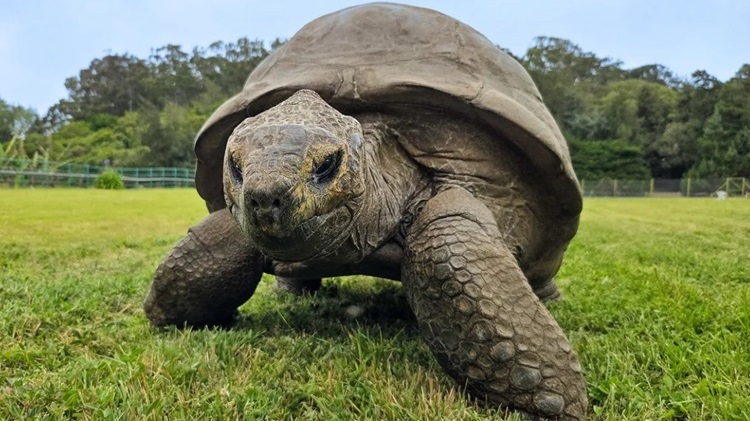
Jonathan the tortoise lives on the island of St. Helena in the South Atlantic Ocean is the world's longest-living land animal. At 194 years old, Jonathan has outlived the average lifespan for Aldabra giant tortoises (Aldabrachelys gigantea) by about a century. Now, scientists have identified a series of unique genetic and epigenetic traits that may be the key to its longevity.
New research published on October 7 in the journal Science Advances focuses on Jonathan's genome as well as epigenetic marks on DNA molecules (chemical changes that turn gene activity on/off without changing the original nucleotide sequence). Analysis results showed that Jonathan's genes associated with mitochondrial function were all in good condition. According to Stephen Clark, chief scientific officer of the Kallel Foundation, a nonprofit organization in Nashville that specializes in researching drugs that promote human longevity, although scientists have long known that mitochondrial function is related to longevity and that a decline in this function leads to disease, Jonathan provides new insights into that mechanism.
Live Science said nearly a decade ago, the team asked Joe Hollins, the veterinarian responsible for Jonathan's care, to collect samples from him. Island authorities prohibit veterinarians from taking blood from turtles due to concerns about the risk of infection. Instead, to get a DNA sample, Hollins pretended to feed Jonathan, used a hard glove to open his mouth and scrape cells from the inside of his cheek. The DNA extracted from that cheek tissue sample was more fragmentary than the blood sample, so the researchers filled in the gaps using a reference genome taken from a 36-year-old Aldabra tortoise named Tank. They also compared Jonathan's DNA with the DNA of a Galápagos tortoise (Chelonoidis abingdoni) named Lonesome George who was more than 100 years old when he died in 2012.
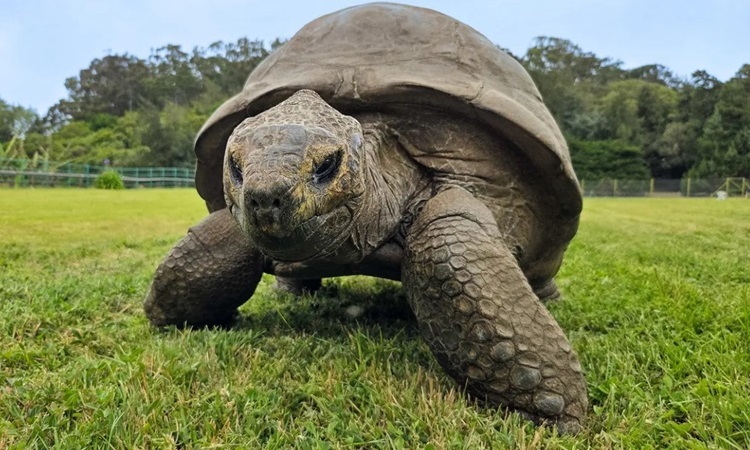
According to Scientific American, the research team discovered that compared to Tank and Lonesome George, Jonathan carries 287 unique gene variations related to aging, including genes involved in DNA repair and telomere function (the protective ends at the end of chromosomes that often shorten with age).
Clark and colleagues also looked at epigenetic changes, including DNA methylation when a chemical tag called a methyl group binds to DNA, turning genes on/off. Young individuals often have consistent chemical tags between cells, so the gene on/off switch works reliably. With increasing age, tags fall out or attach chaotically, causing genes to begin activating in an unpredictable way. Scientists measure chaos by entropy, and aging is expressed by increasing entropy.
In this case, the team compared Jonathan's DNA methylation patterns with many other Aldabra giant tortoises. The DNA methylation pattern on many of its genes was similar to that of older turtles, but the pattern on genes associated with mitochondrial function was as young as a 5-year-old Aldabra tortoise.
However, Clark emphasized that additional experiments based on blood samples from Jonathan could provide a more comprehensive view of its genome. Vincent Lynch, a biology professor at the University at Buffalo, said researchers were only able to learn Jonathan's full genetic profile after the turtle died, allowing DNA to be collected from more tissues.
Estimated to have been born in 1832, Jonathan's age is a conservative estimate of his full maturity, meaning the turtle was at least 50 years old when he arrived on the island and possibly even older. Its estimated age is corroborated by an old photograph taken around 1882-1886, showing Jonathan grazing in the garden of the mansion of William Grey-Wilson, governor of St. Helena. During his life, Jonathan lived through two World Wars, 41 US presidents and 31 governors of St. Helena. Today, it is wandering the island with three other giant turtles, Emma, Fred and David.