Photos of an offline session experiencing JBL Live Beam 4: listen and share the use of headphones every day

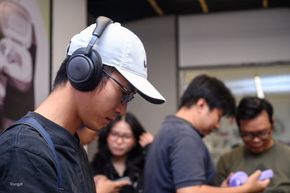
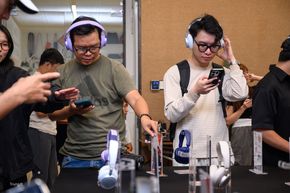
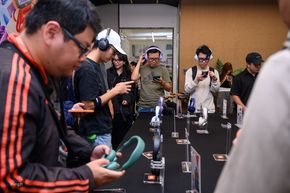
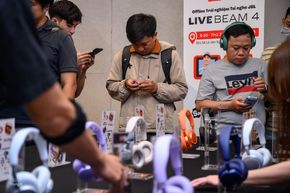
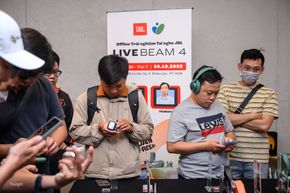
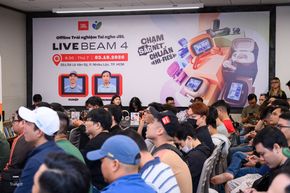
On Saturday morning, October 3, Tinh and JBL organized an offline session to experience JBL Live Beam 4, the latest true wireless headset model of the Live 4 Series recently introduced in Vietnam. In addition to listening to the new headphones, the offline session was also an opportunity for you to learn about JBL's changes in the approach to personal headphones, from sound quality, noise cancellation, personalization to the charging box with a screen that increasingly takes on more functions.
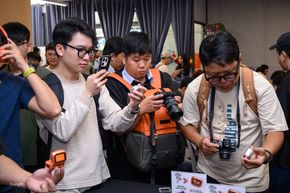
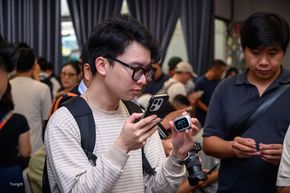
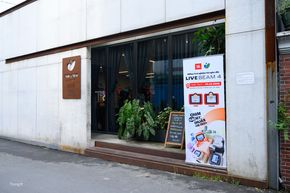
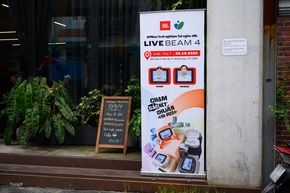
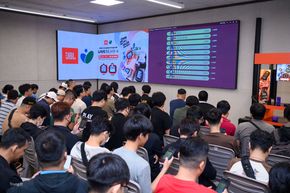
The JBL Live Beam 4 offline session took place on the morning of October 3 at Tinh Tinh, with the participation of those interested in JBL headphones and audio products.



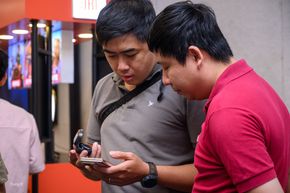
Live Beam 4 is the newest member of the JBL Live 4 Series in Vietnam, besides the two headphone models Live 680NC and Live 780NC.
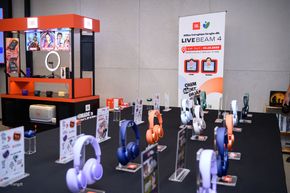
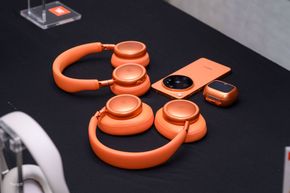
JBL Live 4 Series has three types of headphones
With Live Beam 4, JBL has now completed the Live 4 Series in Vietnam with three designs. Live 780NC is an over-ear headphone, Live 680NC uses an on-ear design, and Live Beam 4 is compact true wireless for daily travel needs.

Live 780NC and Live 680NC have been sold in Vietnam since July 2026. Both use 40 mm dynamic drivers, supporting LDAC Hi-Res Audio Wireless, JBL Spatial Sound 3.0 and Personi-Fi 3.0. Meanwhile, Live Beam 4 uses 10mm dynamic drivers, supports Hi-Res Audio Wireless, JBL Spatial Sound and also has Personi-Fi 3.0.

The point JBL wants to emphasize on the new Live generation is the "All-day companion" philosophy: headphones are not only used when listening to music but also follow the user while moving, working, calling, exercising or relaxing.

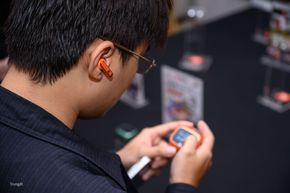
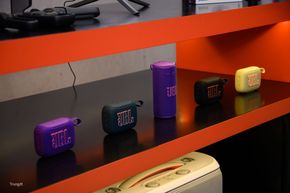
Live Beam 4 has a stem-like design, each ear weighs about 4.85 grams and meets IP55 standards. JBL offers many color options for the new Live generation, from neutral colors to outstanding green, purple or orange.
Live Beam 4 and the charging case look more and more like a standalone device
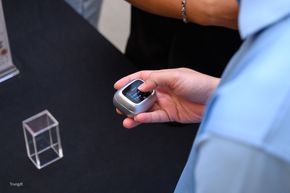
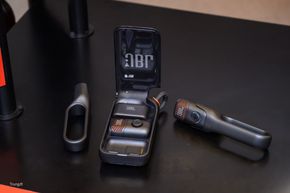
In the Live Beam 4 experience, I focused more on Smart Charging Case. It wasn't until this generation that JBL put the screen on the charging box. The idea emerged from the Tour Pro 2, continued on the Live Beam 3 and expanded to devices like the Smart Tx.

Another point on Live Beam 4 is JBL Smart OS 3.0. The new interface supports more direct operations and is especially available in Vietnamese, making it quick to get familiar with the functions on the box. Smart Charging Case is one of the parts that you spend the most time experiencing on Live Beam 4. The JBL Smart OS 3.0 interface on the Live Beam 4 charging box now supports Vietnamese.

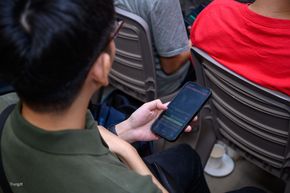
JBL has developed the idea of a screen on the charging box over many generations, from Tour Pro 2, Live Beam 3 to the current Live Beam 4. From this screen, I can change tracks, adjust volume, change ANC/Ambient Sound, adjust EQ, view notifications and quickly access many functions without taking out the phone. In my opinion, the advantage of this approach is more obvious when the headset has many features. If everything is in the app or assigned to touch operations on both ears, users have to remember a lot of gestures. Bringing the controls to the charging box screen creates an intuitive interface: whatever you need, open the box and select. Even with this method of use, you can significantly reduce your dependence on gestures on the headset. This is the point I find more practical than simply placing a screen on the charging box to look fancy. As the number of features increases, the screen on the charging case creates a more intuitive way to control instead of having to remember too many taps on the headset.
Mr. Hiep: If you use headphones more, you also need to rest your ears
Mr. Hiep's sharing expands the story beyond the parameters of a headset. Modern humans have been around for about 315,000 years, while home audio reproduction systems have a history of just over 100 years. James B. Lansing started making speaker drivers in the 1920s and JBL turns 80 this year.

From a foundation of hi-end and professional audio systems, JBL then expanded strongly into consumer products. Portable speakers started to become a notable segment around 2012, then wireless and true wireless headphones became more and more frequently used devices of the day.

According to Mr. Hiep, as headphones become more and more convenient and users wear them longer, the story is not only about "sounding good" but also about using them properly. Headphones can help create a private space, reducing the impact of surrounding noise, but users also need breaks for their ears.

JBL celebrates 80 years this year, with a long background in professional audio systems before expanding strongly into portable speakers and headphones. Mr. Hiep also mentioned JBL's thick, colorful sound characteristics, and said that EQ is increasingly important because one sound configuration is difficult to suit everyone and all uses.

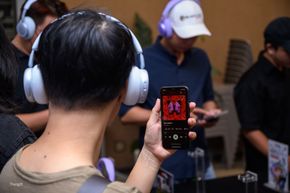
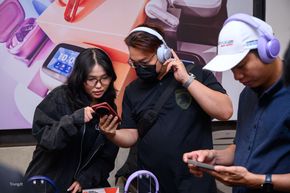
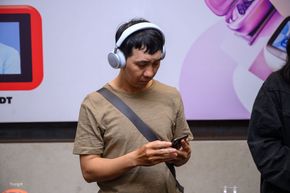
This is also why the new Live headsets have Personi-Fi 3.0. Instead of just choosing an EQ preset, users can perform a personalization process based on their listening ability, then continue to fine-tune in the JBL Headphones app. In addition to listening to music, an interesting feature mentioned is Relax Mode. This feature is aimed at times when users want to relax or fall asleep more easily, further expanding the ways the headphones can be used beyond regular music playback. The rest of the offline session spent a lot of time listening, adjusting Personi-Fi, testing noise cancellation, manipulating the charging box and talking directly with JBL representatives about new features. This is also the interesting point of a headphone experience: the parameters only tell part of the story. Things like the ear fit, the feel of ANC, the sound quality after running Personi-Fi or whether the screen on the charging box is really useful or not need to be used directly to be easy to imagine.



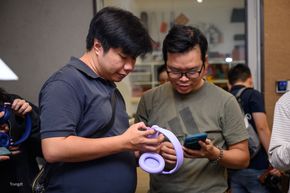
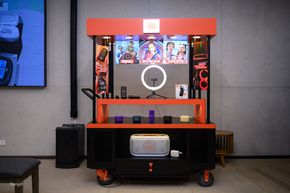
Questions about noise cancellation, codecs, sound quality and how the Smart Charging Case works were discussed directly at the offline session. The experience space is also an opportunity for people to discuss with each other about how to use headphones in daily work and entertainment. The offline session also had two mini games and lucky draw:


With the appearance of Live Beam 4, JBL Live 4 Series in Vietnam now has three form factors including true wireless, on-ear and over-ear. The common point of this generation is not only sound quality or noise cancellation, but also the tendency to personalize and adapt more to each user. As for Live Beam 4, the Smart Charging Case continues to be the most obvious difference. After several generations of development, the screen on the charging box is no longer just for displaying information but is gradually becoming a second control interface for the headset. The fact that JBL Smart OS 3.0 supports Vietnamese also makes this usage more practical for domestic users. And in the story content shared offline, headphones are becoming a device we use more and more during the day. Technology can make listening more convenient, personalized, and quiet, but using headphones wisely and taking time to rest your ears is still an important part of the experience.


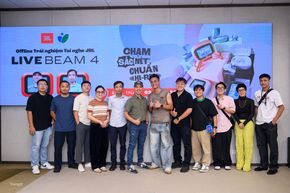
Thank you for participating, see you in the next offline sessions.