IFA26: Xiaomi Vision Gran Turismo - the car that was never sold

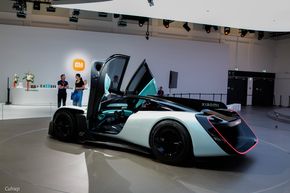
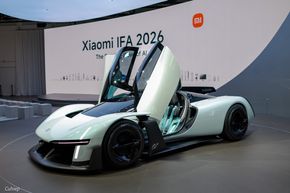
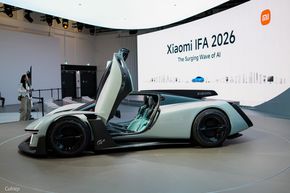
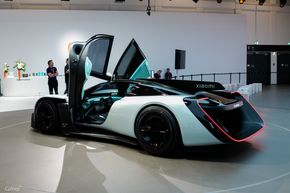
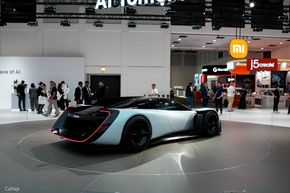
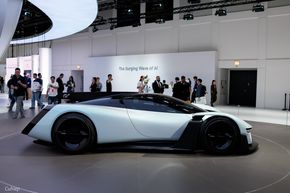
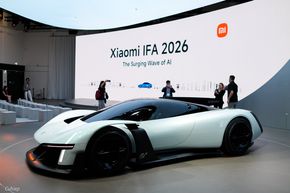
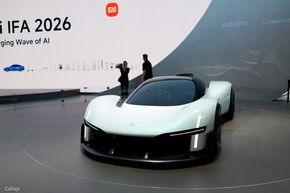
At the IFA 2026 exhibition, Xiaomi displayed the concept car - Vision Gran Turismo next to two commercial vehicles, SU7 Max and SU7 Ultra. This is a product that only exists in the game and as an external display model, and is not intended for future commercial production. In early 2025, Xiaomi cooperated with Polyphony Digital - the studio developing the Gran Turismo racing game series. And certainly, in the near future this car model will appear in Gran Turismo. Before Xiaomi, this program also cooperated with many long-standing car brands such as BMW, Mercedes-Benz, Porsche or Ferrari to create cars in their games.

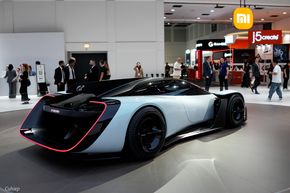
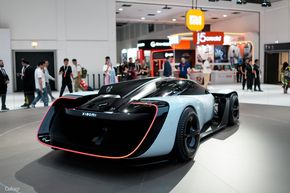
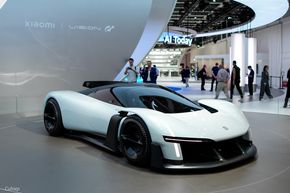
Despite being a game car, the Vision Gran Turismo was methodically built in collaboration with Xiaomi's design teams in Germany, Beijing and Shanghai, who named the car's design philosophy "Sculpted the Wind". Most cars will have to choose between reducing drag to reach top speed in the straight, or increasing downforce for better grip when cornering, and it's difficult to have both at the same time. Xiaomi said the goal of Vision Gran Turismo is to balance both of these factors, and calls its design philosophy "Sculpted by the Wind" - roughly understood as the car shape is created by the airflow passing through it, instead of being drawn and then calculating aerodynamics later. The measured results are an aerodynamic drag coefficient of 0.29, downforce of -1.2, and an aerodynamic efficiency ratio of 4.1:1.

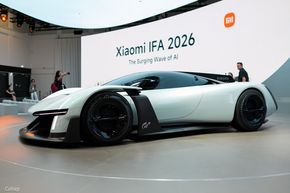
The car's body is shaped in the shape of a water drop, and according to Xiaomi's description, not only the outer shell but also the internal structural bars are designed according to the wing profile, so that every surface of the car participates in air conduction instead of just playing a load-bearing role.

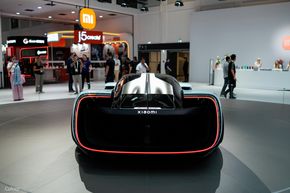
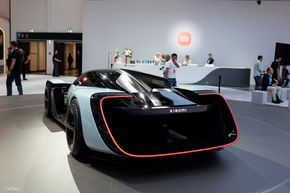
Looking at the specific details on the car's body, we can see that the headlights are shaped like a cross, serving both as lighting and as an air duct to send wind through the car's body. At the rear, the taillights are designed in the form of a closed circle, attached to the Active Wake Control system - an alternative to the mobile mechanical spoiler commonly found on high-performance cars.

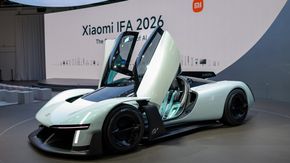
The most talked about technical detail is probably the wheel rims called Accretion Rims: each wheel has a cover placed flush with the tire surface, inside there are small wings to help guide air to cool the brakes, and this entire cover is kept stationary thanks to a magnetic system while the wheel still rotates normally inside it, thereby reducing the resistance generated from the rotation of the wheel rim. The car also uses scissor doors and a center lock system, covered inside by a carbon ceramic brake cluster.

Vision Gran Turismo is built on a 900V high voltage platform, using silicon carbide semiconductor material, and Xiaomi announced a capacity of about 1,900 horsepower. This is a number for technology demonstration purposes and for video game experience, not equivalent to the parameters of a commercial vehicle that has undergone testing to be sold on the market, and this is also the reason why the Vision Gran Turismo is fundamentally different from the SU7 Ultra, which is a real car with performance numbers that have been confirmed on the actual racetrack.

Inside the cockpit, the car uses a Twitter-shaped steering wheel with electronic steering-by-wire technology, meaning there is no longer a mechanical shaft directly connected between the steering wheel and the wheel, along with the driver's seat shaped like a cocoon-shaped sofa. The display system called Xiaomi HyperVision has an interface that changes depending on the driving mode, combined with the AI assistant XiaoAi and a system called Xiaomi Pulse AI, described as having the ability to read the driver's status as well as the surrounding environment and communicate back through light and sound.

It's important to reiterate that this car will never be produced for sale. Users can only experience controlling it in the game Gran Turismo 7, while the real-life display model only serves the purpose of allowing viewers to directly observe the design. From a strategic perspective, Xiaomi's investment in an unsellable car can be explained quite clearly: Xiaomi has confirmed that 2027 is when it plans to expand into foreign markets, has a research and development center in Munich, and plans to expand the Xiaomi Home store system in many different markets. Being invited to participate in a program that is inherently only for long-standing and reputable car manufacturers such as Vision Gran Turismo, therefore, becomes a way for Xiaomi to assert its design and engineering capabilities before European users, even before its real car models are officially available in this region.