iPhone 18 Pro Could See a Steep Price Hike as the AI Memory-Chip Boom Reaches Consumers' Wallets
For the first time in years, an iPhone Pro may rise in price not because Apple wants it to, but because the company has almost no other choice. In an interview with the Wall Street Journal this week, CEO Tim Cook acknowledged that Apple faces soaring memory-chip costs and that a price increase is hard to avoid. He said the company is still working through the details and will announce the specifics when the next iPhone launches.
According to a TechInsights analysis cited by the WSJ, the iPhone 18 Pro could start at $1,399 or higher, an increase of roughly $200 to $300 over the iPhone 17 Pro's $1,099 starting price. This remains a projection rather than an Apple-confirmed figure, but its roots lie in a very real global memory-chip crisis that is reshaping the entire consumer-electronics industry in 2026.
The AI memory boom and why it is pushing phone prices up
The problem stems from a paradox: demand for memory in AI data centers is booming so fiercely that it is draining the supply meant for consumer devices. The three giants Samsung, SK Hynix, and Micron, which together control over 95% of global DRAM production, have redirected manufacturing capacity toward high-bandwidth memory (HBM) for AI accelerators. HBM commands far higher margins than conventional DRAM, making this a purely economic decision.
The technical mechanism behind it is brutal: each gigabyte of HBM consumes roughly three times the wafer capacity of standard DRAM. This 3-to-1 conversion ratio means that every time the foundries ramp up HBM production, the supply of general-purpose memory is squeezed accordingly. SK Hynix has said its HBM, DRAM, and NAND capacity is essentially sold out for 2026, while Micron has confirmed its HBM capacity for both 2025 and 2026 is fully booked.

The consequence has been a cascade of price hikes. According to Sourceability, DRAM contract prices rose about 30% in Q3 2025, 40 to 50% in Q4 2025, then a further 80 to 90% in Q1 2026, multiplying 4 to 4.5 times in just nine months. TrendForce projects overall DRAM prices to rise more than 70% in 2026. Samsung president Wonjin Lee warned that 2026 will bring semiconductor-supply problems that will affect everyone, not just Samsung.
More worryingly, this may not be a short-term blip. Relief capacity, such as Samsung's new Pyeongtaek line, does not reach mass production until 2028. Micron has gone so far as to announce it will exit its Crucial consumer brand, redirecting that wafer capacity to enterprise and AI memory. With most high-end DRAM in 2026 estimated to go to AI data centers, mainstream consumers become the party that pays the price.
Apple's component-cost and margin math
To understand why Apple is being forced to consider a price increase, it helps to look at the production cost structure. TechInsights estimates the 12 GB of RAM in the iPhone 17 Pro cost Apple about $39, but that figure could climb to $145 in the iPhone 18 Pro. Similarly, 256 GB of NAND flash storage could rise from $13 to $51. All told, memory and storage alone are projected to jump from roughly $50 to nearly $200 per device.
Adding it up, TechInsights estimates the iPhone 18 Pro's total bill of materials (BOM) at around $726, a 25% increase over the iPhone 17 Pro's estimated $582. The non-memory components of the iPhone 17 Pro come to about $530, with the rest being memory. In other words, almost the entire cost increase this time comes from memory chips, exactly as Tim Cook lamented.
The iPhone 17 Pro currently starts at $1,099 with a gross margin of about 47%, per TechInsights. To preserve that margin against the higher costs, Apple would need to price the iPhone 18 Pro around $1,371, likely rounded to $1,299. MacRumors notes that a $1,299 price would yield only about a 44% margin, meaning Apple would have to sacrifice some profit if it wanted to hold the line there.
Why the figure could climb to $1,399: the camera factor
Memory chips are not the only variable. Supply-chain analyst Ming-Chi Kuo estimates the iPhone 18 Pro's new camera module, featuring a variable-aperture lens, will cost about 50% more than Apple's current high-end 7-element plastic lens. Kuo did not give a specific dollar figure, only the percentage, and said Sunny Optical would supply 40 to 50% of the variable-aperture lens components, with Largan remaining Apple's main supplier.
When this pricier camera cost is added to the memory pressure, the WSJ believes Apple could push the iPhone 18 Pro's starting price to $1,399 or higher. It bears emphasizing that this is entirely an analyst projection, not a price Apple has announced. Cook himself only confirmed price increases in general, without naming any specific product or stating how much.
We're doing our best to mitigate the huge increases that are being passed to us, and we've been trying to shield our customers from them, but the situation has become unsustainable. — Tim Cook, speaking to the WSJ
Cook described the crisis in unusually stark terms for a CEO normally so careful with his words, calling it a hundred-year flood and saying he had never seen anything like it in any area in over 40 years. The cause, he said, is an insatiable appetite for memory chips from artificial intelligence companies.
The iPhone 18 lineup and the first foldable iPhone
The iPhone 18 Pro and Pro Max are expected to launch in September 2026, alongside a historic milestone: Apple's first foldable iPhone, often referred to as the iPhone Fold or iPhone Ultra (the official name is unconfirmed). According to leaks, Apple is splitting its lineup into two waves, with the Pro and foldable models arriving in fall 2026, while the standard iPhone 18 and 18e are pushed to spring 2027 — a major break from its tradition of a single fall launch.
The foldable iPhone is projected to start above $2,000, with estimates from Ming-Chi Kuo and Mark Gurman clustering around $2,000 to $2,500, making it the most expensive iPhone ever. Per the rumors, it uses a book-style design with a roughly 7.8-inch inner display and a 5.5-inch outer display, an A20 chip, 12 GB of RAM, and notably Touch ID instead of Face ID due to space constraints imposed by the folding mechanism.
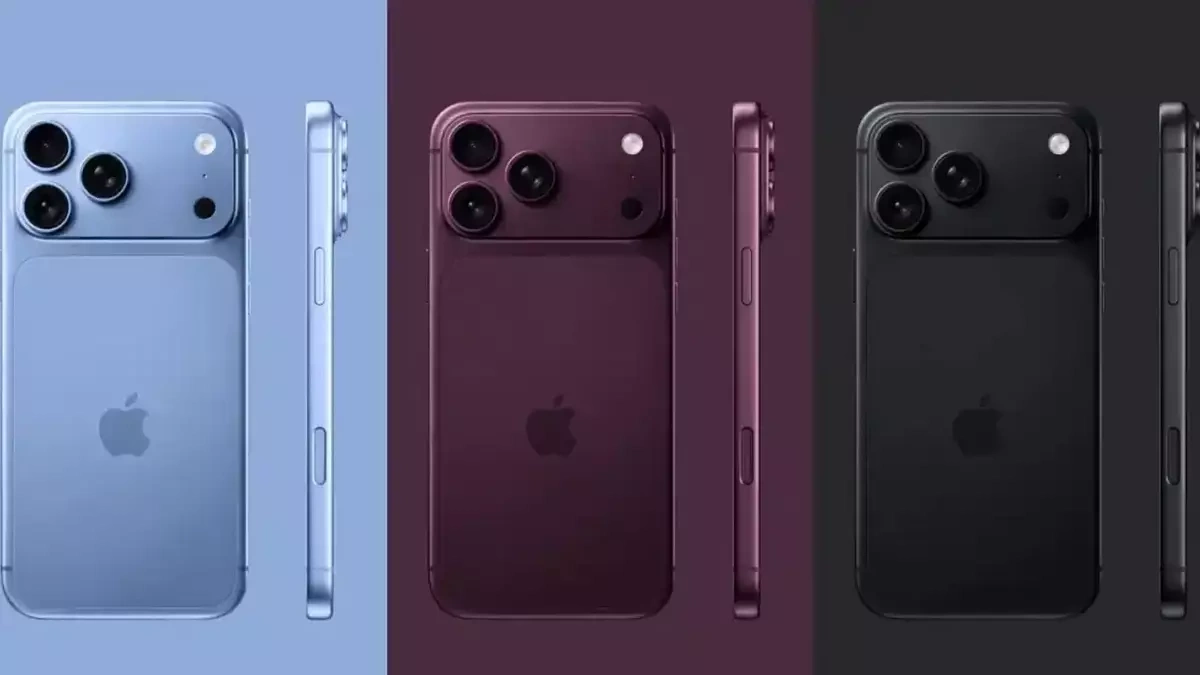
As for the iPhone 18 Pro, leaks point to several worthwhile upgrades: an A20 Pro chip on TSMC's first-generation 2nm process, a smaller Dynamic Island enabled by moving Face ID under the display, a 48 MP main camera with variable aperture, a 24 MP front camera, and Apple's in-house C2 modem replacing Qualcomm. Rumored new colors include Light Blue, Dark Cherry, Dark Gray, and Silver, with a redesigned, seamless frosted Ceramic Shield rear.
What buyers should prepare for and how Apple might offset it
This crisis reaches far beyond the iPhone. Gartner estimates a 130% combined surge in DRAM and SSD prices by the end of 2026, pushing smartphone prices up 13% and PC prices up 17% versus 2025. IDC projects global smartphone shipments to fall about 12.9%, from 1.26 billion units in 2025 to around 1.12 billion, the sharpest drop since the 2008-2009 financial crisis. The average smartphone selling price is forecast to hit a record of roughly $523.
Apple holds a strong advantage over many Android rivals thanks to 12-to-24-month supply agreements that hedge part of its exposure. Beyond that, it has a familiar strategy: pricing by storage tier. Last year Apple raised the iPhone 17's base storage from 128 GB to 256 GB and bumped the iPhone 17 Pro by $100. Ming-Chi Kuo even predicts Apple will hold the standard iPhone 18's starting price at $799, absorbing memory costs through margin and supply-chain leverage and recouping them via services instead.
For buyers, the message is fairly clear: if you have your eye on an iPhone 18 Pro, brace for a meaningfully higher price and think carefully about timing. In a market where consumers are extending replacement cycles and turning to refurbished devices to cope with rising costs, weighing a new Pro model against a previous-generation iPhone with just enough storage may be the smarter financial decision of all.
(Sources: VnExpress, WSJ, TechInsights, Ming-Chi Kuo, Gartner, IDC, TrendForce, MacRumors.)