Abuse of AI 'can make people stupid'
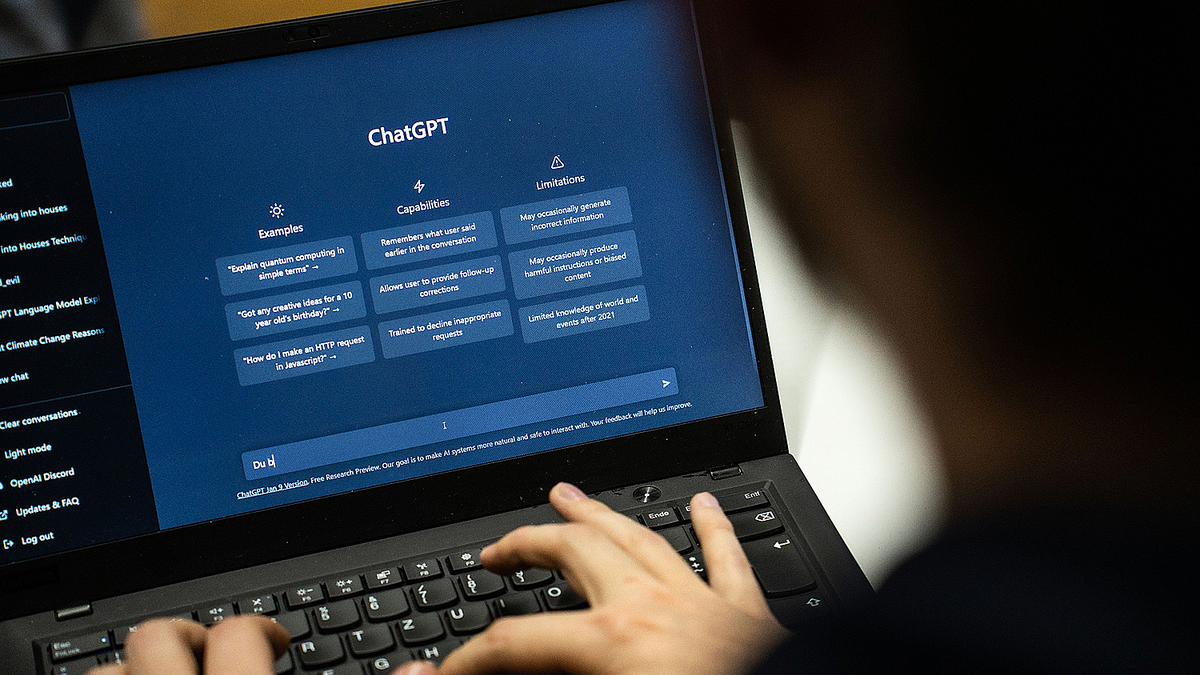
Typically, users just need to enter commands in natural language to receive responses from chatbots like OpenAI's ChatGPT or Anthropic's Claude. They can solve homework, compose emails, write code, translate, organize trips or suggest gifts. The effectiveness is clearly shown both at school, at work and in daily life.
However, some studies have shown that entrusting cognitive tasks to AI can lead to disastrous consequences, affecting memory, decision-making abilities and critical thinking.

In the field of education, MIT research last year attracted great attention with the conclusion that students using generative AI to write essays had poorer critical thinking skills.
Speaking with The Chronicle of Higher Education in June, literature lecturer Tyler Jagt said that none of his students finished reading the assigned 20-page essay, while he easily completed it when he was a student about 10 years ago. One student admitted that he could not finish reading because he constantly "lost his train of thought" and was distracted from the main content.
Jagt shared that when assigning assignments, his goal is not to receive a "shiny" product but to let the students' minds undergo training and become stronger. "Hardly handing over to chatbots doesn't give students time to do more 'advanced' tasks, but deprives them of the opportunity to develop the capacity to do any deep cognitive work," he warns.
Many other studies also emphasize the concept of "cognitive load transfer", even "cognitive letting go". What's worrying is that unlike previous assistive technologies, AI has the ability to adapt to all kinds of problems. For example, pocket calculators help calculate equation results, but people still have to find solutions and reason on their own. Meanwhile, AI can help solve exercises from start to finish.
According to a British-American collaborative study with 1,222 participants and under review, using AI to solve math or reading comprehension improves short-term performance, but in the long term reduces results and the willingness to try without support tools. "This finding is concerning because persistence is the foundation for skill acquisition and one of the strongest indicators of long-term learning," the authors wrote.
Grace Liu, a doctoral student at Carnegie Mellon University and lead author of the above study, assessed that AI's ability to respond quickly to all types of questions causes users to lose the opportunity to learn.
"AI is especially frightening because it is not a tool for a certain activity. It can be used for almost any intellectual, reasoning and cognitive activity," Liu told AFP.
In the medical field, a survey of doctors who have performed at least 2,000 colonoscopies in Poland shows that AI causes dependence and reduces skills. In research published in The Lancet Gastroenterology and Hepatology last year, they had access to an AI system capable of analyzing colonoscopy images in real time and marking adenomas, a type of precancerous lesion. Doctors can only use the tool for a few days, the rest must be examined by themselves. Three months before using AI, doctors detected adenomas in 28.4% of colonoscopies, but after that, the detection rate dropped to 22.4%.
The authors concluded that continuous exposure to AI tools can make doctors "less motivated, less focused, and less responsible when making decisions without AI support."
In the field of computer science, the team at Anthropic designed a randomized controlled trial earlier this year in which 52 software engineers were asked to perform a basic programming task. All can look up online, but only half use AI assistants. The engineers were then asked to take a test on what they learned from the task. As a result, the group using AI achieved an average score of 50%, significantly lower than the group not using AI (67%).
Johann Chevalere, a cognitive and social psychology expert at the French National Center for Scientific Research (CNRS), said: "Humans have a very strong tendency to save energy. In everyday life, we often use strategies that help us get to the point faster without spending time carefully studying the information, because that will waste a lot of cognitive energy."
Chevalere said that misuse of AI could accelerate this trend. "If there are activities you never do, the brain, which operates on the principle of saving energy, will not waste time maintaining unused connections," he explains.
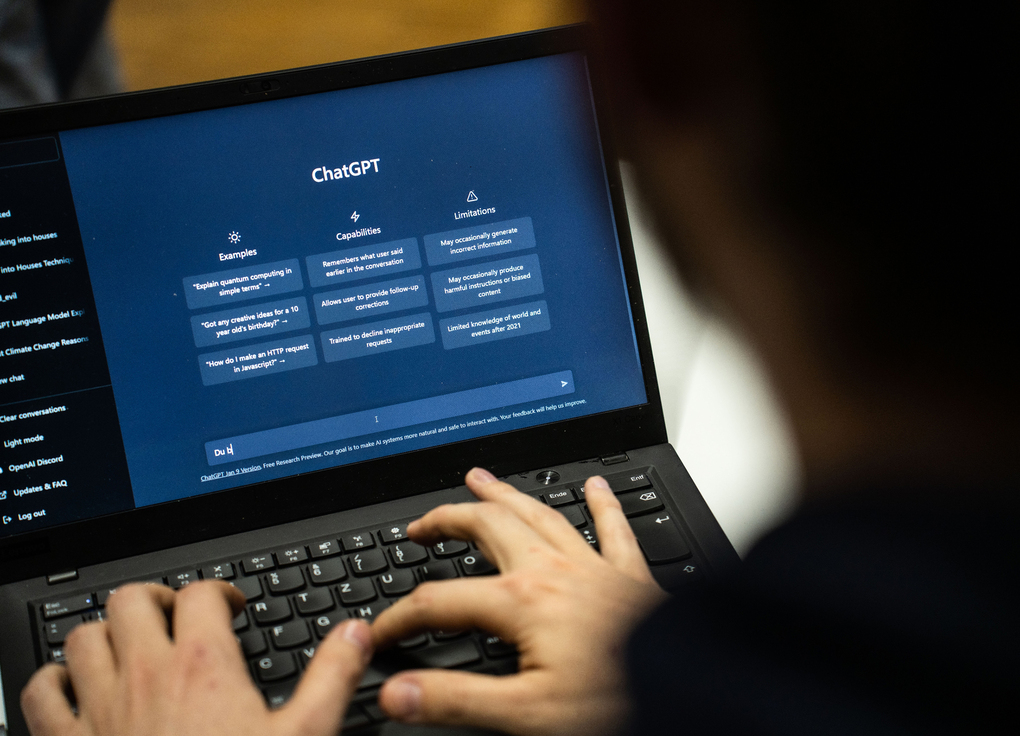
Under pressure from critics, AI developers began integrating the "Socratic Method" into the model, which is now mainly aimed at students. Accordingly, chatbots do not simply provide answers but give suggestions and ask questions to stimulate users' thinking. For example, ChatGPT has a "learning mode" and Google's Gemini has "learn with instructions".
Meanwhile, according to Microsoft, virtual assistant Copilot now integrates warnings about the risk of errors, and reminds users to check the information it provides. This is just one of many measures to help users maintain proactive and critical thinking when receiving feedback from AI.
"The risk of transferring cognitive burden is completely real, especially if using AI to automate tasks that are important for skill development," a Microsoft representative said, emphasizing that people need to be trained to use the tool properly.
Currently, experts say there is still a lack of large-scale, long-term studies to evaluate the true impact of AI on the human brain. According to Chevalere, in the meantime, people need to use AI intelligently. "We will adapt to this technological revolution just as we have adapted to previous revolutions," he said.