The wave of 'sea turtles' helps China compete in technology with the US
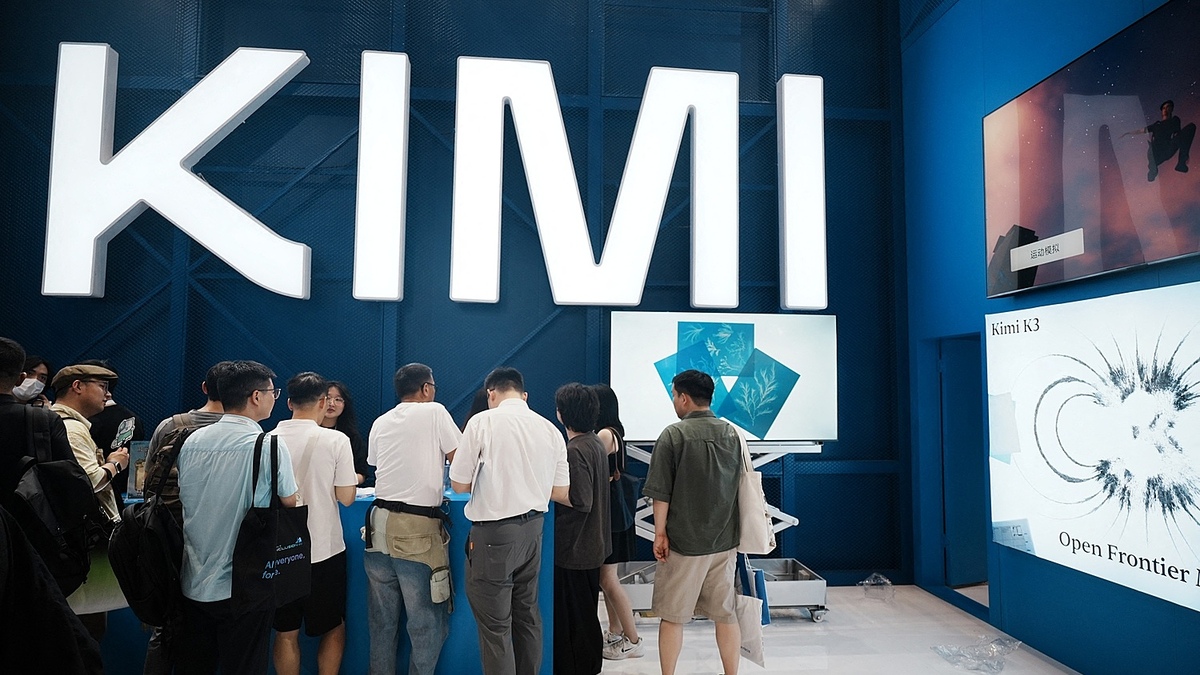
Last month, Yang Zhilin, 34, caused a stir in Silicon Valley when the Moonshot AI startup he founded announced the Kimi K3 model. This is the world's largest open weight model (public parameters used in the training process, allowing others to download and modify) with 2.8 trillion parameters.
"He is truly excellent," Ruslan Salakhutdinov, a computer science professor at Carnegie Mellon University, commented and said Yang was sought after by many large technology companies in the US after graduating but was still determined to return to his homeland to start a business.
Yang is not the only Chinese AI talent leaving the US. In 2023, at the end of his internship at Nvidia, AI student Zizheng Pan faced an important decision: stay in Silicon Valley with the world's leading chip designer, or return to his hometown to join DeepSeek, a little-known startup.
Pan chose DeepSeek. Less than two years after joining, the company is famous for its low-cost AI models but is considered capable of competing with American "giants".
"I'm very impressed," Zhiding Yu, a senior research specialist at Nvidia and Pan's mentor during his internship, wrote on Twitter last year. "Cases like Pan's are becoming more and more common. Many of the excellent talents we have come in contact with come from China, and they don't necessarily aim to succeed in an American company."

According to WSJ, for decades, "making it big" in the US has been considered the highest sign of success for Chinese talents. But many of them are repatriating, creating a wave of "reverse brain drain", strengthening China in its competition with the US in robotics and AI.
China has long called repatriates "sea turtles" - a play on the Mandarin term "haigui", while also evoking the instinct of female sea turtles to return to the beach where they were born after years of migrating across the ocean. Today, many "sea turtles" are top technology talents. Their movement has a certain impact on the fierce technological competition between the US and China.
According to a report by recruitment platform Zhaopin, the number of Chinese students graduating and returning home to find jobs in 2025 increased by 12% compared to the previous year, even doubling compared to 2018. The country of billions of people is providing returnees with many good opportunities to work in advanced industries, offering incentives such as housing subsidies and startup funding.
The change comes as many Chinese people feel less welcome in the US due to deteriorating relations between the two countries and increasingly tightened immigration policies. Some "sea turtles" shared that it was difficult for them to advance to leadership positions in the US, while others returned with the belief of achieving greater career freedom.
For example, Zhang Kai is an outstanding researcher on the internal structure of cells at the subatomic level, an area of particular interest to pharmaceutical companies. Earlier this year, he left his position as a professor at Yale University to move to the University of Science and Technology of China. He said it is increasingly difficult for Chinese researchers to lead large projects in the US, while the political environment is also harsher. He cited the case of a doctoral student working with him who was restricted from entering the US during President Donald Trump's first term.
Jeff Li, who graduated with a master's degree in computer science from New York University, commented that American businesses tend to recruit Chinese people for engineering positions, but he is more interested in product management. Li used to work at Microsoft, but in 2021 decided to return to Beijing to contribute to a leading domestic technology company. "America has many outstanding advantages, but China is my 'home ground'," he told the WSJ.

Experts say that American businesses generally still pay high salaries and offer better work-life balance than their Chinese competitors. The US is also considered a leader in AI modeling and other advanced technologies. Many Chinese professionals get married and live in the US for long periods of time, making it difficult to leave. According to the latest annual statistics from the US National Center for Science and Engineering Statistics, four-fifths of the 6,700 Chinese who received research doctorates in the US from July 2023 to June 2024 plan to stay instead of repatriating.
However, China is making efforts to create favorable conditions for "sea turtles". Shenzhen, the technology hub in the south, announced tax exemptions and grants of more than $700,000 for qualified returnees. Pudong District, Shanghai, provides project grants of up to 14.7 million USD for top young talents in the field of science and technology.
Another district in Shanghai launched a program targeting people with doctorates who have held senior positions at foreign businesses, as well as people under 40 with experience working abroad. Those who meet the criteria can receive a living allowance of nearly $300,000, while startups can be provided with cheap or free office space.
Recruitment efforts even extend to students who have not yet begun their careers. In 2022, China's Ministry of Education established a recruitment platform for students returning from abroad. Leading technology companies such as Huawei and Tencent also implemented similar programs.
China's Ministry of Education said that last year there were 535,600 repatriated students, up from 415,600 in 2023. According to a LinkedIn survey last year, conducted with more than 1,000 Chinese doctoral students abroad, 59% plan to return home after graduation, up from 38% in 2024. Data from the US Department of Homeland Security also shows that the number of Chinese people Quoc lives in the US on study and work visas, including H1B visas, which gradually decrease each year during the period 2022-2024.
After Kimi K3 made a splash, some famous people in the US technology field expressed regret that Zhilin did not stay here to work. Billionaire Vinod Khosla blames the Trump administration's harsh immigration policy, saying the US is "losing outstanding talents from other countries".
Last year, the US announced a fee of $100,000 for businesses sponsoring new H1B visa applications for foreign workers. The regulation was later challenged by a federal judge and remains in litigation.

The Financial Times said that America's dominant position in technology over the past decades is built on a simple formula: attracting the world's best minds and retaining them. However, the story of Yang Zhilin or Zizheng Pan shows that this approach is facing major challenges, not only because America is becoming less open but also because China is becoming more and more attractive.
China is also not simply a "net importer" of talent trained in the US but is building its own high-quality human resources. Stanford University's Hoover Institution looked at the 356 researchers behind DeepSeek's core model and found that 53.5% of them had never studied or worked abroad.
"China is rising to become a global power, making the choice much easier," said Lu Wuyuan, a professor specializing in cancer, HIV and other infectious diseases at the University of Maryland, who returned to China in 2020 after three decades living in the US.