Windows laptop prices are about to increase

(Dan Tri) - In the context of the supply of RAM and memory chips becoming increasingly scarce, computer prices have continuously increased for nearly a year. This condition may get worse.
According to Wccftech, Microsoft has begun increasing licensing fees for Windows operating system licenses for computer manufacturers (OEMs) from 7% to 10% since July.

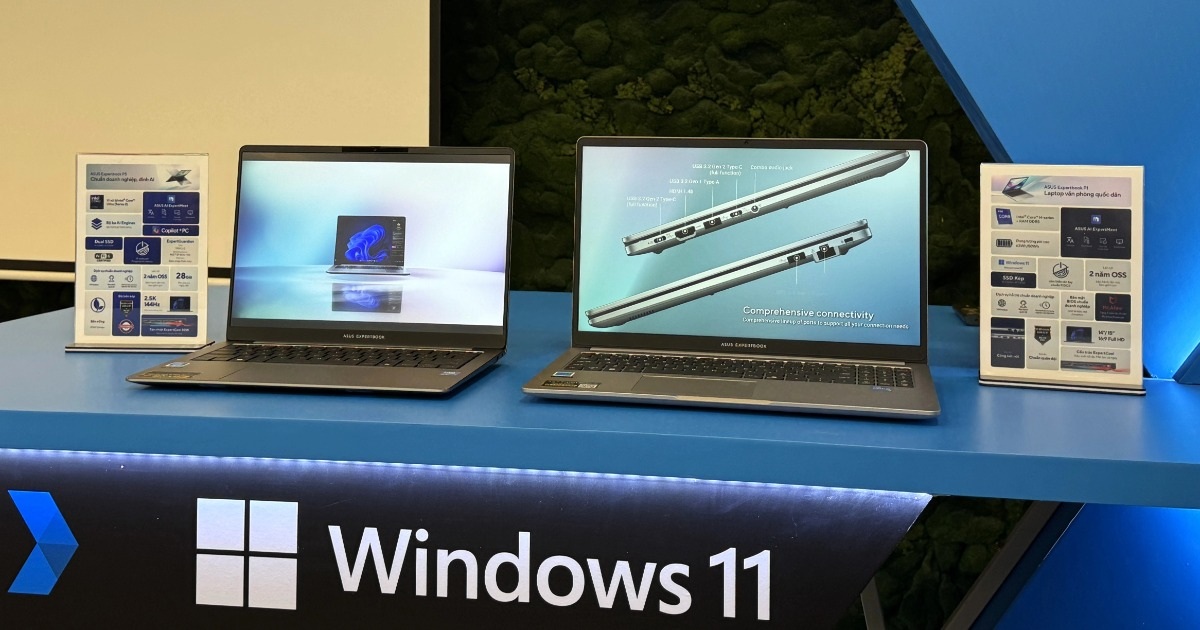
Increased Windows license costs can cause laptop prices to increase (Photo: The Anh).
In fact, Microsoft still adjusts Windows 11 license prices every year. Therefore, this is not a new or surprising move. However, this increase is up to double digits and is considered unusual. Some sources even believe that this has begun to affect the selling price of some laptop models on the market.
According to a report from market research company IDC, the number of computers shipped worldwide in the second quarter decreased by 4.9% over the same period last year, reaching 68.2 million devices. This decline ended a streak of nine consecutive quarters of growth, signaling a challenging period for computer manufacturers.
Most major brands such as Lenovo, HP and Dell are facing a decline in sales. Among them, HP suffered the deepest decrease of up to 9%, followed by Dell with 5% and Lenovo with a slight decrease of 2.1%.
The cause of the current decline in the computer market stems from the global shortage of RAM and hard drive storage. The explosion of AI data centers has consumed a large amount of chip supply, causing component prices to increase.

The scarce supply of components caused the computer market to plummet (Photo: The Verge).
To offset costs, manufacturers are forced to increase product prices. This leads to a paradox: although the number of machines sold decreases, the industry's revenue still tends to increase.
The global memory chip shortage is entering its peak phase. According to DigiTimes, the world's three largest DRAM and HBM manufacturers have sold out 100% of their output until the end of 2027. In the SSD (NAND Flash) hard drive segment, all production capacity is expected to be fully booked in August.
Currently, large corporations such as Samsung, Micron and SanDisk have announced that they are out of stock of NAND. The remaining two units, Kioxia and SK Hynix, are completing the final contracts. To maintain supply, all partners must accept deposit payments in advance, regardless of whether they have signed a long-term contract or not.