LG OLED evo AI W6 - 'wall mounted' TV priced at 220 million VND
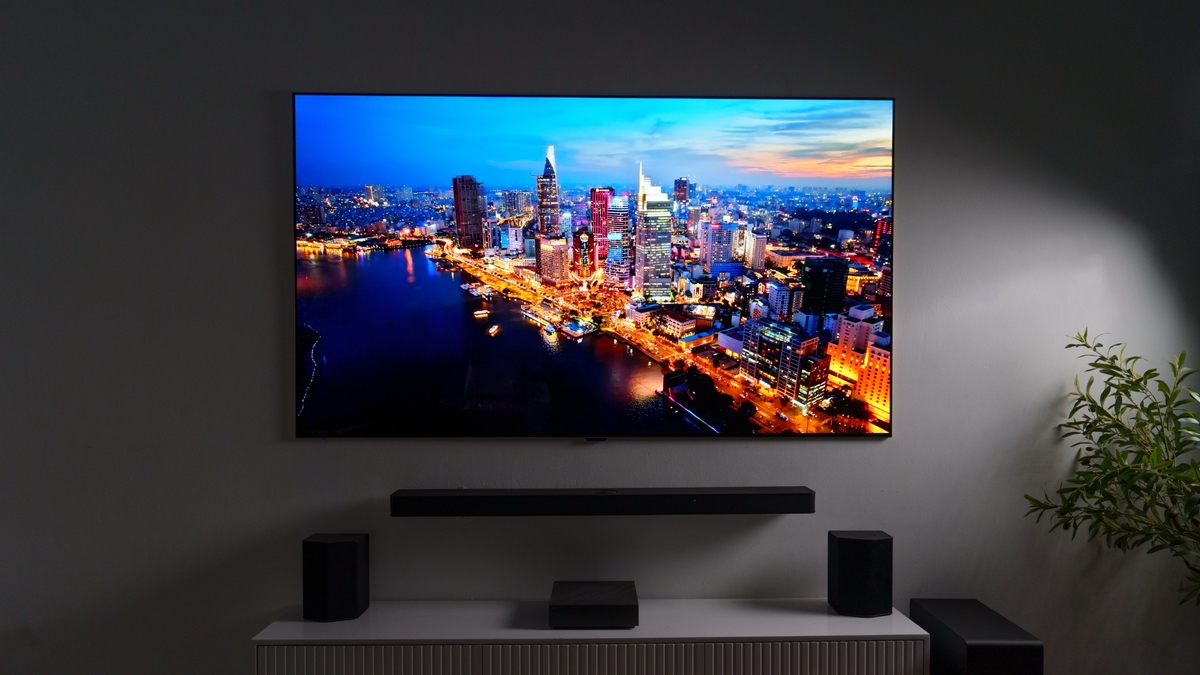
LG OLED evo AI W6 - 'wall mounted' TV priced at 220 million VND
W6 marks LG's revival of the ultra-thin "paper-like" Wallpaper TV line that the company first launched in 2017. Last year, the company introduced W5 at CES 2025, won the highest design award of this exhibition but did not sell it after that.
OLED evo AI W6 possesses LG's best current technologies such as high-end OLED evo panels, using the new generation wireless connection box Zero Connect Box and ultra-thin size with wall mount. This can be considered the successor to the M5 series (this year the company does not have the M6 series) with a similar wireless mechanism but with more emphasis on thinness.
W6 marks LG's revival of the ultra-thin "paper-like" Wallpaper TV line that the company first launched in 2017. Last year, the company introduced W5 at CES 2025, won the highest design award of this exhibition but did not sell it after that.
OLED evo AI W6 possesses LG's best current technologies such as high-end OLED evo panels, using the new generation wireless connection box Zero Connect Box and ultra-thin size with wall mount. This can be considered the successor to the M5 series (this year the company does not have the M6 series) with a similar wireless mechanism but with more emphasis on thinness.
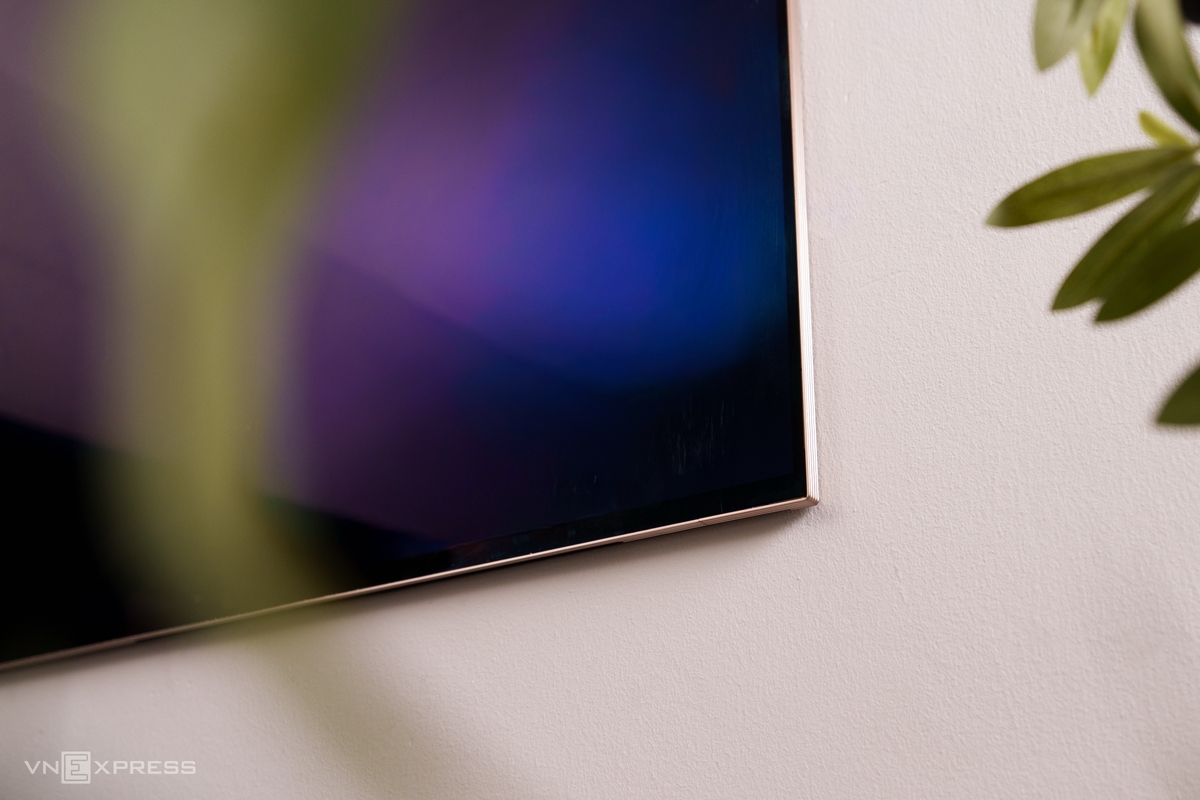
The OLED evo AI W6 is not as thin as LG's first generation of Wallpaper TVs (2.6 mm for the 77-inch version) due to its focus on large-volume commercial production, but the figure of 9.9 mm is still impressive enough when placed next to the high-end Gallery G6 (25 mm). This level is also slightly lower than Samsung's highest-end OLED line, S95D (about more than 1 cm).
To make the most of its thinness, the W6 uses a separate mount, included in the box. The TV uses two hinges on both sides connected to a recessed body, helping the TV almost completely close to the wall after installation. The mounting process is significantly more complicated than a traditional VESA TV mount.
Instead of a smooth surface like most other TV lines, the W6 has a striped pattern with black and yellow mixed in, like B&O's branded speakers. Due to the wireless connection mechanism with the Zero Connect Box, users only need to arrange the power outlet on the back and the TV is almost completely "wireless", without exposing HDMI or audio wires to external accessories such as game consoles, audio decoders, speakers.
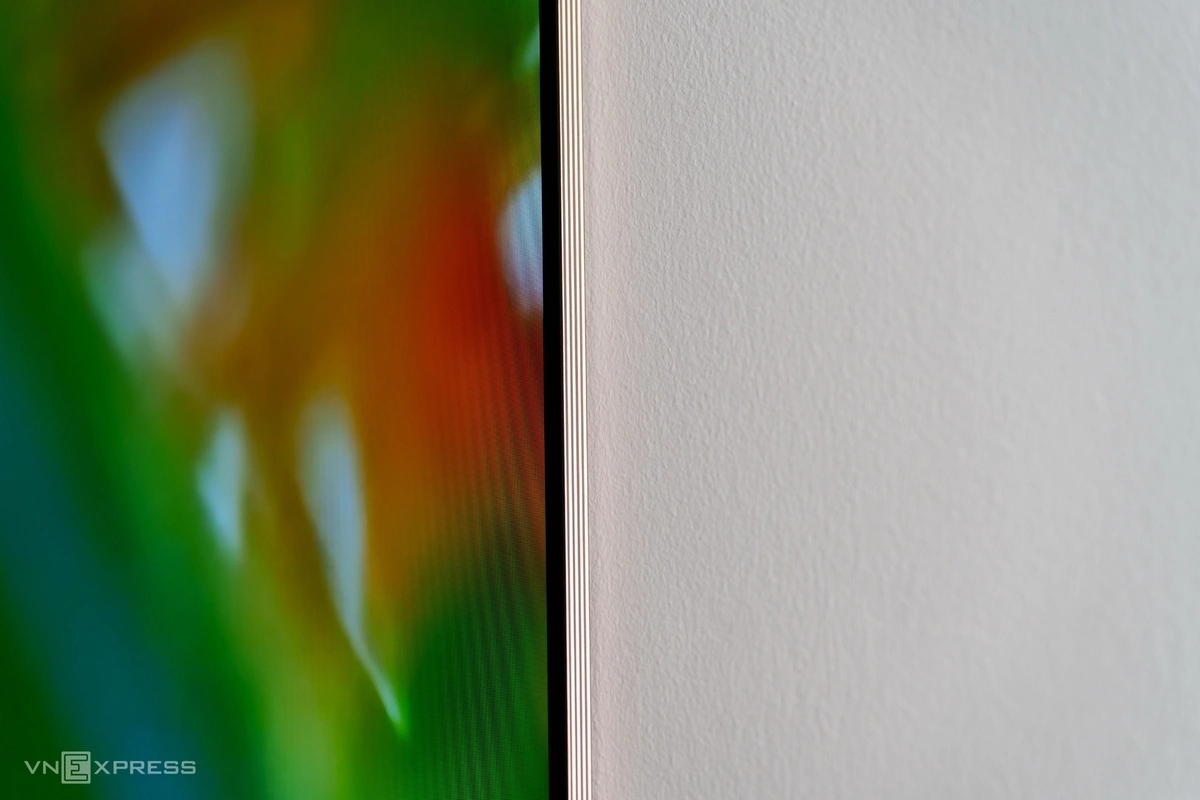
The OLED evo AI W6 is not as thin as LG's first generation of Wallpaper TVs (2.6 mm for the 77-inch version) due to its focus on large-volume commercial production, but the figure of 9.9 mm is still impressive enough when placed next to the high-end Gallery G6 (25 mm). This level is also slightly lower than Samsung's highest-end OLED line, S95D (about more than 1 cm).
To make the most of its thinness, the W6 uses a separate mount, included in the box. The TV uses two hinges on both sides connected to a recessed body, helping the TV almost completely close to the wall after installation. The mounting process is significantly more complicated than a traditional VESA TV mount.
Instead of a smooth surface like most other TV lines, the W6 has a striped pattern with black and yellow mixed in, like B&O's branded speakers. Due to the wireless connection mechanism with the Zero Connect Box, users only need to arrange the power outlet on the back and the TV is almost completely "wireless", without exposing HDMI or audio wires to external accessories such as game consoles, audio decoders, speakers.
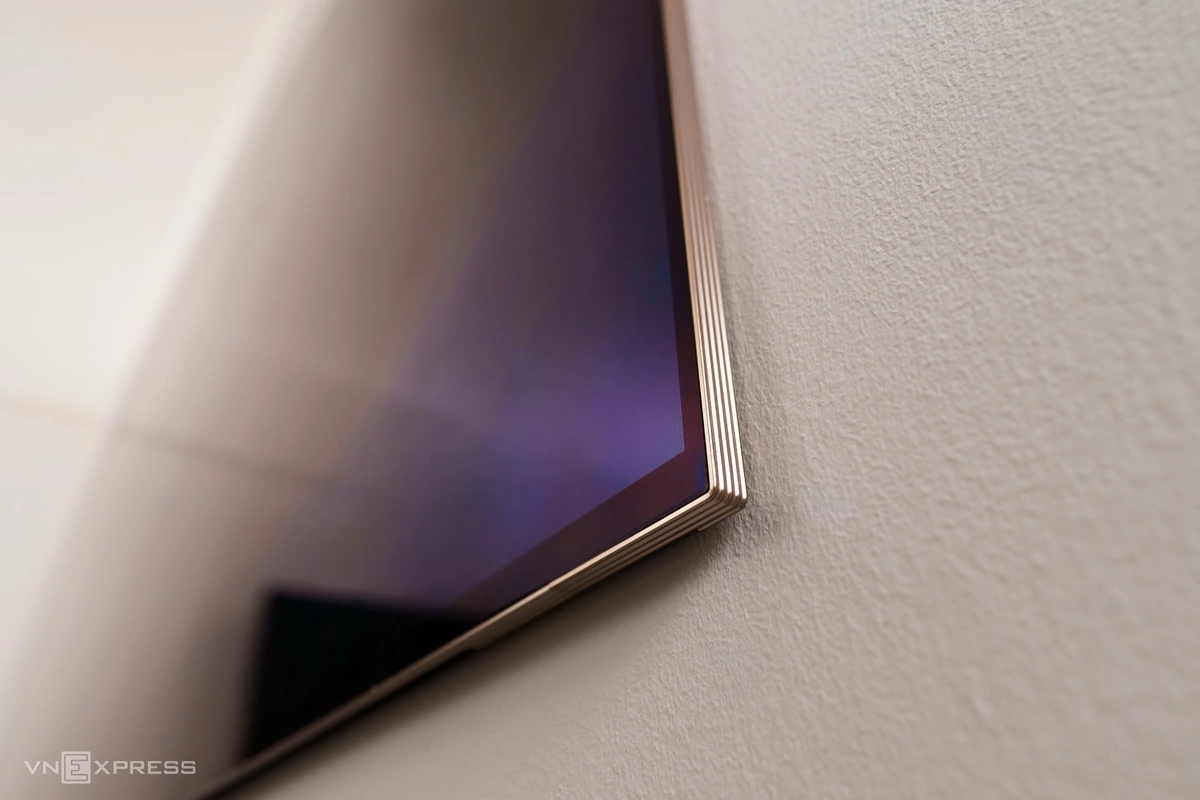
The OLED evo AI W6 is not as thin as LG's first generation of Wallpaper TVs (2.6 mm for the 77-inch version) due to its focus on large-volume commercial production, but the figure of 9.9 mm is still impressive enough when placed next to the high-end Gallery G6 (25 mm). This level is also slightly lower than Samsung's highest-end OLED line, S95D (about more than 1 cm).
To make the most of its thinness, the W6 uses a separate mount, included in the box. The TV uses two hinges on both sides connected to a recessed body, helping the TV almost completely close to the wall after installation. The mounting process is significantly more complicated than a traditional VESA TV mount.
Instead of a smooth surface like most other TV lines, the W6 has a striped pattern with black and yellow mixed in, like B&O's branded speakers. Due to the wireless connection mechanism with the Zero Connect Box, users only need to arrange the power outlet on the back and the TV is almost completely "wireless", without exposing HDMI or audio wires to external accessories such as game consoles, audio decoders, speakers.
The OLED evo AI W6 is not as thin as LG's first generation of Wallpaper TVs (2.6 mm for the 77-inch version) due to its focus on large-volume commercial production, but the figure of 9.9 mm is still impressive enough when placed next to the high-end Gallery G6 (25 mm). This level is also slightly lower than Samsung's highest-end OLED line, S95D (about more than 1 cm).
To make the most of its thinness, the W6 uses a separate mount, included in the box. The TV uses two hinges on both sides connected to a recessed body, helping the TV almost completely close to the wall after installation. The mounting process is significantly more complicated than a traditional VESA TV mount.
Instead of a smooth surface like most other TV lines, the W6 has a striped pattern with black and yellow mixed in, like B&O's branded speakers. Due to the wireless connection mechanism with the Zero Connect Box, users only need to arrange the power outlet on the back and the TV is almost completely "wireless", without exposing HDMI or audio wires to external accessories such as game consoles, audio decoders, speakers.
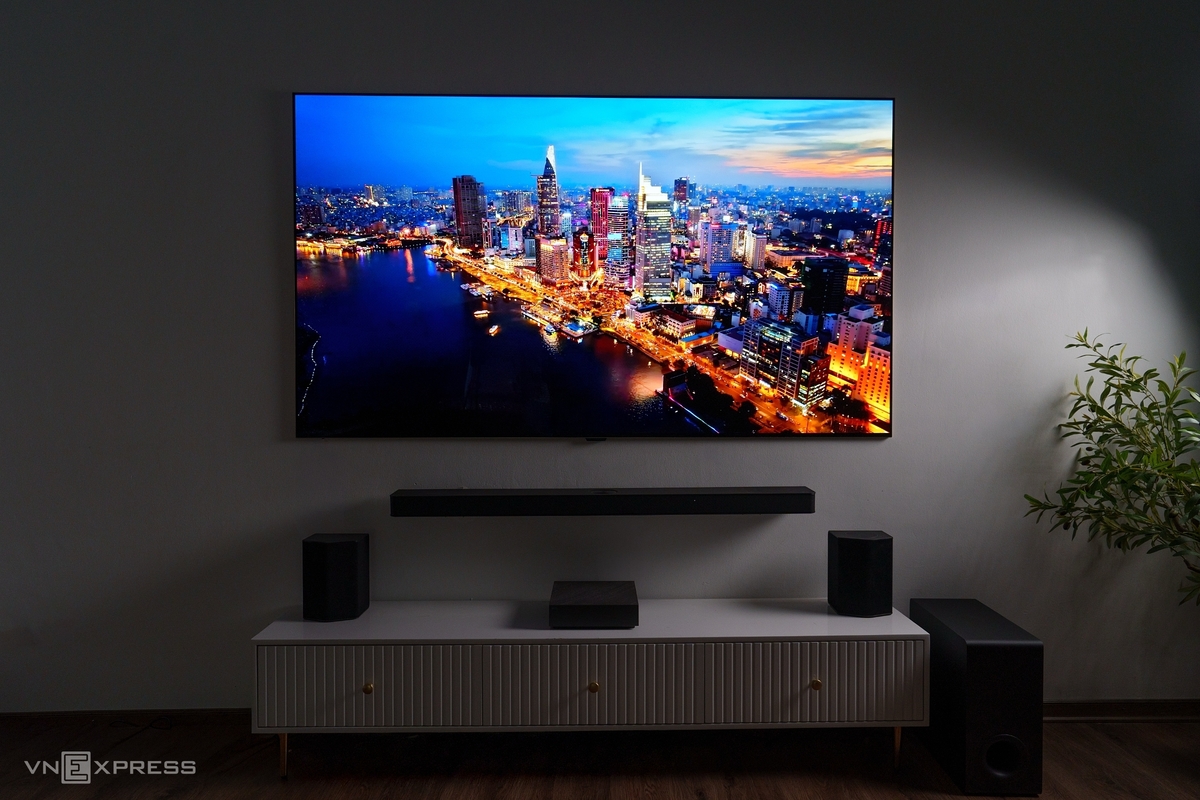
When installed, LG TVs synchronize with the company's devices with the Zero Connect Box speaker system and external receiver box. Different in design and connection technology, W6 shares the same panel characteristics as G6. Accordingly, this model will use the second generation 4-layer RGB Tandem OLED panel, 20% brighter than the Primary RGB Tandem OLED panel on the G5 and M5, according to LG.
Superior in contrast and color compared to LCD TVs, but OLED often has disadvantages in brightness. However, when LG started applying the technique of overlapping multiple OLED panels together, this weakness has improved dramatically in the past two years.
When installed, LG TVs synchronize with the company's devices with the Zero Connect Box speaker system and external receiver box. Different in design and connection technology, W6 shares the same panel characteristics as G6. Accordingly, this model will use the second generation 4-layer RGB Tandem OLED panel, 20% brighter than the Primary RGB Tandem OLED panel on the G5 and M5, according to LG.
Superior in contrast and color compared to LCD TVs, but OLED often has disadvantages in brightness. However, when LG started applying the technique of overlapping multiple OLED panels together, this weakness has improved dramatically in the past two years.
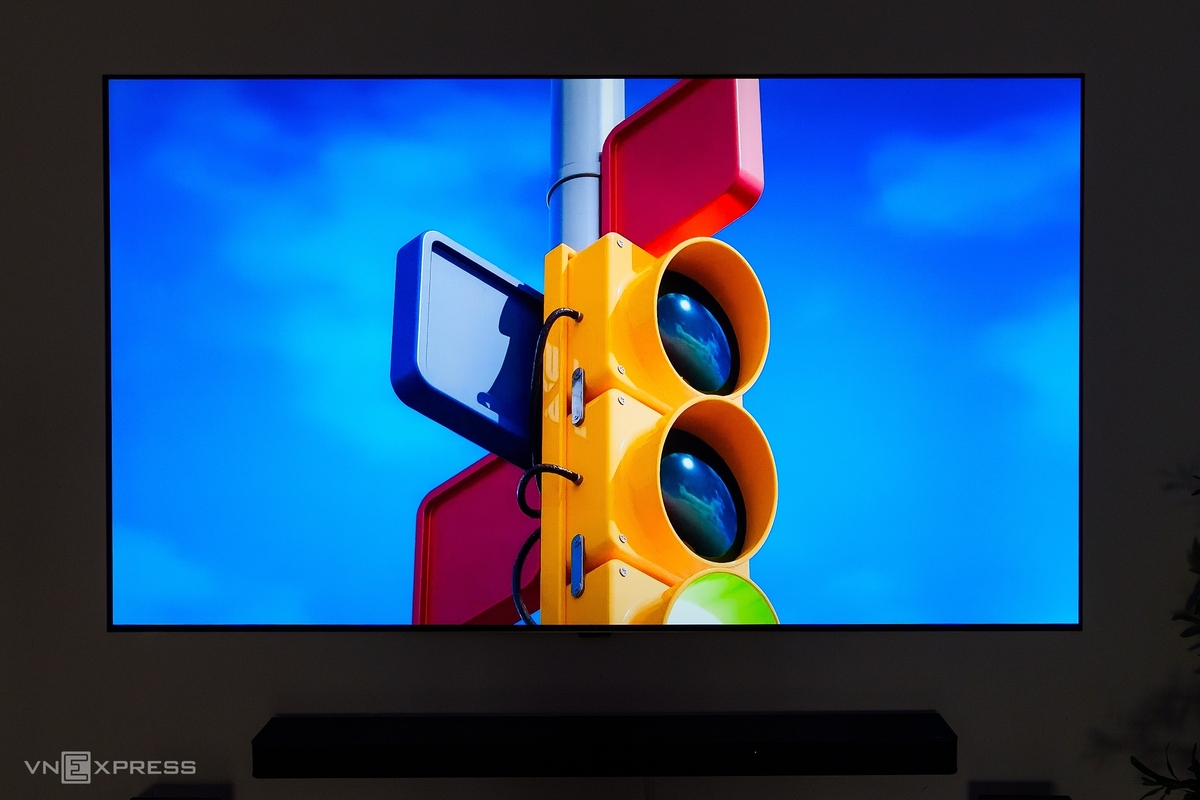
Independent testing from specialized sites such as Rtings and FlatpanelsHD shows that the new generation Tandem OLED 4 RGB panel is significantly brighter than its predecessor. The difference in peak brightness between the 2026 and 2025 TV models when displaying HDR and playing games ranges from 15-30%. Notably, increasing the brightness does not affect the color as the W6 is also considered to have much higher sharpness, overall detail and color than the G5.
In addition, LG has also recently "popularized" anti-reflection filters on high-end lines, from G to W series. At first glance, the TV surface is still quite glossy instead of rough like competitors' anti-glare TVs, but in actual testing, the anti-reflection works well.
Independent testing from specialized sites such as Rtings and FlatpanelsHD shows that the new generation Tandem OLED 4 RGB panel is significantly brighter than its predecessor. The difference in peak brightness between the 2026 and 2025 TV models when displaying HDR and playing games ranges from 15-30%. Notably, increasing the brightness does not affect the color as the W6 is also considered to have much higher sharpness, overall detail and color than the G5.
In addition, LG has also recently "popularized" anti-reflection filters on high-end lines, from G to W series. At first glance, the TV surface is still quite glossy instead of rough like competitors' anti-glare TVs, but in actual testing, the anti-reflection works well.
The W6 design is so thin that integrating a good enough speaker system is a big challenge for LG. The company uses a tube-shaped speaker structure that runs along the back of the TV, directing sound to the exit slots at the bottom of the screen. The Korean company says this method helps solve the problem of not having space to install a subwoofer on the back like conventional TVs.
With the 83-inch model, LG can still integrate a 4.2-channel system with a capacity of 60 W, much larger than the usual 15-20W level. The sound quality is quite strong in the mid and low frequency ranges, giving clear sound but the bass is a bit thin. The product adds AI Sound technology, which can convert regular stereo audio signals into virtual surround sound with configurations of up to 11.1.2 channels.
The W6 design is so thin that integrating a good enough speaker system is a big challenge for LG. The company uses a tube-shaped speaker structure that runs along the back of the TV, directing sound to the exit slots at the bottom of the screen. The Korean company says this method helps solve the problem of not having space to install a subwoofer on the back like conventional TVs.
With the 83-inch model, LG can still integrate a 4.2-channel system with a capacity of 60 W, much larger than the usual 15-20W level. The sound quality is quite strong in the mid and low frequency ranges, giving clear sound but the bass is a bit thin. The product adds AI Sound technology, which can convert regular stereo audio signals into virtual surround sound with configurations of up to 11.1.2 channels.
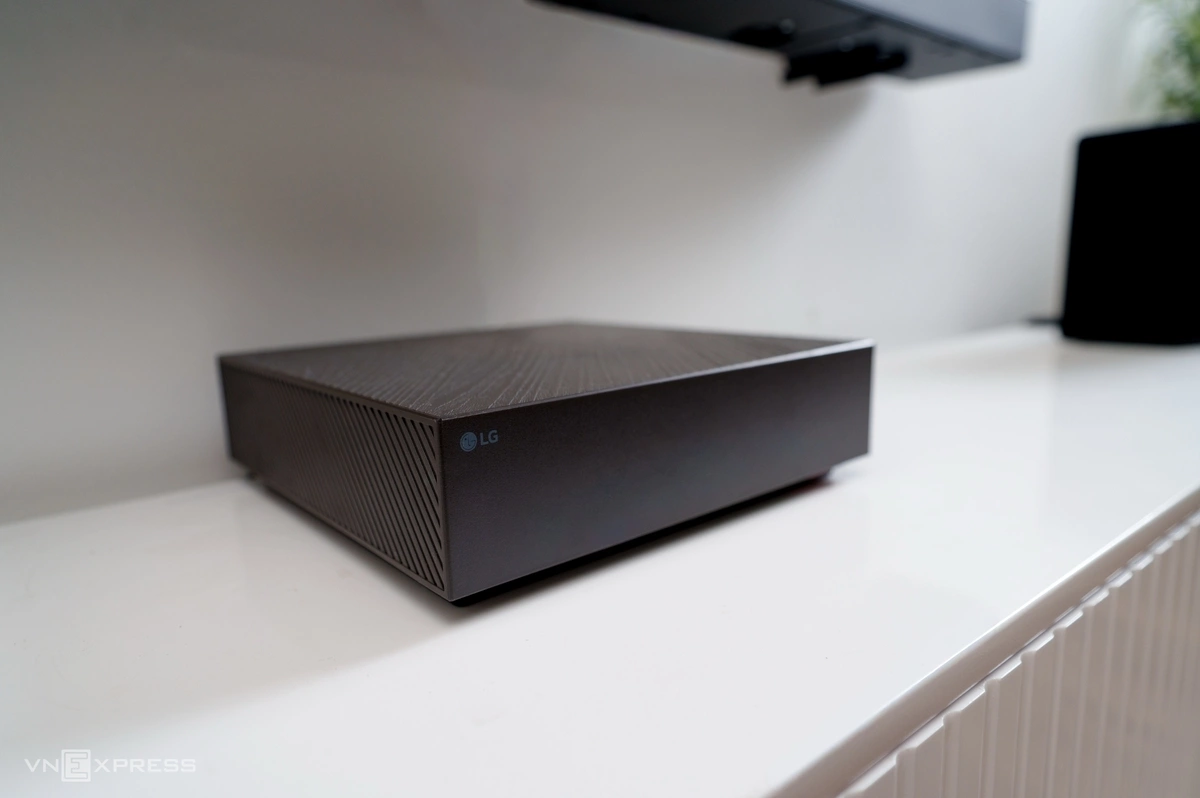
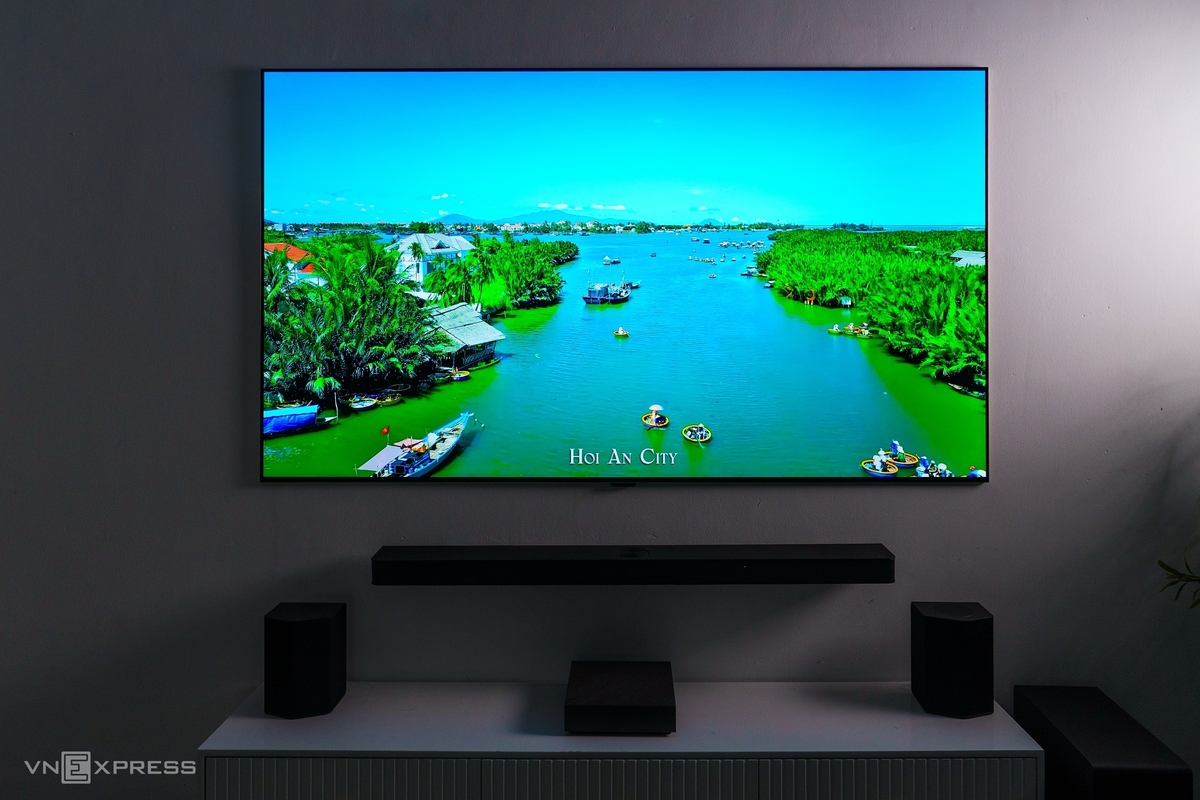
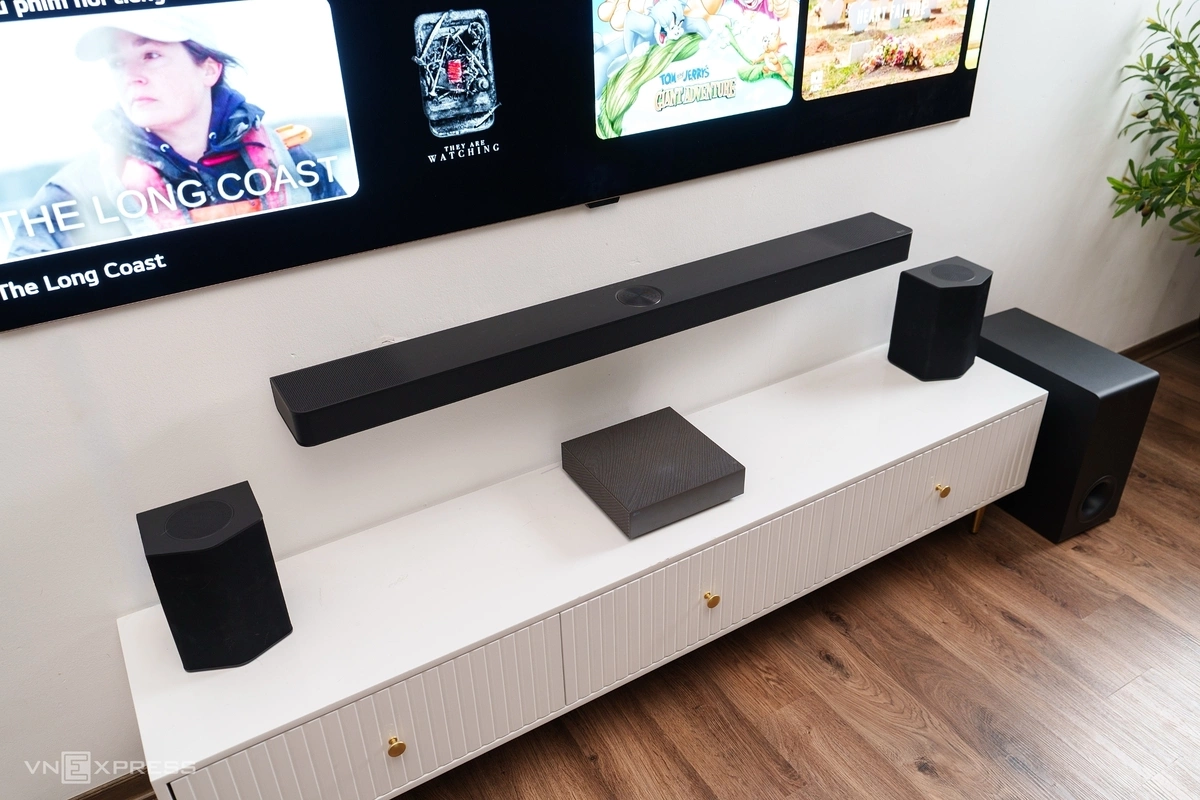
To achieve impressive thinness, W6 uses the same mechanism as the previous M series when separating the connection ports into separate control boxes. This is an upgraded version of Zero Connect Box that connects to the TV body using a 60 GHz wireless band. If placed directly under the TV (as shown in the picture) or about 5 meters away without obstructions, the viewing experience is no different from a regular TV. The signal may stall or jerk slightly if there is an obstacle in the middle or if the position of the box is changed. In theory, users can place the Zero Connect Box 10 meters away.
The second generation of the connection box is significantly more compact in size than the previous M series and no longer has the antenna adjustment ring on top. The number of rear connection ports is also greater with four HDMI 2.1 ports, one that supports eARC/ARC next to the LAN port, two USB ports, and antenna connection for digital television.
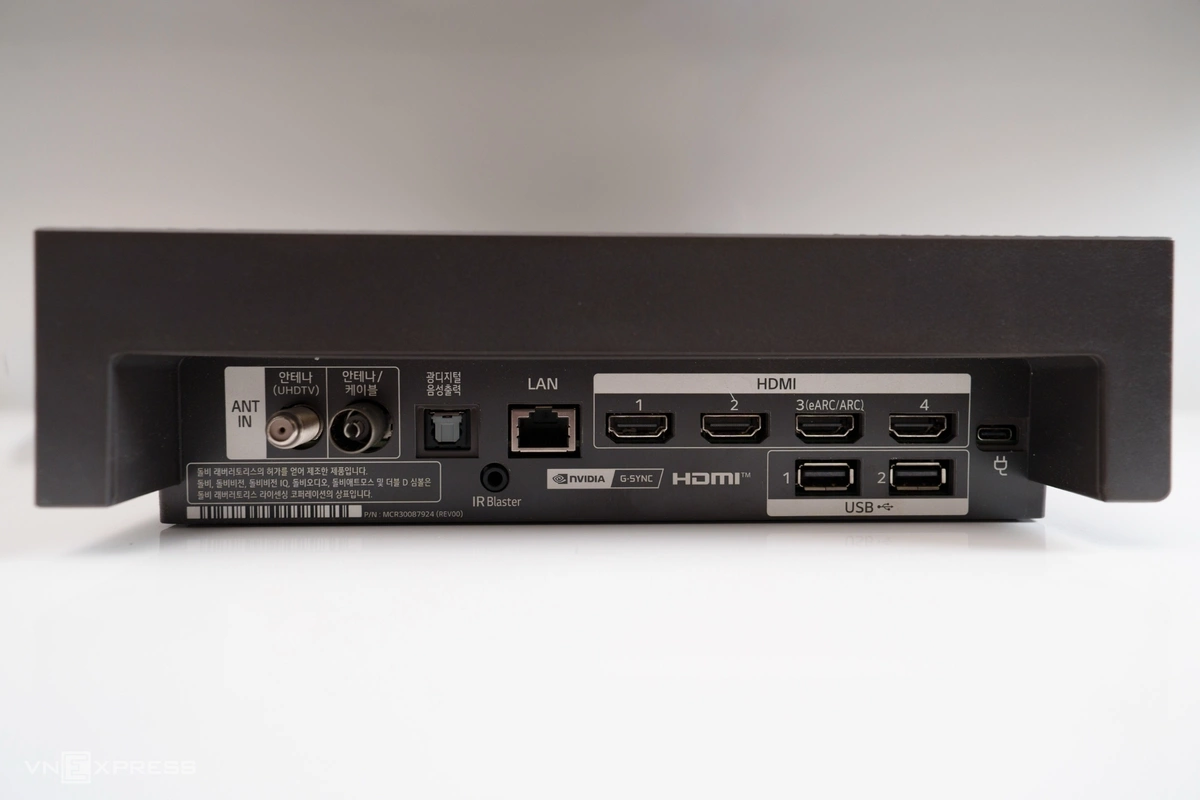
To achieve impressive thinness, W6 uses the same mechanism as the previous M series when separating the connection ports into separate control boxes. This is an upgraded version of Zero Connect Box that connects to the TV body using a 60 GHz wireless band. If placed directly under the TV (as shown in the picture) or about 5 meters away without obstructions, the viewing experience is no different from a regular TV. The signal may stall or jerk slightly if there is an obstacle in the middle or if the position of the box is changed. In theory, users can place the Zero Connect Box 10 meters away.
The second generation of the connection box is significantly more compact in size than the previous M series and no longer has the antenna adjustment ring on top. The number of rear connection ports is also greater with four HDMI 2.1 ports, one that supports eARC/ARC next to the LAN port, two USB ports, and antenna connection for digital television.
To achieve impressive thinness, W6 uses the same mechanism as the previous M series when separating the connection ports into separate control boxes. This is an upgraded version of Zero Connect Box that connects to the TV body using a 60 GHz wireless band. If placed directly under the TV (as shown in the picture) or about 5 meters away without obstructions, the viewing experience is no different from a regular TV. The signal may stall or jerk slightly if there is an obstacle in the middle or if the position of the box is changed. In theory, users can place the Zero Connect Box 10 meters away.
The second generation of the connection box is significantly more compact in size than the previous M series and no longer has the antenna adjustment ring on top. The number of rear connection ports is also greater with four HDMI 2.1 ports, one that supports eARC/ARC next to the LAN port, two USB ports, and antenna connection for digital television.
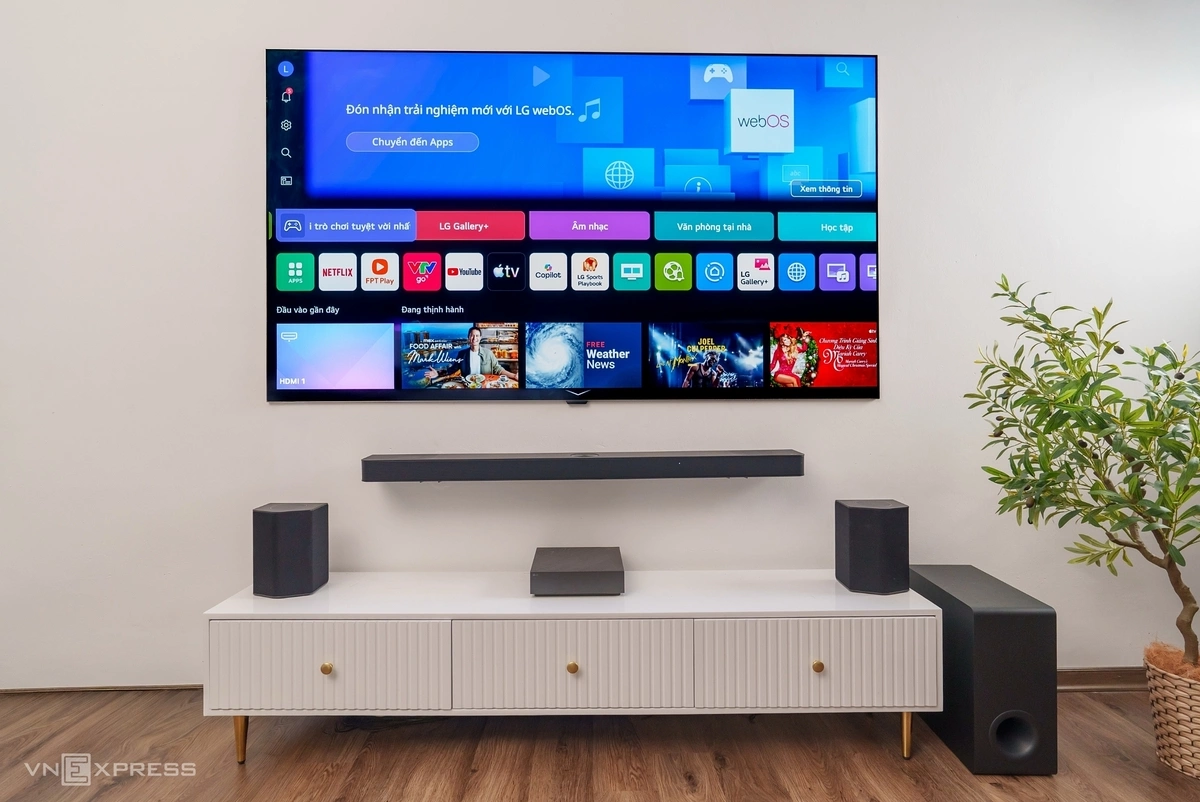
In addition to improving the panel, the W6's image quality is better thanks to the new Alpha 11 AI Processor 4K Gen 3 processor. The manufacturer says the new chip has 50% faster processing speed, 70% better graphics performance, and AI tasks 5.6 times faster than the previous generation. Even though it is a wireless TV line, this model still supports a maximum scan frequency of 165 Hz, low latency of 10-12 ms optimal for gaming.
Meanwhile, the webOS 2026 operating system does not have many notable upgrades, mainly features that automatically adjust sound and images using AI. Gallery+ for picture frame mode has more than 5,000 copyrighted works of art and is updated regularly. LG is currently committed to continuously updating webOS for 5 years for high-end models.
In addition to improving the panel, the W6's image quality is better thanks to the new Alpha 11 AI Processor 4K Gen 3 processor. The manufacturer says the new chip has 50% faster processing speed, 70% better graphics performance, and AI tasks 5.6 times faster than the previous generation. Even though it is a wireless TV line, this model still supports a maximum scan frequency of 165 Hz, low latency of 10-12 ms optimal for gaming.
Meanwhile, the webOS 2026 operating system does not have many notable upgrades, mainly features that automatically adjust sound and images using AI. Gallery+ for picture frame mode has more than 5,000 copyrighted works of art and is updated regularly. LG is currently committed to continuously updating webOS for 5 years for high-end models.
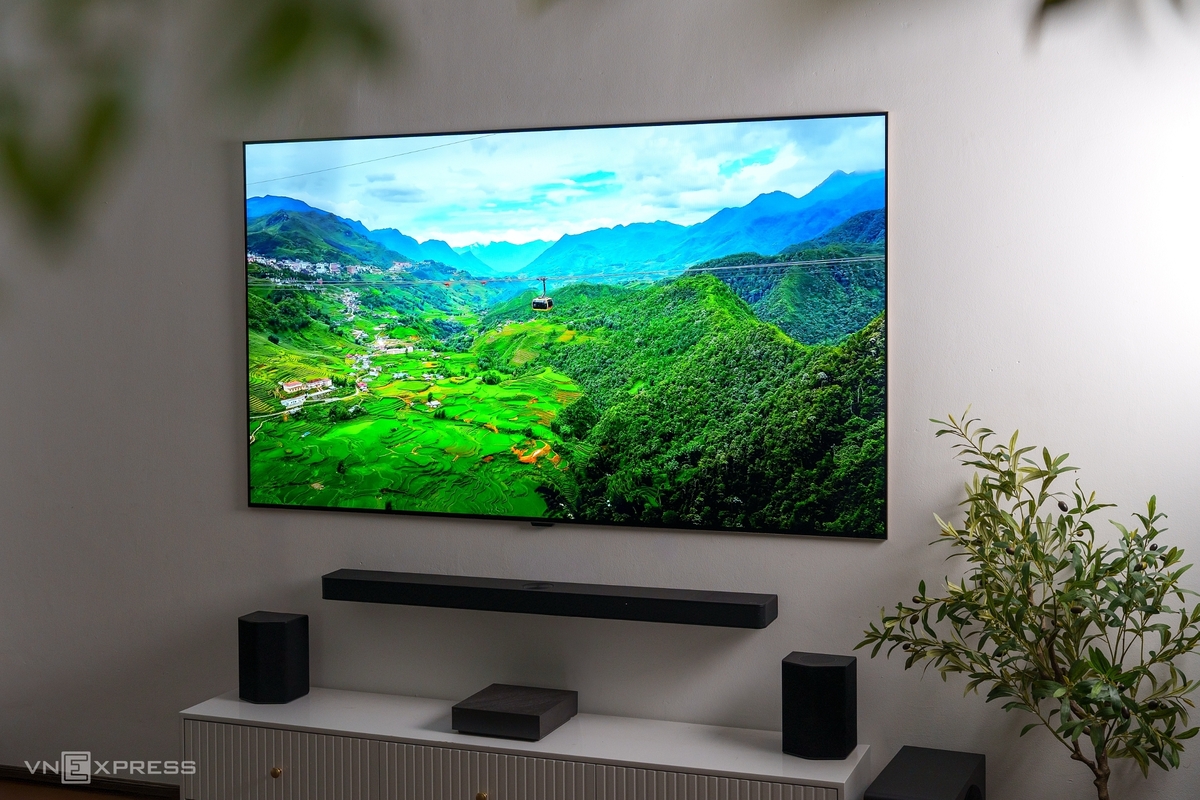
LG OLED evo AI W6 is priced at 220 million VND for the 83-inch version, not much higher than the similarly sized G6 series (about 190 million VND). If only image quality is a priority, LG's C and G series are good and high-end enough for OLED technology lovers. Meanwhile, W6 will target luxury interior spaces, requiring a different layout with unique wireless technology.
LG OLED evo AI W6 is priced at 220 million VND for the 83-inch version, not much higher than the similarly sized G6 series (about 190 million VND). If only image quality is a priority, LG's C and G series are good and high-end enough for OLED technology lovers. Meanwhile, W6 will target luxury interior spaces, requiring a different layout with unique wireless technology.