Plants have evolved to use lightning to destroy enemies
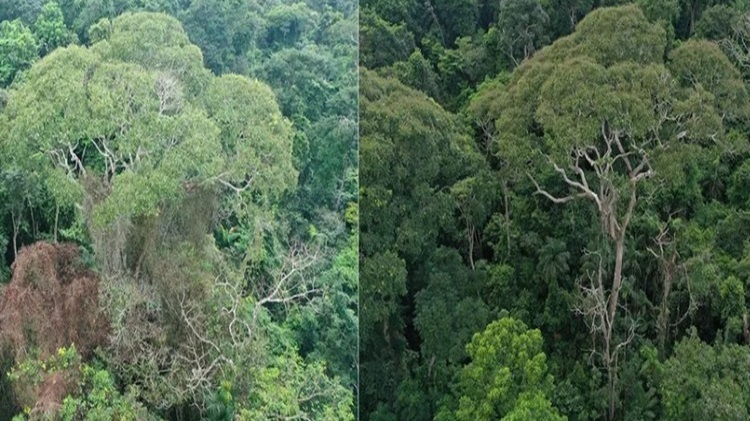
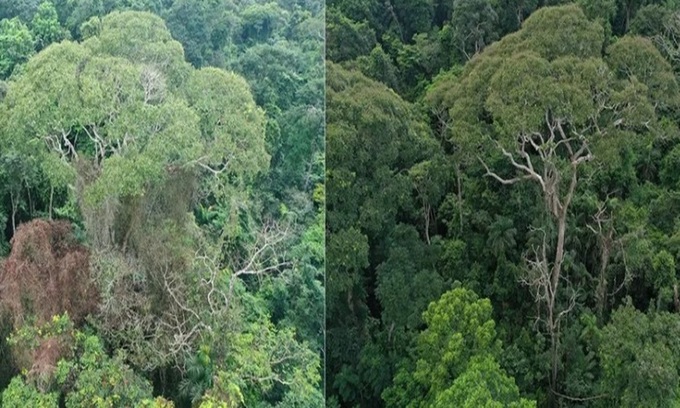
In the lowland rain forests of Panama, a type of flowering tropical plant may have evolved to use lightning to its advantage. Tonka bean plants (Dipteryx oleifera) may benefit from being struck by lightning, according to research published in the journal New Phytologist. Scientists found that these trees not only survive lightning strikes, but lightning also injures competitors and parasitic vines attached to their trunks.
"We started this research 10 years ago. Obviously, lightning kills many trees, especially large trees. But Dipteryx oleifera trees are always undamaged," Live Science on April 7 quoted research team leader Evan Gora, a forest ecologist at the Cary Institute of Ecosystem Research.
In tropical rainforests, lightning is the main cause of tree death, especially for the largest and oldest trees, playing a key role in carbon storage and supporting ecological diversity. Understanding how lightning shapes forest structure and species composition can reveal how resilient these ecosystems are in the face of climate change.
Using a custom-made system that includes electric field sensors and cameras to monitor lightning, Gora and his colleagues studied nearly 100 lightning strikes at the Barro Colorado Natural Monument in Panama. To track the exact location where lightning strikes, the team developed a high-resolution detection system. A set of antennas spread across central Panama detect radio waves from lightning strikes. Through analyzing the energy model of each sensor in the recording system, researchers can triangulate lightning measurements with high accuracy.
When combined with ground surveys and drone photos, the research team can identify forest areas hit by lightning and monitor the condition of trees over time. They found that D. oleifera was unique in that the plant suffered little or no damage after being struck by lightning. To understand the long-term impact of lightning strikes on tonka bean plants and their neighbors, researchers analyzed decades of tree records.
On average, each lightning strike kills more than 2 tons of neighboring plant biomass and nearly 80% of the liana plants (parasitic vines) attached to the tonka bean canopy. Gora speculates that the key behind tonka bean plants' ability to withstand lightning comes from their structure. Past research has shown that this is a tree species with high electrical conductivity in its trunk, allowing electricity to flow through it without accumulating heat causing damage, like a well-insulated electrical wire.
Due to its tendency to grow large, up to 40 m tall and last for decades, it is estimated that a tonka bean tree is struck by lightning at least 5 times before reaching maturity. Each lightning strike helps clear parasitic vines and its competitors, opening up a forest space to help the tree grow. The team estimates that being struck by lightning could lead to a 14-fold increase in seed production over the life of the tonka bean plant, providing a huge reproductive advantage.
Gora and his colleagues will expand their research to other forests in Africa and Southeast Asia to find out whether lightning benefits other tree species.
An Khang (According to Live Science)