Tokenization of real assets is becoming trendy
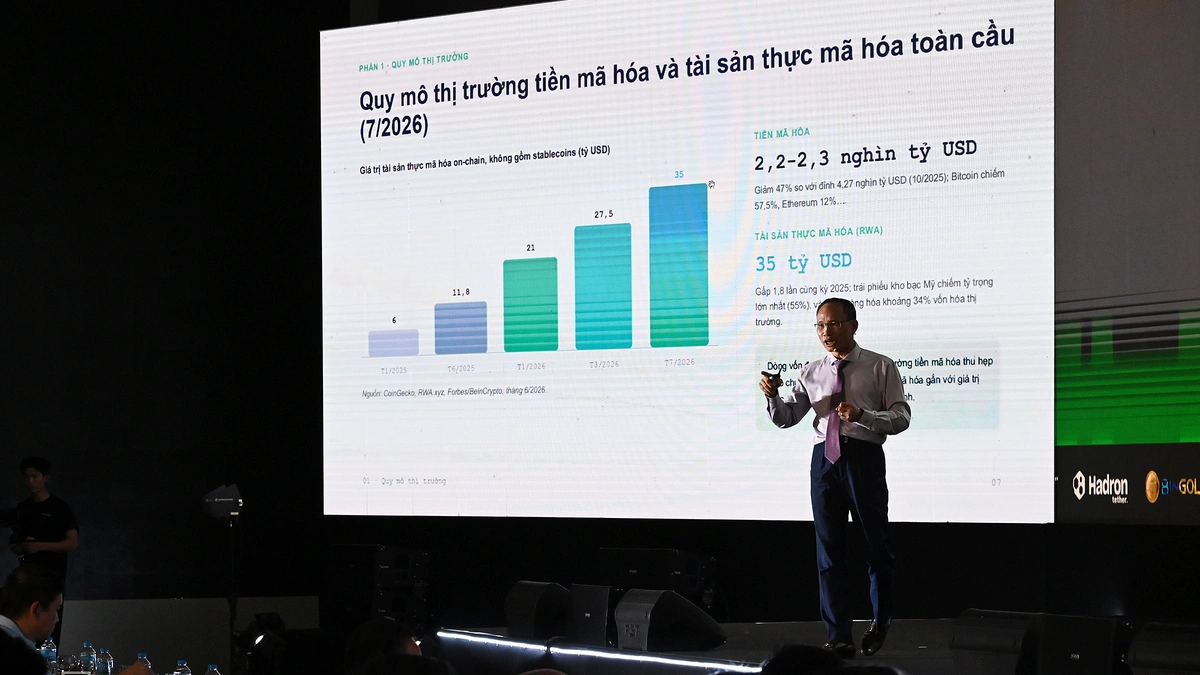
Assets such as real estate, stocks, bonds or commodities are digitized in the form of tokens on the blockchain to be traded and managed using digital technology, forming the encryption of real assets (Real World Assets - RWA). This trend was mentioned by many speakers at the Vietnam Real Asset Tokenization Conference 2026, July 18 in Hanoi.
The Vietnam Blockchain and Digital Asset Association cited a report saying that the RWA market size has increased from 6 billion USD in January 2025 to more than 34 billion USD within 16 months. Mr. Phan Duc Trung, Chairman of the Association, said that capital flows into RWA in 2025 will increase by 300%, significantly higher than other asset groups.
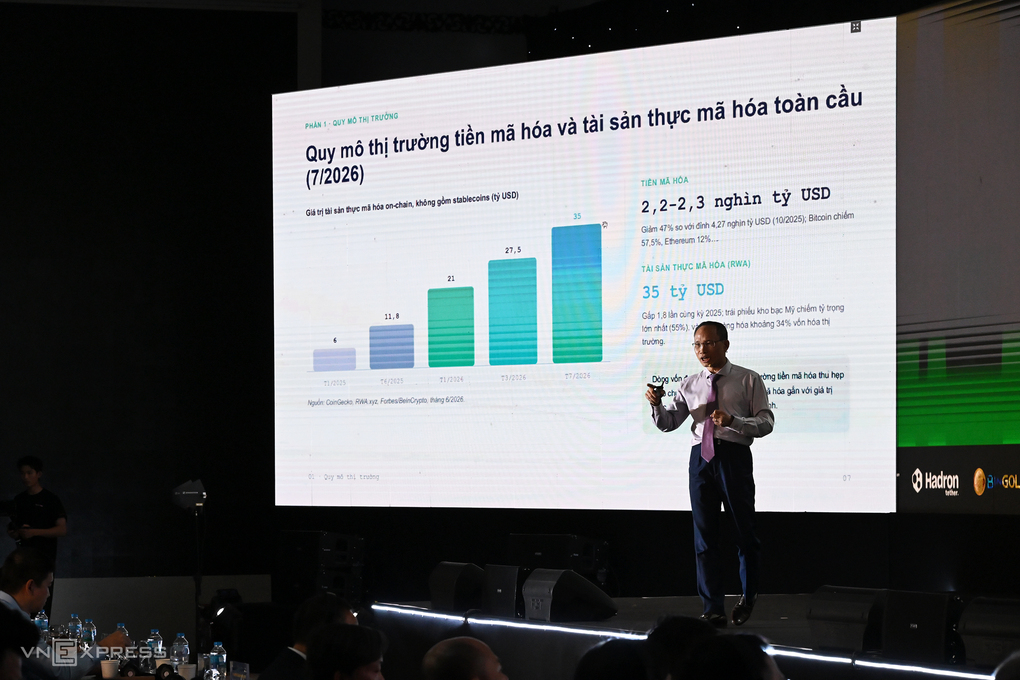
According to Dr. Can Van Luc, chief economist of BIDV bank, member of the National Financial and Monetary Policy Advisory Council, the size of the encrypted real asset market will "continue to increase".
He said that real assets and digital assets are two different forms of existence. One side is the real form, in physical form, and the other side is the digital form. In the long term, the two types will exist in parallel, causing the scale of digital assets to expand more and more. "This market still has a lot of room for development if large-scale assets such as stocks or real estate are allowed to be encrypted," he said.
Regarding the benefits of asset tokenization, he said that the first is increased liquidity when transactions can take place almost instantaneously, instead of waiting for T+1 and T+2 cycles like many traditional markets. Technology also helps reduce costs, transaction times and allows assets to be divided into small pieces so that many people can participate in ownership. He gave the example of a real estate worth 10 billion VND that can be divided into many parts, thereby expanding the ability to mobilize capital.
With digital assets, transactions are recorded on the blockchain, increasing transparency and traceability. Tokenization also contributes to improving asset management capabilities, creating new financial products and promoting financial inclusion.
However, according to Dr. Can Van Luc, this process also comes with risks such as legal issues regarding property ownership, network security, large price fluctuations, tokens without collateral...
From a management perspective, Mr. Bui Hoang Hai, Vice Chairman of the State Securities Commission, commented that RWA is emerging as a trend with great influence on global finance, helping to unlock "dormant" resources in the economy.
According to him, for Vietnam, when the need for capital for infrastructure, production, innovation and digital transformation is increasing, this will be a potential development direction that needs to be seriously researched and implemented carefully with a long-term vision.
However, he emphasized that the crypto asset market in general and RWA in particular can only develop sustainably when built on a clear legal foundation, transparent cash flow, safe infrastructure and protected investors.
From international experience, Dr. Can Van Luc proposed that Vietnam classify encrypted assets according to risk level instead of digital form; build a separate legal framework for stablecoins; Deploy testing mechanisms (sandbox) in the field; Do not let legal gaps exist and strengthen coordination between management agencies.
He said that Vietnam needs to find a balance between controlling risks and encouraging innovation, while protecting investors but not creating a psychology of dependence, bringing crypto asset transactions to the country but still ensuring competitiveness for the digital economy.
Trong Dat