The world's smallest pacemaker
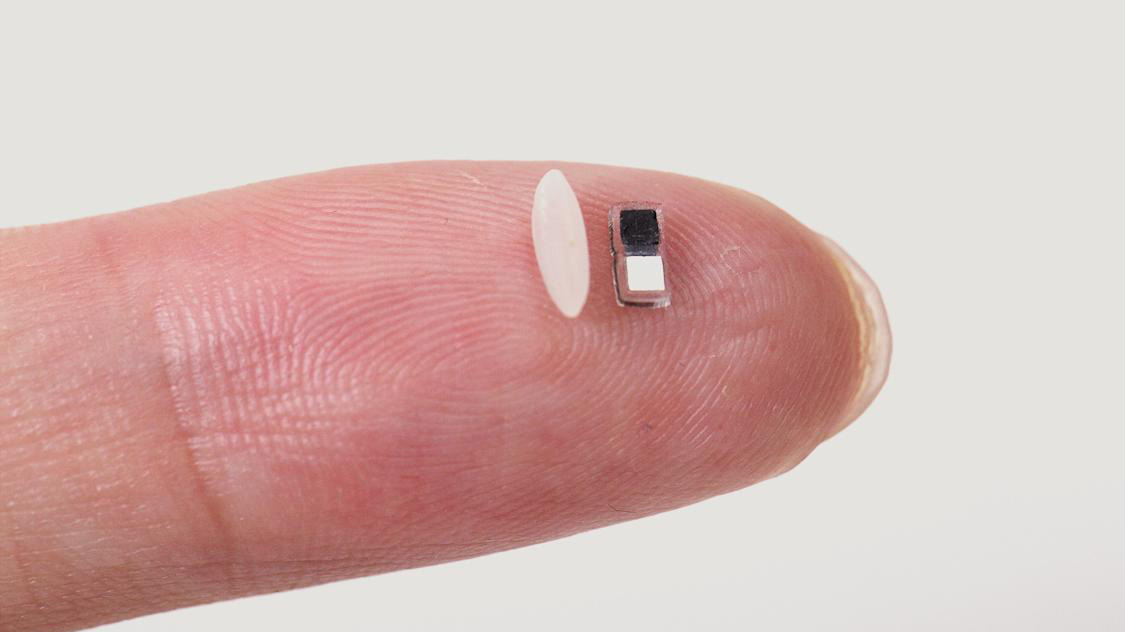
A group of scientists at Northwestern University announced on April 2 that they had developed the world's smallest pacemaker, a temporary heart rate-regulating device smaller than a grain of rice that can be injected into the body and controlled by light, then dissolves on its own. Although human trials are still years away, the wireless pacemaker is being touted as a breakthrough that could spur progress in other areas of medicine.
Millions of people around the world have permanent pacemakers. This device stimulates the heart with electrical pulses to ensure the heart beats normally. However, in the new study, the team of experts wanted to help the 1% of children born with congenital heart defects and who need a temporary pacemaker in the first week after surgery.
This pacemaker can also help adults restore a normal heart rhythm while recovering from heart surgery. Currently, temporary pacemakers often require surgery to sew the electrode to the heart muscle, with wires connecting to a powering device in the patient's chest. When the pacemaker is no longer needed, the wire is removed, sometimes causing damage.
However, the new pacemaker does not require wires. Only 1 mm thick and 3.5 mm long, the device can fit inside the tip of an injection needle. It is also designed to dissolve when no longer needed, helping patients avoid invasive surgery.
According to research in the journal Nature, the new pacemaker will connect to a soft patch on the patient's chest. When the patch detects an irregular heart rhythm, it automatically emits light to tell the device how to stimulate the heart rate.
The pacemaker receives power from a galvanic battery, which uses body fluids to convert chemical energy into electrical impulses that stimulate the heart. The device has worked effectively in laboratory tests on mice, pigs, dogs and human heart tissue.
John Rogers, the study's lead author and expert at Northwestern University, estimates that pacemakers can be tested on humans in the next 2-3 years. He commented that in the future, this technology can create unique and effective strategies to solve challenges in the medical field.
Thu Thao (According to AFP)