Quantum computer solves 110 year problem in 19 seconds
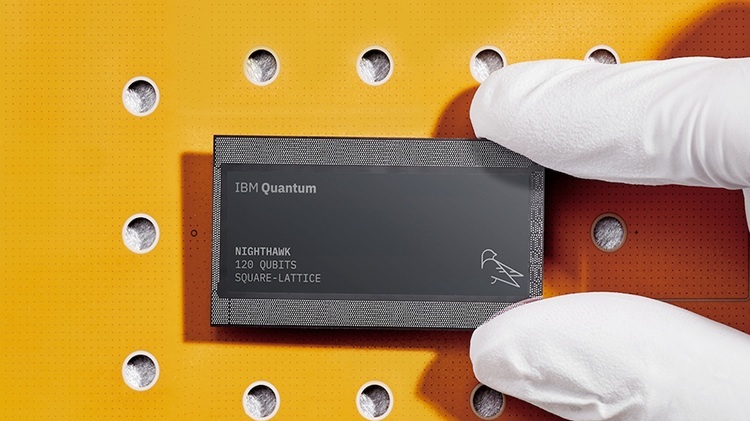
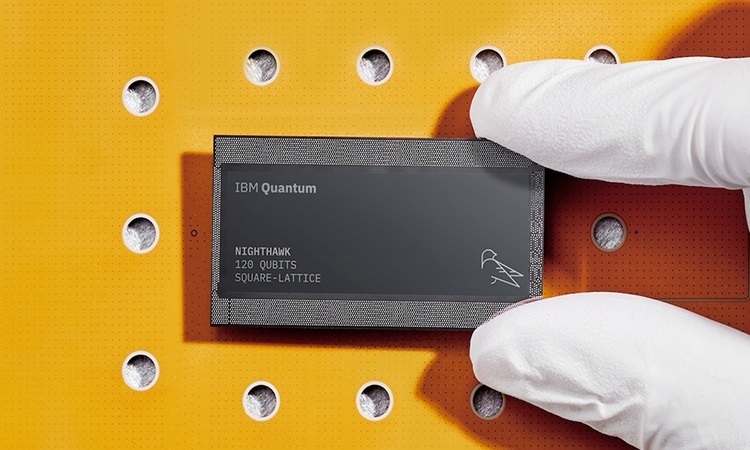
According to Science Alert, IBM's Nighthawk r2 processor has shown that commercial quantum computers could one day surpass supercomputers. The experimental results were described on the arXiv database on September 23. Condensed matter theoretical physicist Tigran Sedrakyan of the BlueQubit platform in the US said this is the first demonstration of a quantum advantage over purely random circuit sampling on a commercial processor that can be easily applied by non-technical users.
Instead of using a dedicated processor, Sedrakyan and his colleagues conducted experiments on the Nighthawk r2, a 120-qubit superconducting quantum processor that is commercially accessible through IBM's cloud platform. They selected 61 of these qubits and applied them to random computing circuits of increasing complexity, up to 40 cycles (repetitions of operations in which qubits are affected and entangled with each other). In particular, the research team performed experiments using the standard workflow of the cloud platform without the need for separate calibration. As a result, the Nighthawk r2 generates one million samples in just 19 seconds.
To measure the difficulty of this task for classical computers, Sedrakyan's team used a technique called tensor network contraction to estimate the computational cost of simulating a quantum circuit on a classical computer. According to their calculations, generating one million samples would require about 1.2×10²⁷ calculations. Meanwhile, Frontier, the world's fastest supercomputer until 2024, has a peak performance of more than a trillion (1 × 10¹⁸) operations per second. Based on the actual speed at which the machine can run stably for a long time, researchers calculate that leading supercomputers like Frontier will have to run continuously without stopping for 110 years to repeat the achievement of Nighthawk r2.
Sedrakyan and his colleagues emphasize that they do not claim that classical computers will never be able to match the performance of the Nighthawk r2, but rather point out that quantum processors are far ahead in the race for quantum advantage.
The race for quantum advantage between supercomputers and quantum computers started in 2018. Quantum advantage is the moment when a quantum computer successfully performs a complex computational task that is impossible or very difficult for classical computers to perform. In 2018, researchers at the University of California, Berkeley proposed using the random circuit sampling (RCS) problem as a metric.
A quantum circuit is a series of operations performed on qubits (quantum bits - the basic unit of information in quantum computing), similar to operations performed on bits in conventional computers. According to Kaggle, in RCS, these operations are largely randomized, creating increasingly complex quantum states. The processor measures that state many times, creating a series of 0s and 1s, called "samples." Creating the pattern is quite simple, but as the number of qubits and operations increases, the process of calculating the probability distribution needed to produce the same result on a classical computer becomes difficult.
In 2019, Google announced that its 53-qubit Sycamore processor performed an RCS experiment that exceeded the capabilities of classical supercomputers. However, not long after, scientists found a way to motivate regular computers to produce similar results. From there, quantum researchers try to push their systems to higher limits using the most advanced technology available.