OpenAI's model decrypts 217 years of Napoleon's letters
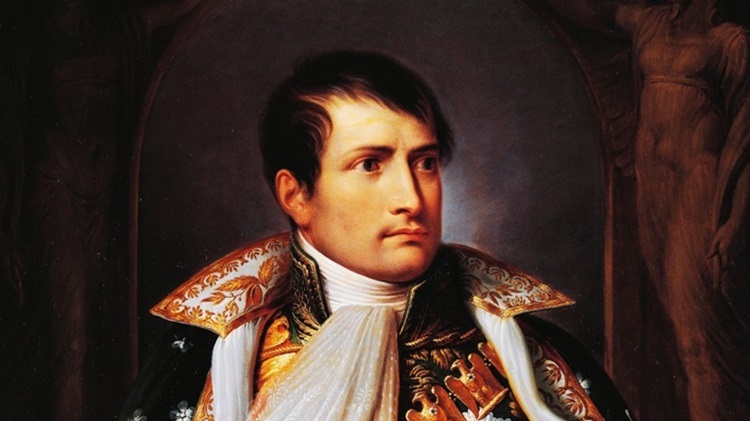
Live Science reported that Carter Church, an engineer at cybersecurity company Sentinel One, used OpenAI's new GPT-6 Astra model to crack the code that Napoleon Bonaparte used to send secret messages to generals in a letter 217 years ago. In a Twitter post on September 30, Church explained how he provided suggestions and images to complete the decoding task in just 6 hours, making historians excited about the potential of turning AI into a tool for translating encrypted historical messages.
In 1809, at Napoleon's request, his step-son Eugène de Beauharnais, viceroy of Italy, sent a letter to Marshal Auguste de Marmont, then stationed in the eastern Adriatic Sea. The purpose of the letter was to inform Marmont of the location of French and allied troops across the continent. However, to avoid revealing military secrets to the enemy if the letter was intercepted, the information was written in code.
Church found the letter while searching for a suitable code to break to demonstrate the capabilities of the GPT-6 Astra. According to Church, the only available image of the letter is a low-resolution scan published in a French military magazine in 1969. The secret letter includes a total of 1,300 characters but only revolves around 155 different symbols and the code is homophone (meaning the regular letters have several symbols interchangeable).
But with just a low-resolution scan and a single command, the GPT-6 Astra recognized the encrypted character and found a partial decoding table compiled by cryptographic historian Daniel Tant, recording the meaning of 33 symbols, accounting for about a third of the message's content. GPT-6 Astra successfully uses a partial decoding table to determine the meaning of other symbols and translate the message.
In addition to the military location and commanding general, in the letter, Eugène encouraged Marmont not to be afraid of the enemy. According to Zack White, a historical researcher at the University of Portsmouth, the translation raises a number of questions about Napoleon's state of mind before the campaign in Austria in 1809. For example, Napoleon actually had 60,000 fewer troops ready to fight at the time than claimed in the letter, and he also seemed haunted by the number of troops Austria might send to invade Italy.
During this period, cryptography was used quite commonly to send military and diplomatic information. White explains that French emperor Napoleon was forced to use encryption to send confidential information securely across his vast empire because there was always a chance that letters could be intercepted and reveal important intelligence to the enemy.
Satoshi Tomokiyo, a patent engineer and cryptographer who runs the site Cryptiana, which specializes in documenting unsolved historical codes, confirmed Church's results and placed the letter in the "solved" category on the site.
The Telegraph said the GPT-6 Astra decodes the message using an algebraic simulation algorithm, a trial-and-error process in which the AI tests multiple words for suitability and compares them with Marmont's available handwritten text. Although this process can be done manually, the work is so labor-intensive that to date no cryptographer has ever attempted it.
Church shared that he had never tried to decode before but was inspired after seeing an AI model decoding a German military message in 1941. In that case, technology developer Carter Leffen used GPT-6 Astra to decode a German military message from World War II (1941). According to Popular Science, this cipher was encrypted using the Enigma machine (with about 159 trillion possible configuration combinations) and has puzzled professional cryptographers since it was published online in 2005.
Instead of just running a regular key detection algorithm, GPT-6 Astra operates as an autonomous system: searching historical documents and detecting word clues, then writing code in Python and C++ to simulate the Enigma code breaker to decrypt the letter in 10 hours.
New AI models have recently shown increasingly strong abilities in solving math problems and decoding. Decoding often involves meticulous work, requiring piecing together many possible combinations of words, which AI systems can do much faster than humans.