The US 'tightens' the green card program for many technology companies
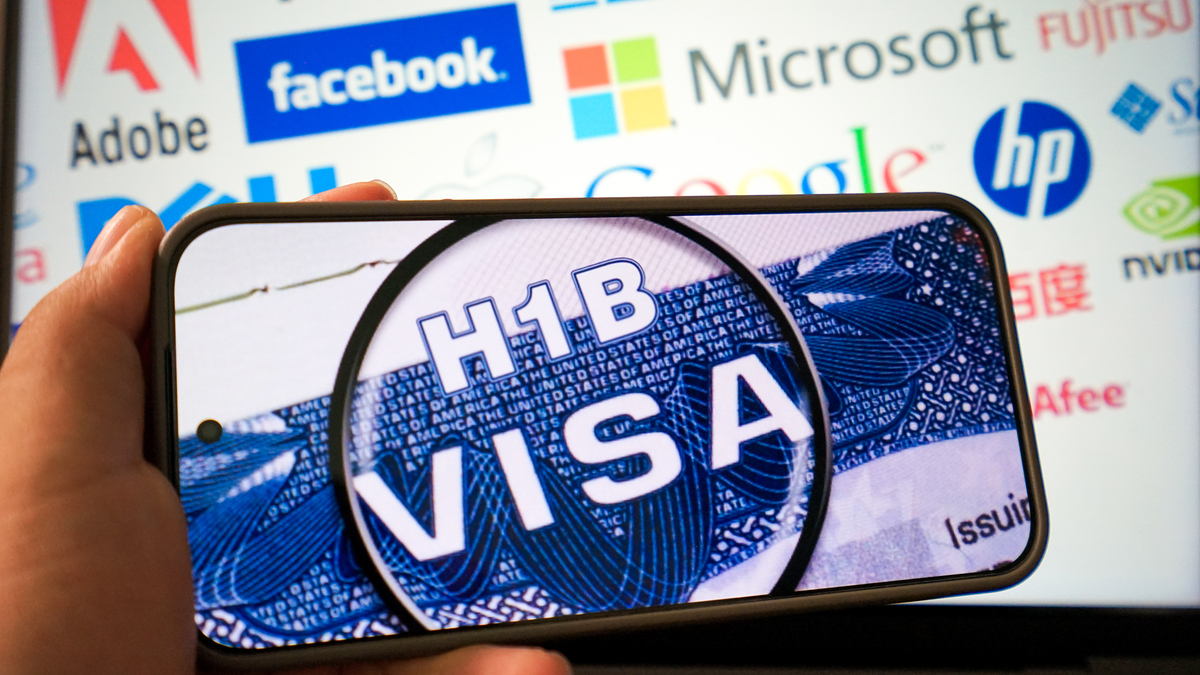
"Unfortunately, there is no company in the US that abuses the system more than Microsoft," US Vice President JD Vance told the media on October 8, adding that the company fired 6,000 US workers last year, but still benefited from 6,300 H-1B temporary work visas and nearly 3,000 green cards.
In addition, the US also opened an investigation into 9 leading universities, including prestigious names such as Harvard University, Yale University, Stanford University, Brown University and Massachusetts Institute of Technology. US Labor Inspector General Anthony D'Esposito said the summons had been sent.
The US H-1B visa is issued to professionals and engineers in the technology industry. Meanwhile, the US green card, or permanent resident card (Green Card), is a certificate of legal permanent residence for foreigners living and working in the US.
Mr. Vance's comments came hours before Trump honored a series of tech billionaires for their contributions to America. Among them, Tesla CEO Elon Musk, Google co-founder Sergey Brin, Nvidia CEO Jensen Huang and AMD CEO Lisa Su were awarded the National Medal of Science by Mr. Trump, while computer industry tycoon Michael Dell and Microsoft CEO Satya Nadella received the National Medal of Technology and Innovation. Musk and Nadella each held H-1B visas, while Brin, Huang, and Su are immigrants.
US President Donald Trump is currently pursuing a broad effort to reduce the number of foreign-born people in the US, including limiting immigration pathways to gain US citizenship. According to Reuters, the two new moves mark the strongest blow to date against immigration programs for high-skilled workers, potentially even cutting off the "popular path" used by foreign technology experts to obtain permanent residency in the US. It also warned some of the country's leading research universities.
According to data from the US Department of Labor, Microsoft is the company that applied for PERM (permanent labor certification) the most. PERM is the process that most employment-based green card applications require, in which employers must demonstrate that hiring a foreign national will not affect the wages or employment of the American worker.
Microsoft said that about 80% of the H-1B visa applications the company filed last fiscal year were to "extend or change the visa status of existing employees, not to recruit new employees." In July, the company also cut 4,800 jobs, equivalent to about 2.1% of its global workforce.
According to US Labor Secretary Keith Sonderling, along with Microsoft, the suspension will apply to a series of businesses including Adobe, Cognizant, Infosys, Tata Consultancy Services, Wipro, HCL Technologies, Capgemini. "We will not accept any new permanent labor certification applications or process any pending applications related to these companies," Sonderling said.
Citing statistics, Sonderling said this series of companies has applied for nearly three million foreign workers, received more than 230,000 H-1B visa permits and more than 100,000 permanent resident labor certifications.
According to US immigration data, Amazon.com is the largest employer of H-1B visa beneficiaries in fiscal year 2026, followed by Tata Consultancy Services, Infosys, Apple and Microsoft.
Mr. Vance said the suspension will last "as long as necessary," and emphasized that the government wants companies to change hiring practices.
Most companies have not yet responded. Tata Consultancy Services declined to comment.
In September 2025, the Department of Labor launched an enforcement campaign called "Project Firewall," according to a White House statement. The program imposes a one-time fee of $100,000 on new H-1B visa applications for workers recruited from abroad.
With the investigation of prestigious universities, Ms. Sarah Spreitzer, Vice President of the American Council on Education, an organization representing college and university presidents, said that it would "have a huge impact on the entire US economy". According to her, international students previously spent up to 40 billion USD each year when studying in the US.
The investigation also deepens a long-running dispute between the US government and Harvard University over the issue of foreign students. Last year, the US Department of Homeland Security subpoenaed the university to investigate allegations of international student misconduct and compliance with immigration laws. Harvard called the subpoena "baseless retaliation" but said it would comply with the law.
Bao Lam (according to Reuters)