Five tasks for digital transformation that create measurable value

At the event to celebrate National Digital Transformation Day, held on the morning of October 9, many results of digital transformation activities over the past year were shared by the Ministry of Science and Technology.
The year 2026 marks an important step forward when the Digital Transformation Law begins to take effect. The overall national digital architecture framework was also issued, as an overall design, guiding the digital architecture of agencies throughout the system. Shared digital platforms are gradually being completed.
By September 2026, the 5G network will cover 91.9% of the population; Fiber optic cable has reached 100% of communes and wards. The digital economy continues to grow and contribute practically to GDP. Currently, the country has 81,600 digital technology businesses. Digital technology industry revenue has reached nearly 3.6 million billion VND.
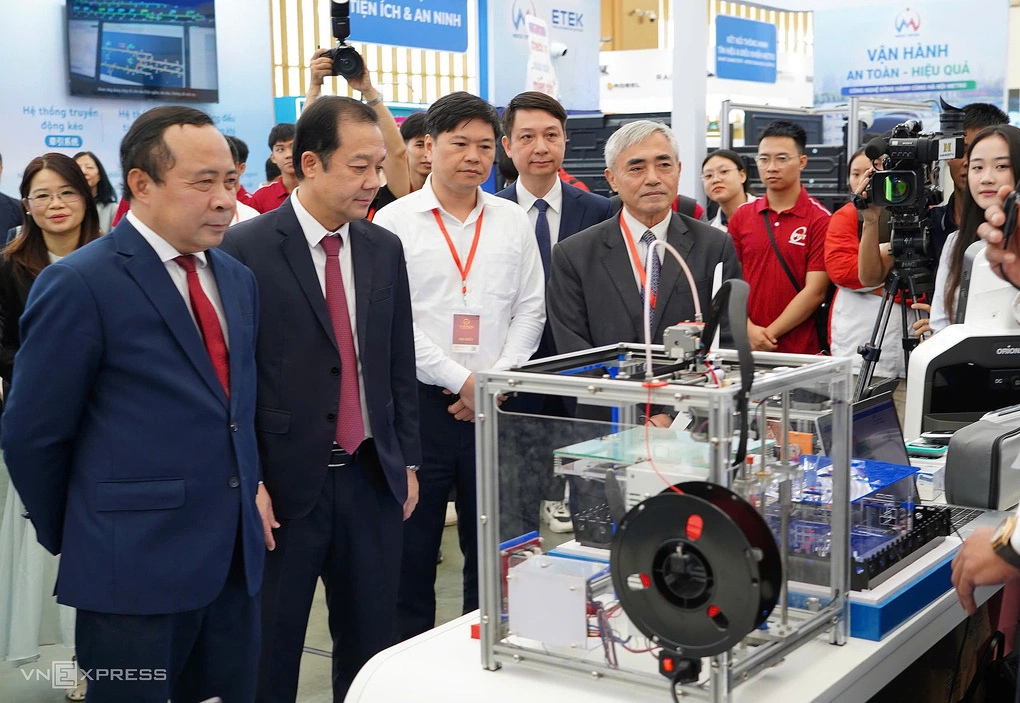
According to the Ministry of Science and Technology, the digital national foundation is gradually being implemented, creating a basis for digital transformation from building systems to creating substantive results.
Noting the achieved results, however, Minister Vu Hai Quan pointed out major challenges. The progress of building data in some fields, ministries, branches and localities is still slow. Places are sometimes still confused in the process of implementing a shared digital platform.
Infrastructure is also a challenge, especially for high-performance computing for AI and data research. The whole country still has a number of wave depressions that cannot be treated.
Many businesses want to digitally transform but have not progressed as quickly as expected. The application of AI, especially in small and medium enterprises, has not progressed as expected. The most important challenge is people, as human resources for digital transformation, especially at the commune level, are lacking and need to be properly trained.
These limitations lead to the consequence that "the speed of disbursement of digital transformation is still slow". The fields of science, technology, innovation and digital transformation have the slowest disbursement speed. And among them, the disbursement speed for digital transformation is also the slowest.
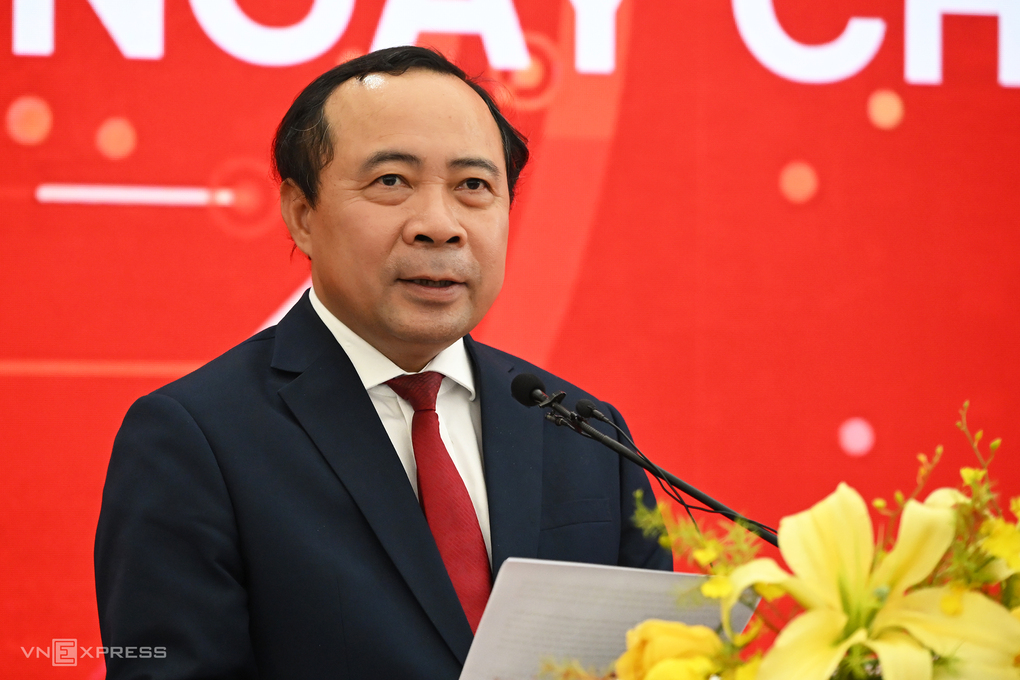
From the above limitations, Minister Vu Hai Quan proposed to focus on five groups of tasks:
First, improve institutions, improve implementation effectiveness and innovate measurement methods. Each program must be specified by tasks with clear products, time and responsibilities. Results need to be measured using operational data and real-world impact.
Second, develop digital infrastructure, digital platforms and synchronous and shared data. Data must be "correct, complete, clean, live, consistent and shared according to authority". AI must come from practical problems, be based on quality data, control risks and measure results.
Third, build a digital government centered on people and businesses, with comprehensive online public services that are easy to use and do not depend on administrative boundaries. The ultimate goal is to reduce time, reduce costs, reduce paperwork and increase transparency.
Fourth, digital economic development becomes a new growth driver. Digital transformation must penetrate deeply into every industry, field and business, especially small and medium-sized enterprises, cooperatives, and business households; associated with manufacturing innovation, e-commerce, digital payments, smart management and productivity improvement.
Fifth, develop an inclusive digital society, high-quality digital human resources and digital trust. Digital transformation must reach the grassroots, narrow the gap between regions, leaving no one behind.
Digital transformation must be evaluated by substantive results: "productivity must be higher, costs must be lower, services must be more convenient and competitiveness must be more strongly improved", Minister Vu Hai Quan requested.
From 2022, October 10 is chosen as National Digital Transformation Day. This year, National Digital Transformation Day 2026 has the theme "From architecture, platform, data to substantive results, improving national governance efficiency". The series of events takes place over 3 days, from October 8-10, at the National Exhibition Center (VEC), Hanoi.
The main activity of the program is the celebration of National Digital Transformation Day, along with side activities including high-level forums, thematic forums, and Smart City Asia exhibition with more than 200 booths.
Trong Dat