How should I choose the appropriate TV size?
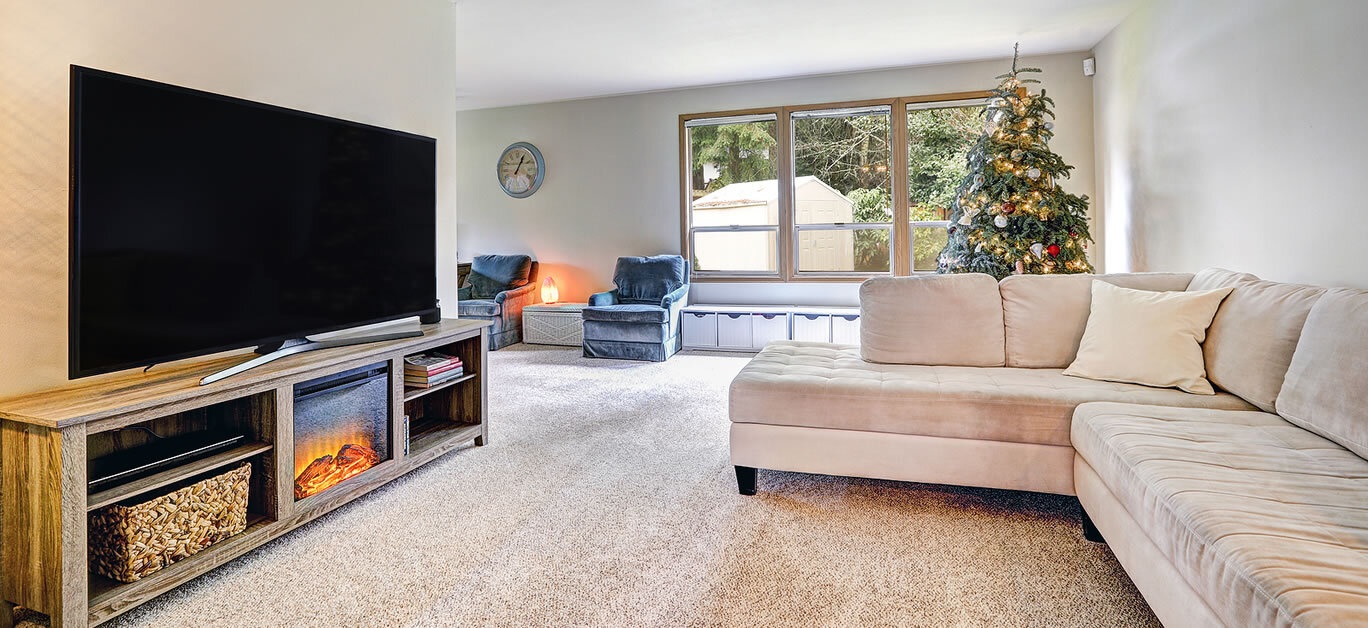
If we ignore the price issue, choosing the appropriate TV size should be based on the space and location where you want to place the product.
There are many different tips given by experts regarding choosing the right TV size, but the most important is the distance from the viewer to the screen.
According to many experts, users should choose a TV size equal to half the distance from the TV to the closest viewing position, measured in inches. For example, if the distance is 120 inches (3 meters), you should choose a 60 inch TV.
Advice is only relative. The choice of TV size must also be suitable for the space and area of the room.
If you watch TV in the living room to enjoy rest and relaxation, you should choose a model with a size of 55 inches or larger. If you buy a TV to put in the kitchen or bedroom, a model under 42 inches is the right choice.
Which screen technology should I choose?
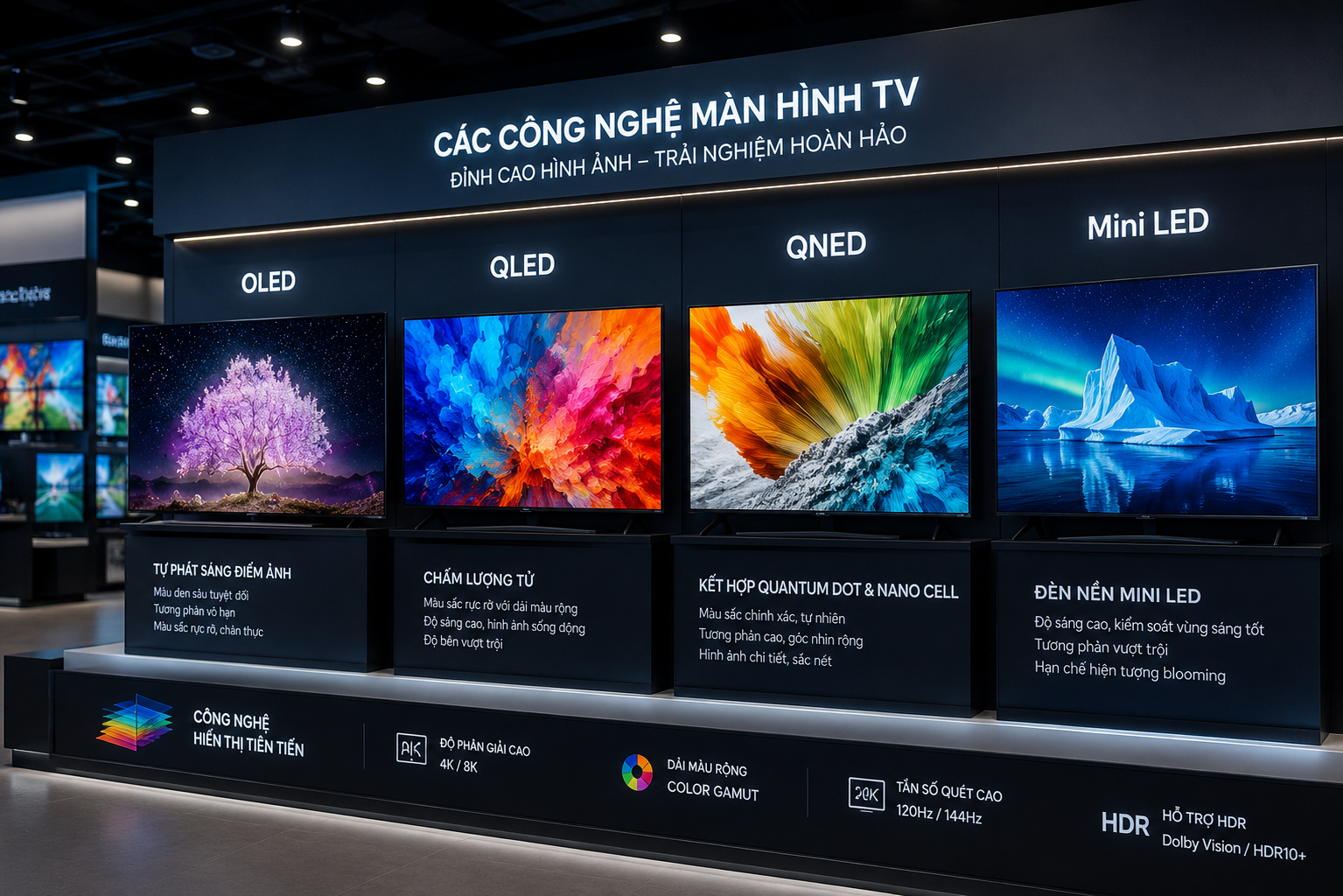
When entering an electronics supermarket, users may encounter many different screen technology names. In particular, OLED and Mini LED are two technologies that are commonly used in the TV market today.
OLED (including variants such as QD-OLED and WOLED) is a display technology that uses self-illuminating pixels. Unlike traditional LCD TVs, OLED does not need a separate backlight system, allowing each pixel to turn on or off independently.
This characteristic gives OLED the ability to display deep blacks, high contrast and wide viewing angles. These are factors that are often highly appreciated when watching movies or entertainment content that requires high image quality.
However, OLED TVs often have higher prices than many LCD TV models on the market. In addition, this technology still has the risk of burn-in if static content is displayed continuously for a long time.
However, the risk of this phenomenon has been significantly reduced thanks to protection solutions integrated into new TV lines. Under normal usage conditions, most users are unlikely to encounter image retention.
Meanwhile, Mini LED is a technology developed from the LCD platform, using a large number of small-sized LEDs as the backlight system for the display panel.
The advantage of Mini LED is its ability to achieve high brightness, support for displaying HDR content effectively and often has a lower price than OLED models in the same segment. However, the ability to control black color and contrast generally still depends on the quality of the backlight system and control algorithm of each manufacturer.
A common limitation on Mini LED TVs is the halo phenomenon, which occurs when bright objects on a dark background are surrounded by dim light areas due to the influence of the local backlight system.
Besides, QLED and QNED are also technologies developed based on the LCD platform. These technologies use LED backlighting combined with a quantum dot layer or other color enhancement solutions to improve brightness and color reproduction.
Compared to OLED, QLED and QNED TVs often have more accessible prices and achieve high brightness in many product segments. However, the ability to display black and contrast is often limited by the characteristics of LCD technology.
In general, Mini LED, QLED and QNED TVs currently appear in many different price segments, from mid-range to high-end, providing many choices for users.
In addition to the above technologies, the market is also seeing a number of TV lines using Mini RGB LED or MicroLED. These are new development directions to improve brightness, color reproduction and display efficiency.
However, production costs are still high, making MicroLED and Mini RGB LED products not yet popular on the market. In Vietnam, the selling price of many TV models in this group is currently hundreds of millions of VND, mainly targeting the high-end customer segment.