'Resolution 57 creates systemic change'
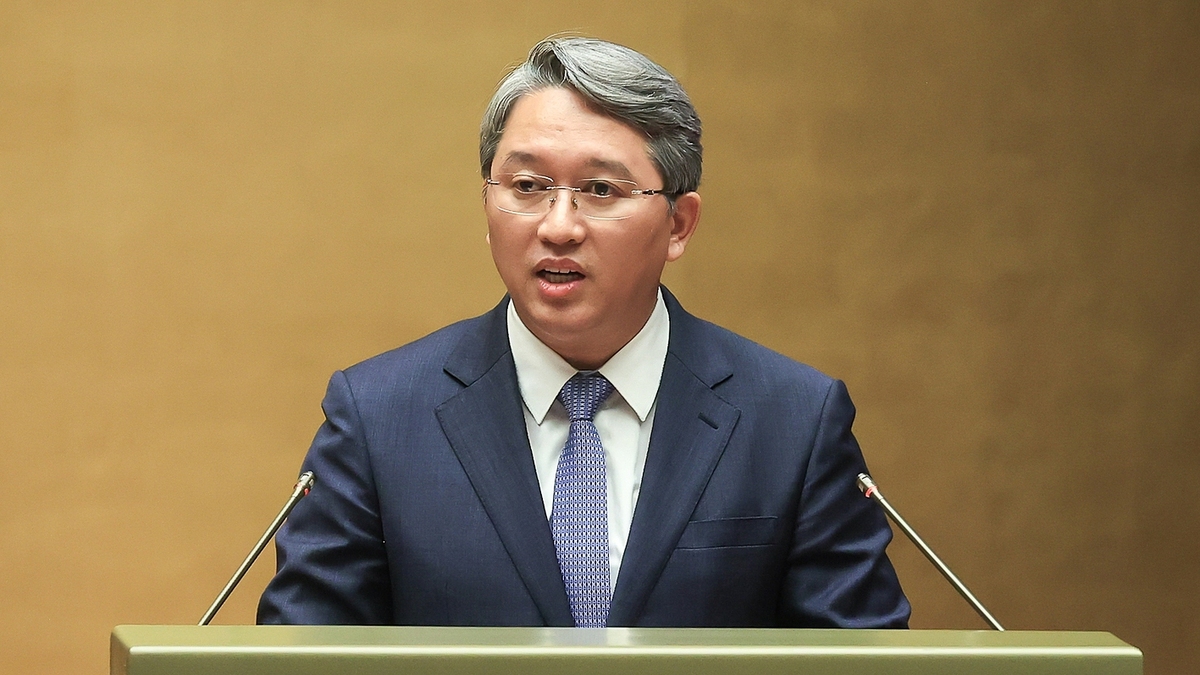
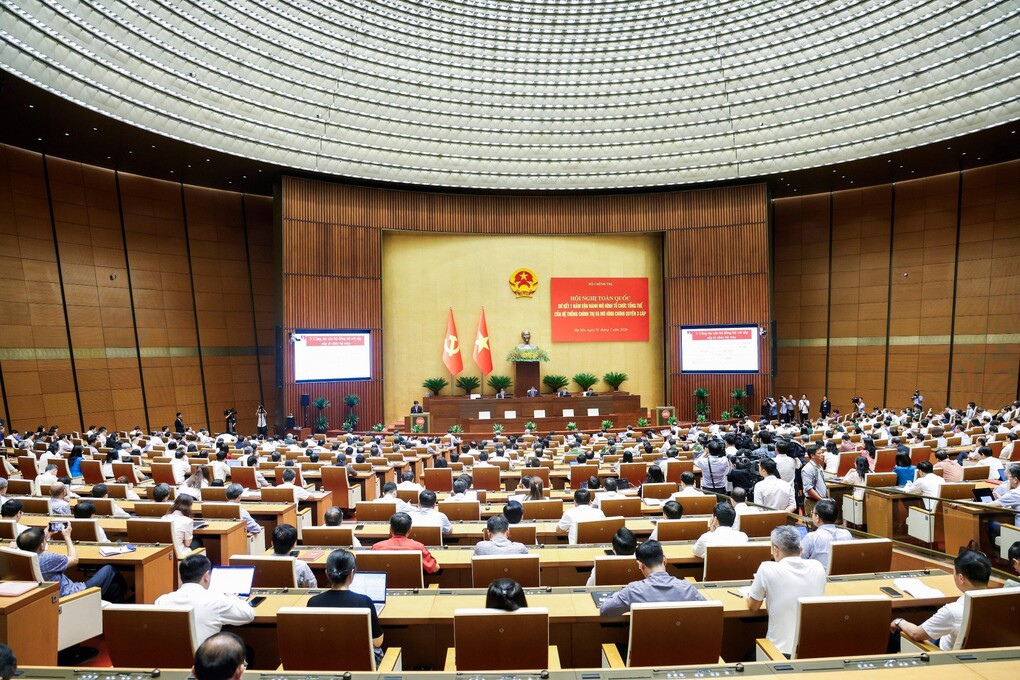
The information was stated by the Chief of the Party Central Committee's Office in the Summary Report of one year and six months of implementing Resolution 57 of the Politburo, at the preliminary conference held on the afternoon of July 1. The conference took place directly in Hanoi and online at 3,662 meeting points at ministries, departments, branches, central organizations and headquarters of provinces, cities, communes, wards and special zones nationwide with 568,384 delegates attending. General Secretary and President To Lam, Head of the Central Steering Committee for science and technology development, innovation and digital transformation, chaired the conference.
The report states that one of the most obvious changes after more than a year of implementing Resolution 57 is the improvement of institutions. Of these, more than 400 documents related to science and technology, innovation and digital transformation have been developed by agencies and submitted to competent authorities for promulgation. Including 13 documents of the Secretariat, 30 laws, more than 170 legal documents of the Prime Minister and more than 80 circulars.
Along with the number of documents comes a change in the way policies are formulated. Scientific management thinking shifts from operations management to creating innovation ecosystems. Many breakthrough mechanisms such as controlled experiments, block payments, risk-taking in scientific research, intellectual property policies, commercialization of research results or attracting talent have been issued.
At the local level, Hanoi allocates a budget exceeding 3% for science and technology. Ho Chi Minh City established a Venture Capital Fund with an initial capital of 500 billion VND, aiming for a scale of 5,000 billion VND.
According to Mr. Ninh, Resolution 57 has opened a new stage of development for the country. The greatest significance lies not only in specific results, but in establishing a new development model. In particular, science and technology, innovation and digital transformation have become the main driving forces, gradually replacing the development model based on capital, resources and low-cost labor. "This is a fundamental change in development thinking."
Spillover impact
In the report, Mr. Nguyen Hai Ninh also cited evidence that Resolution 57 creates systemic changes in national governance. For the first time, science and technology, innovation and digital transformation are no longer considered specialized fields, but become the task of the entire political system.
From the central to local levels, from the public sector to businesses, from institution building to implementation organizations are being adjusted to digital thinking, innovative thinking and data-based development thinking.
These changes have been reflected in many specific results. The National Public Service Portal currently integrates 3,475 administrative procedures. In 2025 alone, the system is estimated to help save about 840 billion VND at the Central level and 4,800 billion VND locally.
At the local level, the rate of online records reached 93.5%, digitization of records reached 88% and reuse of data reached 96%, while at ministries and branches, these rates were 34.2%, 19.2% and 5.3%, respectively.
The "Digital Learning Popularity" movement in 2026 organized 105 online classes with more than 880,000 sessions, reducing costs by nearly 80%. The open online mass course has been completed by 26,900 commune-level officials, reaching 75%.
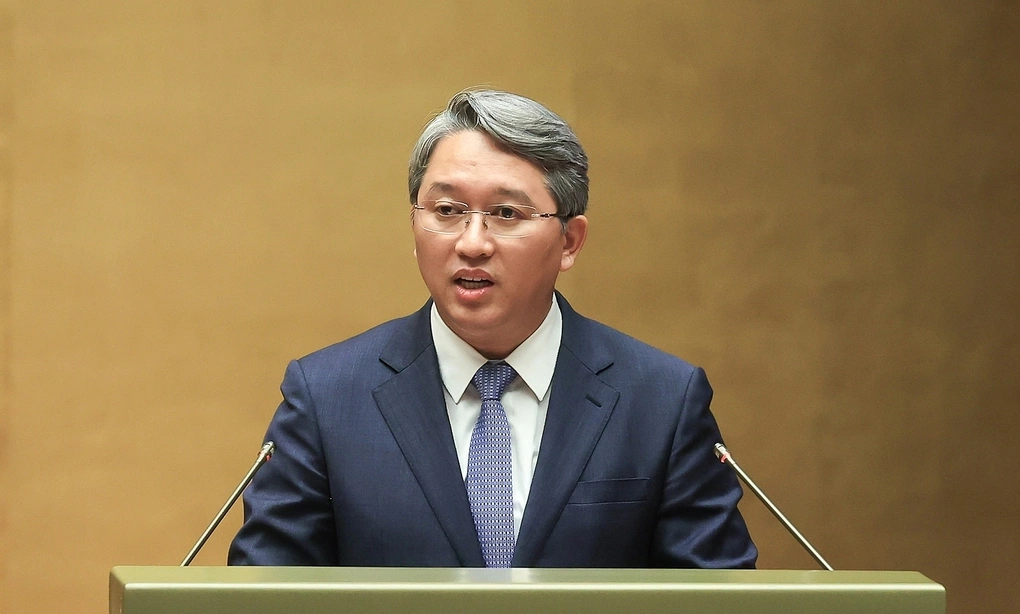
The report also shows that the digital economy continues to grow. The proportion of added value of the digital economy in GDP in 2025 will reach 14%. The scale of e-commerce reached 31 billion USD, an increase of 20%, expected to exceed 60 billion USD by 2030. Revenue of four major e-commerce platforms is estimated to reach 430,000 billion VND, an increase of 34.7%.
Regarding digital society, the proportion of adults with payment accounts reached nearly 89%. Biometric authentication at 18 airports has served about 1.4 million passengers, estimated to save about 7,700 billion VND per year. More than 12,400 medical facilities use citizen identification cards instead of paper health insurance cards; Forming 2.5 million electronic medical records.
In the field of science and technology, the country currently has 16 national key laboratories and 184 laboratories at universities. In 2025, the number of applications for protection rights will increase by 33%, and the number of transferred objects will increase by 107.3%. The Initiative Portal received 67 applications; The science and technology exchange connects 14 local exchanges with about 4,800 products.
In April 2026, the Prime Minister issued a list of 10 strategic technology groups, 30 product groups and assigned 20 major problems to ministries and branches for implementation. There have been initial enterprises in the country researching and applying technologies such as 5G, traceability, UAVs, robotics and biomedicine.
International cooperation has also been expanded. In 2025, Vietnam signs 45 commitments and agreements on science and technology, innovation and digital transformation. In the first six months of 2026, 70 new cooperation commitments were signed.
Cooperation content focuses on high-tech fields such as AI, semiconductors, quantum technology, biotechnology, energy and digital infrastructure. Two technology enterprises, Nvidia and Qualcomm, have established research and development (R&D) centers in Vietnam.
Resolution 57 has enhanced Vietnam's position and ability to participate in global technology trends. "Vietnam not only approaches but is actively participating in strategic technology fields such as artificial intelligence, semiconductors, data, digital technology and innovation," the report stated.
Mr. Nguyen Hai Ninh said that important foundations have been created after one year and six months of implementing Resolution 57. However, ultimate success depends on the ability to transform policies into substantive results. According to him, the biggest challenge today is no longer an institutional bottleneck, but implementation capacity; Remove bottlenecks in thinking and action.
Trong Dat