Vietnamese-born scientist seeks to bring atomic clock into space
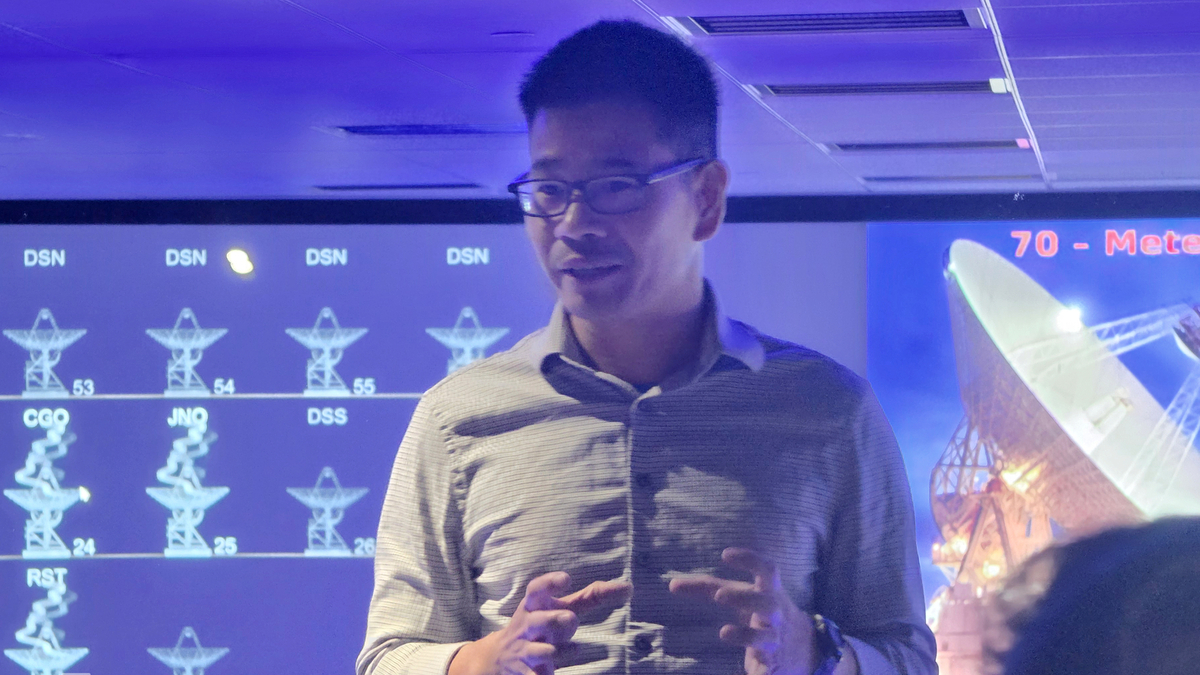
Dr. Hoang Thai is a researcher working at the JPL Jet Propulsion Laboratory of the US Aeronautics and Space Administration NASA. He is the team leader (Principal Investigator), in charge of research and development of quantum sensors. This field exploits the properties of atoms and quantum phenomena to make many measurements, such as time, gravity, electromagnetic fields or physical quantities with high precision.
According to Dr. Thai, current quantum systems are exploited in laboratories, where large optical tables and tightly controlled environments are used. "The problem here is how to get that quantum system out of the laboratory," he said.
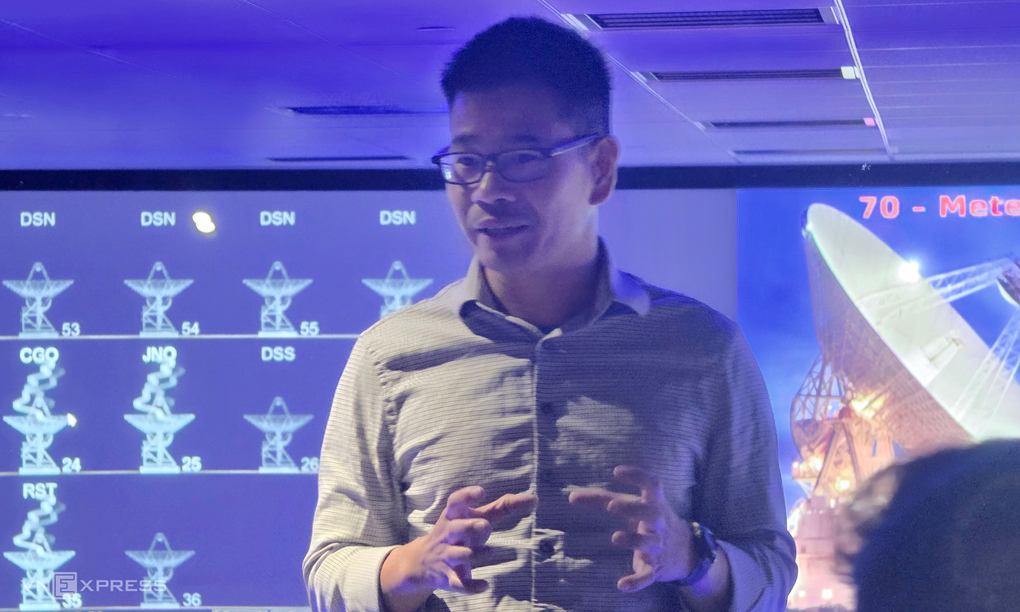
The team's goal is to develop very high-precision clocks, while also miniaturizing and increasing their durability so they can operate in space. Currently, determining the location of spacecraft at large distances still depends heavily on ground stations. The signal is sent from Earth to the spacecraft and then returned, and the time it takes to travel back and forth is used to calculate the distance. As the train travels further and further, signal delay causes this method to become limited.
In 2019, NASA tested the Deep Space Atomic Clock (DSAC), an atomic clock using mercury ions, to develop technology for navigation in deep space. In controlled tests on Earth, the device was shown to be up to 50 times more stable than atomic clocks on GPS satellites and only deviated by about one second every 10 million years.
However, bringing an atomic clock from the laboratory to a spacecraft is not simply a matter of shrinking the size. Quantum systems often require lasers, vacuums, magnetic fields, precision optics and environments with tightly controlled vibration and temperature.
According to Dr. Thai, the device also needs to meet requirements such as being small, light, and durable enough to withstand harsh conditions when launching and operating in space. Satellites and spacecraft inherently have limited energy supplies, so the equipment must also consume very little electricity.
This problem is called SWaP, which includes optimizing factors such as size, weight and power consumption. With quantum sensors, reducing all three factors while maintaining accuracy is one of the key requirements for the technology to leave the lab.
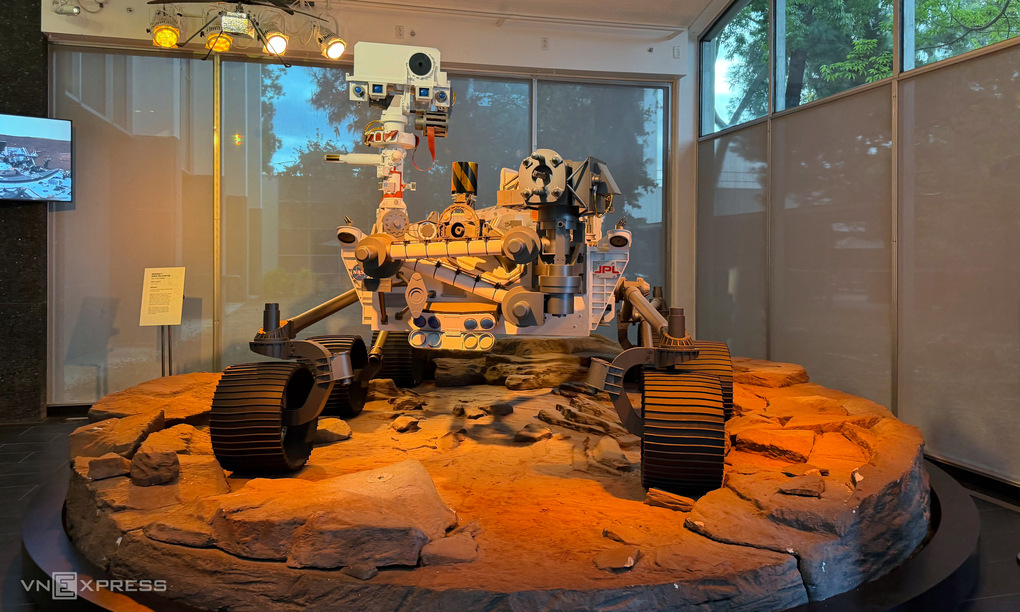
Dr. Thai said the team is developing many different clock directions. In particular, the microwave clock is scaled down to about a liter in size, aiming to replace the standard clock on GPS satellites in the future.
In parallel, they also developed optical clocks, including ion trap clocks and optical clocks using strontium crystal lattices. "The long-term goal is to miniaturize the optical network clock system to launch into deep space for scientific research," he said.
Jason Hyon, head of the Earth Science and Technology Division at JPL, assessed the role of the atomic clock that the Thai team developed not only serving fundamental physics, but also playing a vital role in deep space navigation and navigation. "When exploring the surface of the Moon or distant planets without GPS, landers or rovers are required to have extremely accurate clocks on board," Hyon said.
Taking quantum technology out of the lab
Hoang Thai's team's work is part of a broad research ecosystem at JPL, which is looking to apply many forms of quantum technology to space.
At a sharing session with the media organized by the US Foreign Press Center at the end of September, a JPL representative said people have been applying quantum physics for more than 100 years, with technologies such as semiconductor transistors, lasers, and atomic clocks. The technology has continued to develop strongly recently, being referred to as "second generation quantum", exploiting quantum mechanical phenomena such as superposition and entanglement.
"It is these strange properties that open the door for quantum computers, security and measurement sensors beyond traditional physical limits. That is the technological frontier that we are pursuing," a JPL representative shared.
One of the projects JPL is working on is a quantum gravity gradient meter. Previously, in the GRACE Earth gravity measurement mission, scientists used two satellites flying in parallel to measure very small changes in the distance between them when passing through regions with changing gravity.
Meanwhile, with the quantum gravity gradient meter, JPL uses two "atom clouds" that are cooled and kept in a vacuum chamber. When passing through regions with gravity anomalies, the two atomic clouds are affected differently and this change is used to measure the gravitational field. This approach does not require GPS, opening up the possibility of measuring gravitational fields on celestial bodies that do not have navigation satellite systems like Earth.
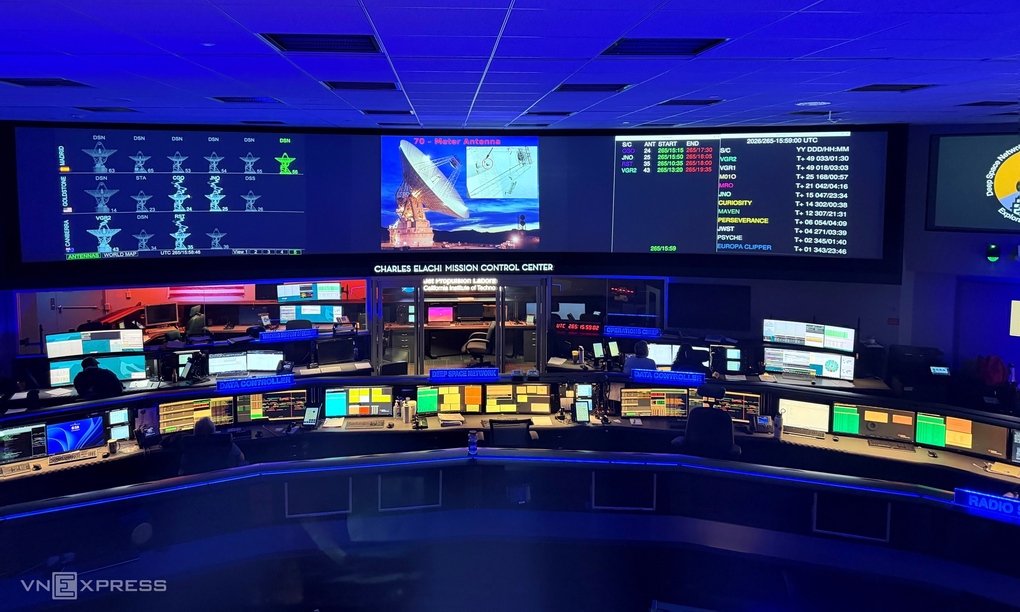
According to Dr. Thai, quantum sensors are a pioneering technology field, requiring large and long-term investment resources for facilities, technical equipment and highly specialized human resources. When enough financial potential, technological infrastructure and the right team are gathered, these technologies can be developed into systems that work in practice.
"To achieve those things requires a lot of time and huge investment of resources. But I think the most important factor is still people," he said.
Luu Quy