Vietnamese scientist granted US patent for 'brain in electrical circuit'
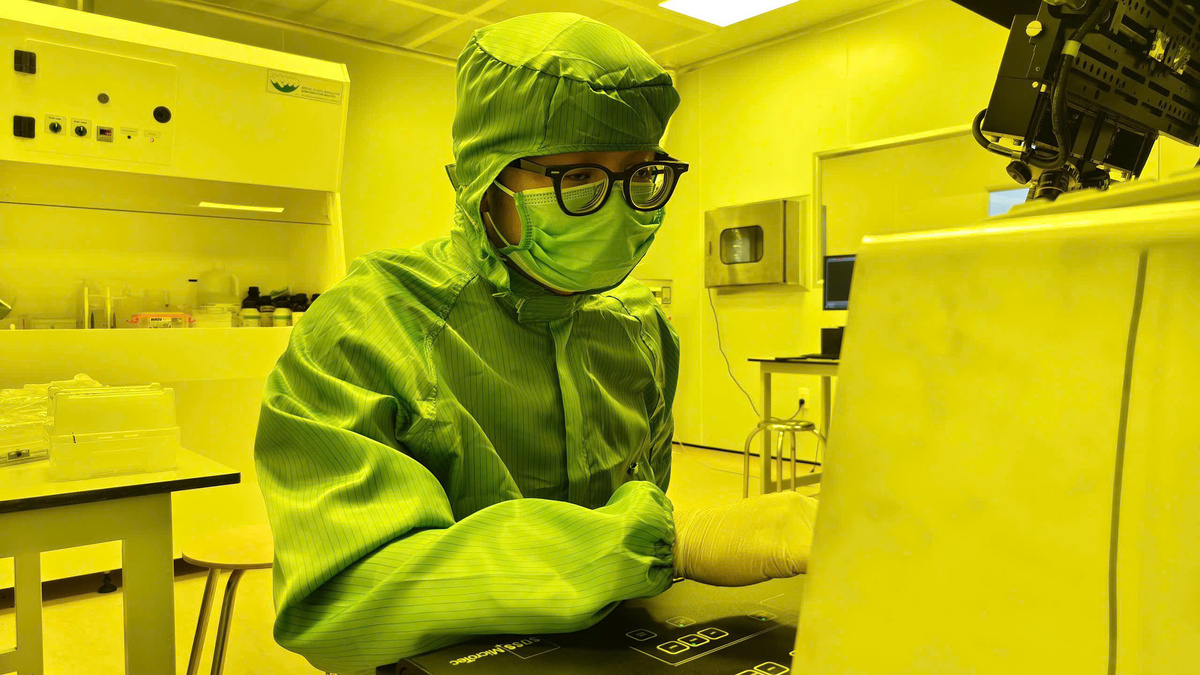
Electronic component in the form of a small artificial neural network, capable of reading handwritten numbers, assembled into 256 "memristors" developed by the research team of Vietnam National University, Hanoi and Ho Chi Minh City. This is a research direction of interest in brain simulation computing. There are many solutions in the world today. Being granted a patent by the USPTO is proof that Vietnam's technology is new, creative, applicable and clearly different from previous solutions.
Memristor - also known as memory resistor - electronic component capable of both storing and processing information. Thanks to this feature, memory solves the bottleneck of today's AI computer systems: having to move data between the processor and memory. As models scale, the energy devoted to data transfer even exceeds that devoted to computation.
According to Associate Professor, Dr. Pham Kim Ngoc, University of Natural Sciences, main member of the research team, the conductivity of the memory resistor can gradually change during the learning and memory process, similar to the way the brain adjusts the connection between neurons.
For these reasons, the device is considered a promising platform for artificial neural networks, consumes less power and can operate directly on the device.
The research team said that the results are at the beginning and need to continue to be expanded to have applicable products, but the international recognition shows that the research has contributed to the development of new generation AI hardware.
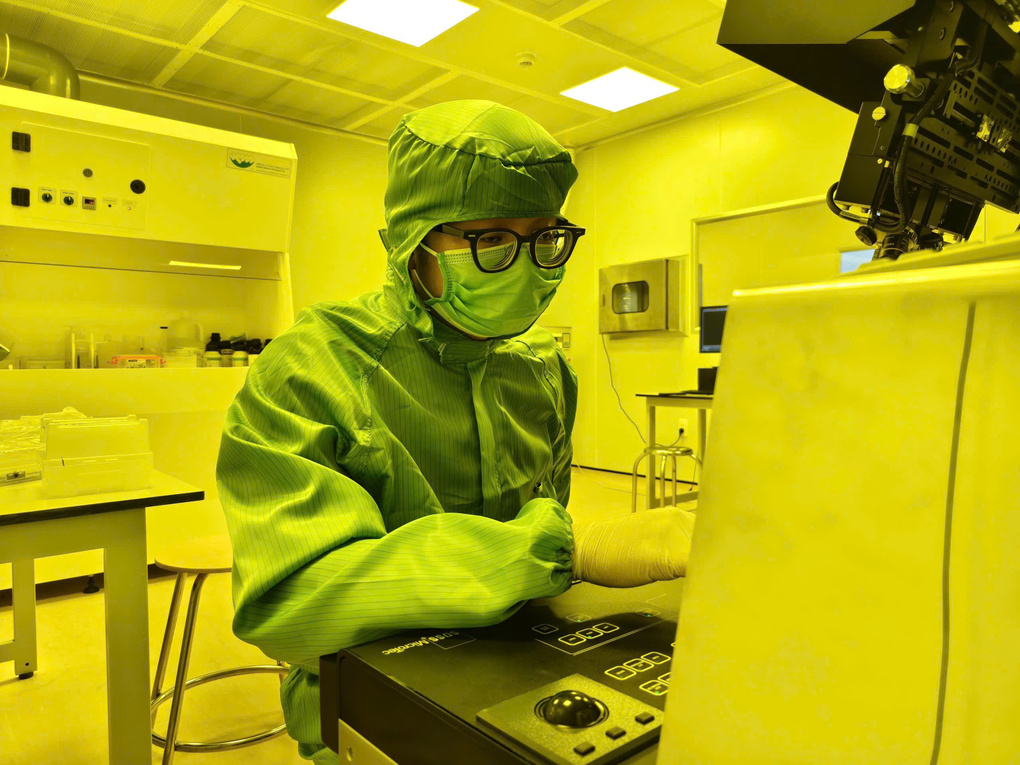
With experience in the field of manufacturing RRAM memory - a form of RAM but operating based on the resistance of the material - using metal oxide, the research team pursued the question: is it possible to develop a new memristor, suitable for manufacturing capacity and scale up in Vietnam?. However, from the conception of the idea to the formation of components is a process of more than 5 years.
"RRAM only needs to create two clear states '0' and '1', but memristor requires dozens to hundreds of intermediate resistor states for AI calculations," Associate Professor Ngoc described.
To achieve this status, the research team from the two universities combined their expertise in metallic materials and ultra-thin materials fabrication technology. They use layers of chrome oxide and titanium oxide that are amorphous, meaning they do not have a regularly arranged crystal structure like many conventional materials.
Through the special material structure, researchers can control the displacement of oxygen, thereby creating many different levels of resistance. Another advantage is that the materials are low cost and easier to manufacture than materials currently used in memristors around the world.
The new point that helps remember "made in Vietnam" recognized by the US Patent and Trademark Office (USPTO) is not only in the materials but also in the way the components are designed, according to Associate Professor Ngoc. The two oxides are stacked in alternating layers - a structure that has never been used before. This design helps the device have the ability to rectify, that is, maintain a stable DC current, so many memristors can be coupled into a large network.
The team tested the technology on a square silicon sheet smaller than the palm of a hand. On it there are 32 electrode lines intertwined, creating 256 intersection points, in each point is a memristor. When an image, such as a handwritten number, is converted into a voltage signal and fed into the network, the resistance at each memristor changes the amount of current passing through. The electrical signals throughout the network then add up according to the laws of physics.
Associate Professor Ngoc explained that these voltage variations are also matrix multiplication and addition, the core of many AI models, which are indirectly implemented through the physical conduction characteristics of the component network. The resulting reading is returned as an output signal.
Although the test problem is only on a small scale, it shows that memory resistors can represent weights and coordinate inference, confirming the feasibility of the technology.
Dr. Nguyen Quang, an artificial neural network researcher at the International University, Vietnam National University, Ho Chi Minh City, who will participate in the memristor network expansion phase, said the notable point of this approach is that the calculation is performed directly on the physical signal of the circuit, instead of sequentially converting and processing through many hardware blocks.
"These calculations take place on real physical signals at the speed of light, while today's computers calculate using digital signals or virtual representations," Dr. Quang said. Therefore, memristors efficiently perform neural network calculations and have the potential to form AI chips at the edge.
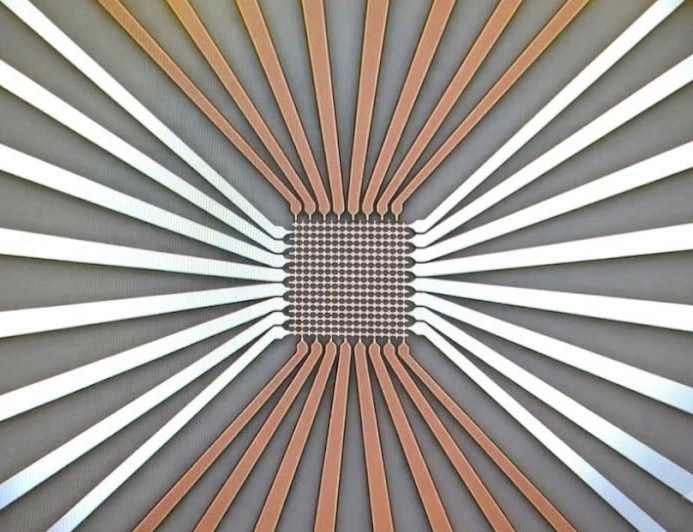
However, the current network of 256 components is still "relatively small", needing to expand the number of memristors hundreds of times to become a practical chip. The research team said it is necessary to continue to miniaturize components to sub-micrometer levels, and beyond nanometers, to integrate millions of elements on an area of about 20-25 mm². During this miniaturization process, it is necessary to ensure uniformity in the "ultra-thinness" of the components and electrical characteristics.
According to Associate Professor Ngoc, to develop new generation AI chip research, long-term investment in semiconductor infrastructure such as modern photolithography systems, clean rooms and manufacturing lines is needed. "Vietnam not only has the opportunity to participate in the supply chain but can also contribute to the core technologies of the next generation of chips," he said.
Nam Nguyen