Innovators struggle to prove 'humanity' in the age of AI
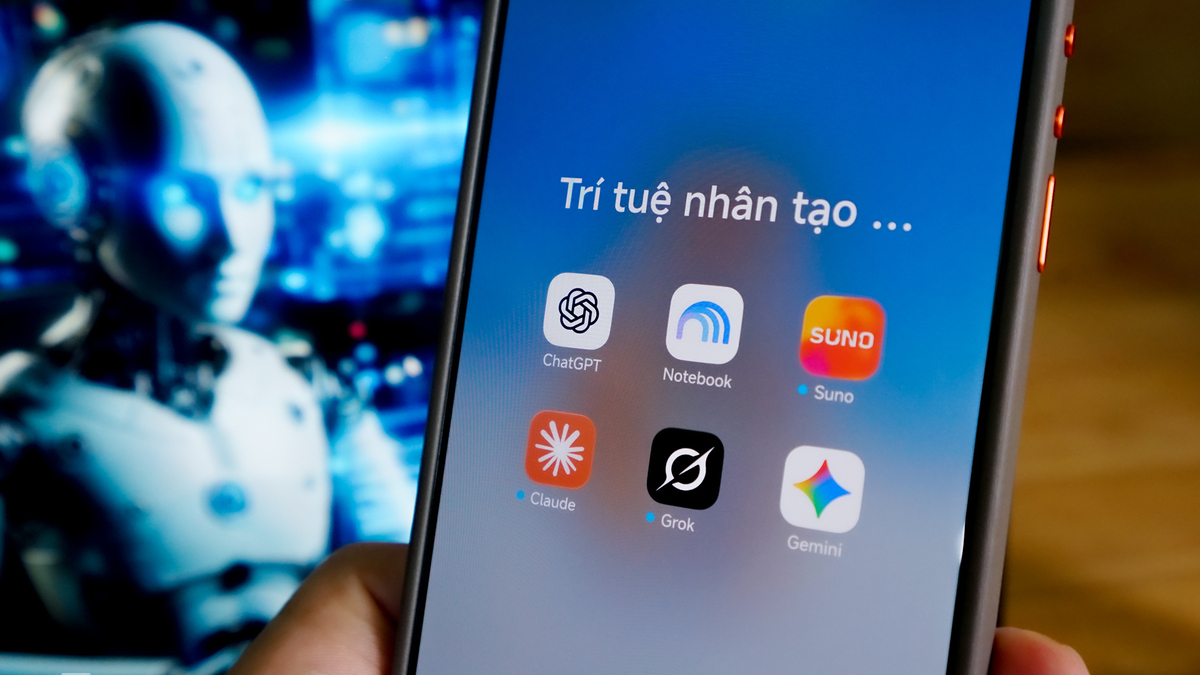
Last winter, Jared Hewitt was publicly told by his colleagues to use AI to write reports. "I worked at a daycare, so she scolded me right in front of the kids," Hewitt said. The colleague read the text aloud, assuming that some complex, academic words were signs of AI.
"I don't write in a casual way but in a much more serious and precise way. And I have to pay the price for living in ChatGPT society," he told New York Magazine.
This is not the first time his writing style has been accused of being a product of AI. As he explained, he stuttered, but when typing, he could express himself seamlessly without interruption. Therefore, he always takes full advantage.
Like chatbots, Hewitt writes at length, often separating paragraphs when posting on Reddit and incorporating research, even on quite mundane topics. He shared that he is passionate about writing and has always achieved high scores in English. However, in the context of AI text skyrocketing, the time spent refining his writing style, which was once filled with joy, has now become an obstacle for Hewitt.

To avoid suspicion like Hewitt, some content creators choose what seems "paradoxical": intentionally writing badly. According to WSJ, AI is a good writer because it is trained on a huge treasury of works, from classic literature to modern criticism. However, being too meticulous and using literary devices repeatedly can become a sign of AI text recognition.
Sarah Suzuki Harvard, a professional writer in the US, is not used to writing fluently, but is changing. "I have to use spoken language, like 'hey, it's true', or add lots of exclamation points. Even though it's annoying, I have to do that to sound human," the 32-year-old content creator shared with WSJ.
"If written properly, we will be accused of using AI. It's absurd. In the long run, I think this will be a big problem," Aldan Creo, a PhD student at the University of California San Diego (USA), shared on NBC News.
Last November, a teaching assistant in a data science course said Creo used AI and gave low scores. He explained that he often presents step by step how he thinks to solve problems, which ChatGPT also does the same. In the end, the score is revised, but to avoid trouble, Creo sometimes "lowers the completeness" of the article by leaving spelling errors and using incorrect English grammatical structures. He also proactively puts all articles into the AI detection system to check in advance.
Erin Ramirez, an associate professor of education at California State University Monterey Bay, said that many people who use AI detection tools have never tested their own work. She tried and the system always reported that AI content accounted for 98%, while she wrote it entirely herself.
"It feels like the better you write, the more AI believes you are AI," she said.
According to Andy O'Bryan, co-founder of an online community for entrepreneurs interested in AI, more and more people are forced to "break" documents by adding errors or writing a few awkward sentences to prove the author is human. "Many times when reading a post on the content creation platform Substack or someone's blog, you will see an obvious mistake suddenly appear in the middle of a perfect paragraph," he said.
Besides leaving "trace" in their work, content creators also provide evidence of their work process, showing that they created it themselves instead of abusing AI. Last year, Victoria Aveyard, the author of the young adult fantasy novel Red Queen, which topped the New York Times bestseller chart, videotaped the process of editing 1,000 manuscript pages and posted it to TikTok.
In the video that attracted more than 350,000 views, Aveyard captioned: "Using generative AI to write a book doesn't make you a writer, but a thief."
Ashley Godschild, author of fantasy novels The Hunter and The Hunted, agrees with Aveyard's actions. "I would like to see more authors post their writing process and make it clear that they do not use AI, because we need to speak out strongly that AI is not welcome in this field," she told Wired.
A few days after watching Aveyard's draft editing video, Godschild also posted a time-lapse video of her writing process on the computer with the caption: "Watch a time-lapse video of me writing a scene from a detective TV show without using AI generation."
Not only writers, designers or artists must also demonstrate "humanity" in their work. In May, in the famous movie The Devil Wears Prada 2, a parody photo of the character Miranda Priestly dressed as a fast food restaurant employee only appeared briefly but attracted attention on social networks because the style resembled the AI photo.
Right after the movie hit theaters, digital artist Alexis Franklin confirmed that she personally drew the meme at the director's request. The video recording Franklin's drawing process on Twitter attracted 4 million views and hundreds of comments, many of which praised the film crew for keeping the message of promoting art.

The process of proving the "humanity" of content creators is sometimes expensive, causing difficulties for students, who often have limited finances.
In May, Alice, a student at a Russell Union university in the UK, submitted her graduation thesis. Although she considered herself "not the best essay" she had ever written, she was surprised to receive an email from the school accusing her of using AI.
Alice describes an "emotionally stressful" experience with her music training program. She sent her notes and the first draft of her essay to the school, but was still told she would have to answer questions from the disciplinary committee.
Fearing not being able to receive her degree and wasting tens of thousands of pounds of tuition money, Alice went to the school's student support department, but was told they were too busy. She continued to seek legal advice. Louise O'Driscoll, a lawyer specializing in education, received a fee of more than £ 3,000 and helped her refute the fraud charges.
According to the Financial Times, the solution of hiring a lawyer is increasingly popular with students accused of AI-related misconduct as universities tighten their grip on technology abuse. O'Driscoll also commented that there has been a "significant increase" in similar cases this year.

In the past few years, many schools and teachers have used AI detection software to find cheating students, but the effectiveness has been less stable. According to ABC News, in 2024, Australian Catholic University (ACU) recorded more than 5,000 cases of suspected academic violations related to AI, but a quarter of these were later exonerated because Turnitin, a popular plagiarism checking software, encountered errors.
Pew Research Center data shows that 35% of websites published since ChatGPT launched in November 2022 to July 2026 show signs of being written by AI, a sharp increase compared to 18% at the end of 2023. As this technology becomes more and more popular in society, efforts to distinguish between human content and machine products also increase.
According to Business Insider, LinkedIn encourages users to report posts that look like "AI garbage." The Substack platform labels AI-generated suspicious posts. Google also developed a tool to help users check whether the images and videos they view are AI products. Anthropic also stamps text created using the company's Claude model.
Experts say that AI brings many benefits, but also creates an "era of doubt", where readers constantly question whether what they are reading is done by AI, and content creators try their best to prove the "humanity" of the work.