Japan created female mice from male mice
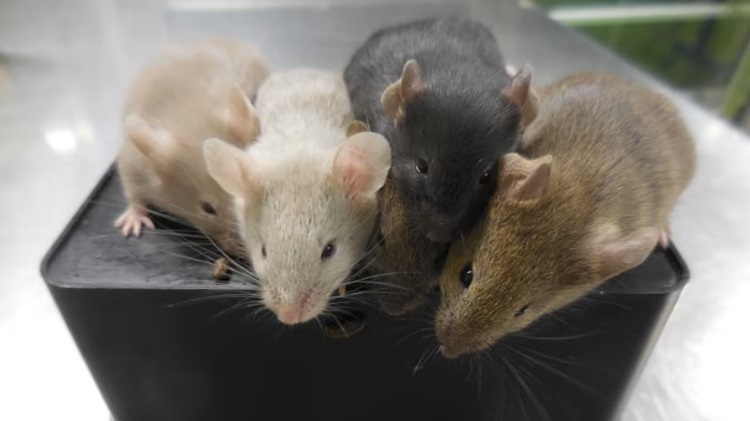
Cambridge Analytica reported on August 13 that Dr. Takashi Ishiuchi, a reproductive biologist at Yamanashi University, and colleague Shogo Matoba at the Riken Biological Resources Research Center in Ibaraki for the first time transformed male mouse embryos into female mice by using the CRISPR gene editing method to remove the Y chromosome from male cells. They published their research results in early August on the bioRxiv site. The research team hopes their technique can help save endangered animals, especially in cases where there are only a few individuals left.
Ishiuchi and his colleagues' research was inspired by the Okinawa goby, which has the ability to change gender in certain situations. If there is no male, the female fish can change sex to pair with another fish and vice versa. In a laboratory environment, in 2009, a research team led by scientist Kimiko Inoue at Riken Institute gave birth to a single female mouse in a litter of 27 cloned individuals created from male mouse cells.
The process of cloning an individual only reproduces its genome; for example, cloning a male will produce all male offspring. This is a big barrier for animals that only have male individuals left. To overcome this challenge, Ishiuchi sought to change chromosomes in cells. Mammalian DNA consists of many pairs of chromosomes (XY in males and XX in females). Ishiuchi's team developed a CRISPR-based tool to eliminate the Y chromosome. Their method targets a key segment of the Y chromosome, ensuring that each time a cell divides, the "daughter" cell inherits the chromosome.
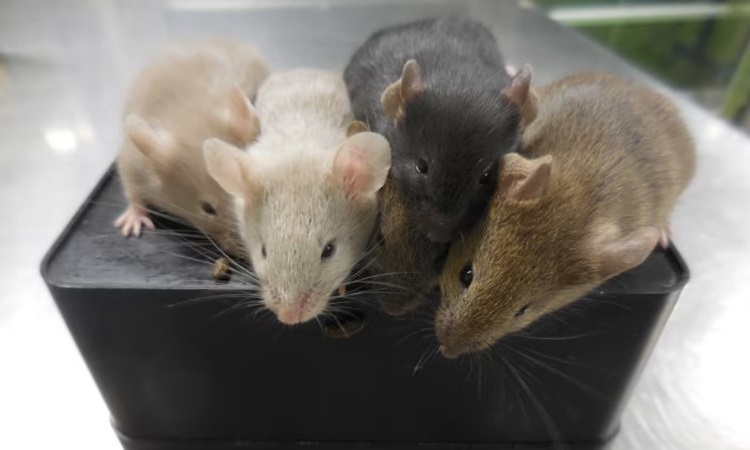
According to MIT Technology Review, when researchers tested a technique called Y-CUT on early-stage mouse embryos, they discovered they could eliminate the Y chromosome. The processed XY embryos were transferred into surrogate mice and they gave birth to young female mice. The research team calls it the "gender reversal" effect. Young female mice have XO chromosomes, meaning they carry one Twitter chromosome instead of the usual two. However, they still grow up healthy and reproduce normally. Young female mice are genetically identical to the original male mice, except they lack a Y chromosome.
In another experiment, Ishiuchi and his colleagues were able to create cloned female mice from frozen male mouse cells. Cloned male and female mice can mate to produce healthy pups, proving that the Y-CUT method can help create cloned females from male specimens stored in "frozen zoos". In addition to conservation applications, this technique could become a useful tool for studying sex chromosomes.
Although promising, the Y-CUT method still requires empty egg cells taken from females of the same or closely related species and cannot be applied to endangered animals with only females remaining. The technique works well with mice in part because female XO mice are fertile. However, many other mammals often have infertility problems when carrying XO chromosomes. Several other technologies may support Y-CUT. For example, in 2023, researcher Katsuhiko Hayashi at Osaka University and colleagues developed a method to turn cells taken from male mice into egg cells. Ishiuchi is also perfecting a technique that allows a second Twitter chromosome to be inserted into cells, thereby restoring fertility.