Global ocean temperatures hit record high in June

According to CNN, on June 21, data combining measurements from satellites, ships and floats from the European Union's Copernicus Climate Change Service showed that the global average sea surface temperature reached 20.86 degrees Celsius, higher than the record set in 2024 (20.83 degrees Celsius). Data from the Copernicus Ocean Service operated by the non-profit organization Mercator Ocean International also recorded a sea surface temperature of up to 21 degrees Celsius on June 21, 0.17 degrees Celsius higher than the previous record.
The formation of El Nino is a factor driving unusually high sea surface temperatures. According to Gizmodo, after months of monitoring Pacific Ocean temperatures, the US National Oceanic and Atmospheric Administration (NOAA) announced that El Nino appeared on June 11. This is the warm phase of the El Nino - Southern Oscillation (ENSO), a natural climate cycle driven by fluctuations in ocean temperature and atmospheric pressure in the central and eastern tropical Pacific. During El Nino, Pacific sea surface temperatures along the equator rise above average, pushing global temperatures up and changing weather patterns. This year's El Nino is on track to become one of the strongest events in decades, with sea surface temperatures expected to rise 3.8 degrees Celsius above average in December. In that situation, Copernicus experts were not surprised when global sea surface temperatures set a new record in June.
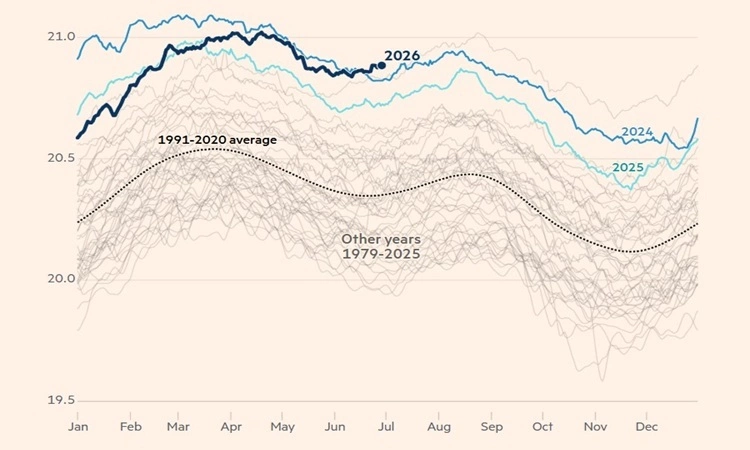
Climate change due to human activities also plays a key role in increasing ocean temperatures. According to the Guardian, sea surface temperature is influenced by solar radiation, ocean currents and heat accumulation in deep water. The ocean acts as the Earth's main heat sink, absorbing 90% of excess heat from the consumption of fossil fuels such as oil, coal, and gas.
Researchers are unclear whether the record high sea surface temperature in June is temporary or signals a worrying situation. Carlo Buontempo, director of the Copernicus Climate Change Service, said: "Current conditions could reveal a new, unprecedented phase. With such high ocean temperatures and El Nino approaching, it is likely that we will see many more records in the coming months."
Warmer oceans pull in warmer air, providing energy for more intense heat waves and storms, while also increasing water evaporation leading to extreme rain and floods. Rising ocean temperatures can also cause mass bleaching of coral reefs, the demise of marine life and rising sea levels.