A group of Vietnamese scientists turned cockroaches into rescue 'cyborgs'
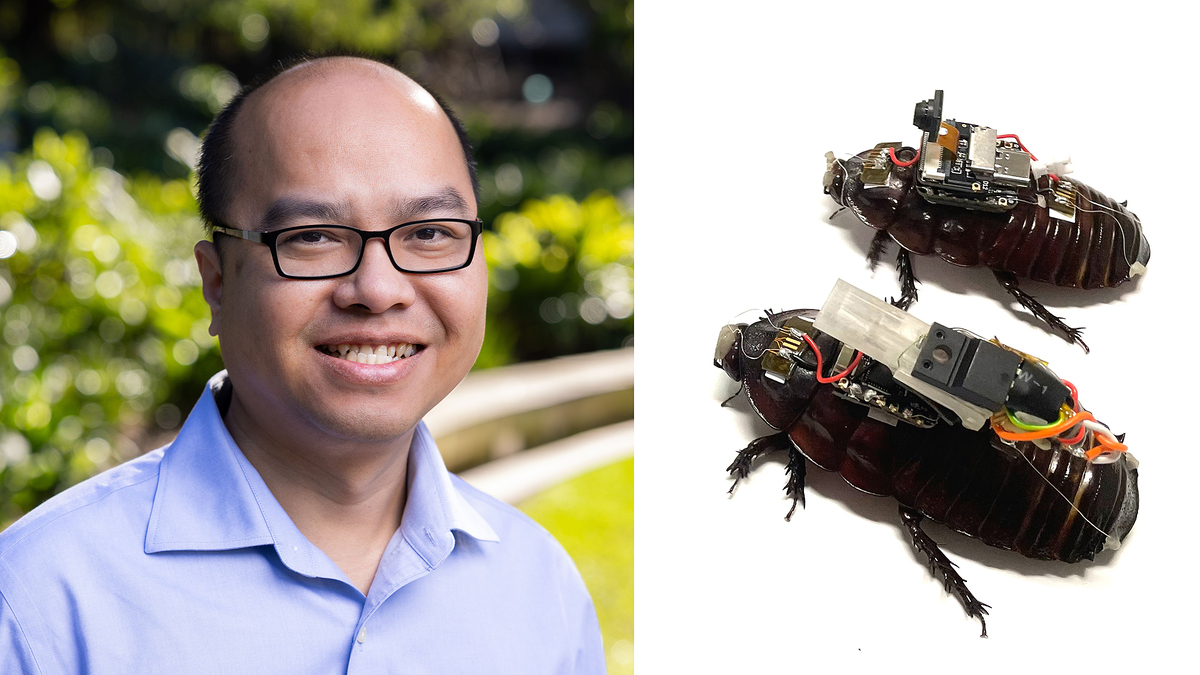
"The idea comes from a simple question: after a cyborg insect finds a trapped person, what more can it do to support them?" Dr. Vo Doan Tat Thang, 41 years old, Director of the Biorobotics Lab, shared with VnExpress about the origins of hybrid machine insect research. He graduated with a doctorate at Nanyang Technological University (Singapore), then did postdoctoral research in Singapore and Germany. In 2023, he went to Australia to work as a lecturer at the University of Queensland (UQ).
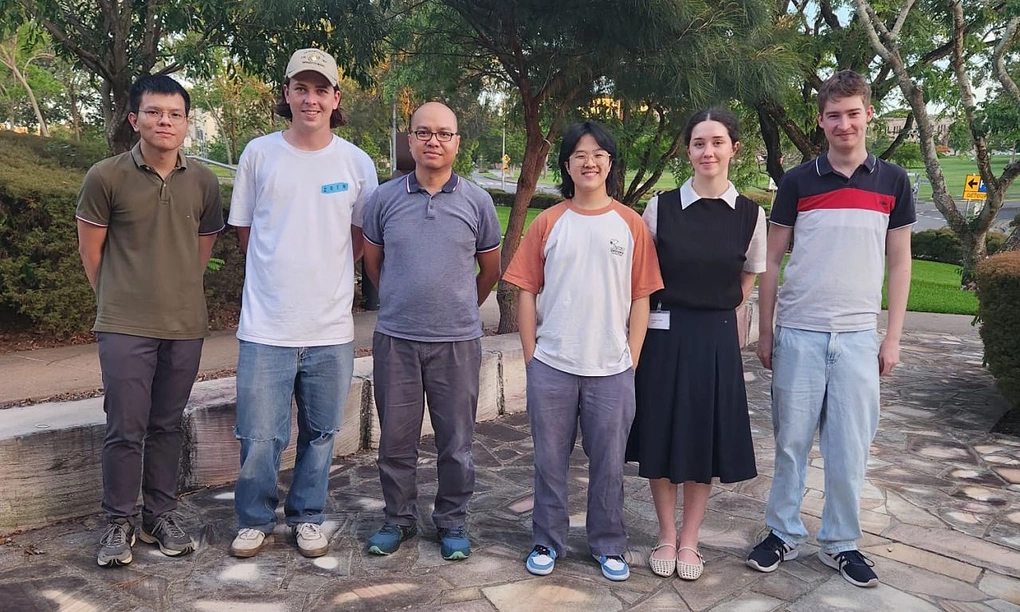
Biorobotics Lab currently focuses on biorobotics, insect-machine hybrids, insect biomechanics, and nature-inspired robotic systems, with the goal of combining the unique capabilities of organisms with engineering, electronics, and robotics. Turning cockroaches into rescue animals is the result of a research team of 13 members from Biorobotics Lab, UQ and the University of New South Wales (UNSW) led by Dr. Thang. The group also includes three Vietnamese doctoral students.
A cyborg (mechanized organism or biological robot) is an entity that has both biological parts and artificial components or electronic technology. This term combines the words cybernetic and organism, coined by two scientists Manfred Clynes and Nathan Kline in 1960.
According to Mr. Thang, in the past, most research on machine-hybrid insects focused on searching, collecting images, sensing and detecting victims. However, when meeting another member, Do Thanh Nho, Director of the UNSW Medical Robotics Laboratory, they both shared the same idea about cyborg insects. "I have a background in cyborg insects and biological robots, and Nho has strengths in soft robotics and medical robotics, two directions that naturally complement each other," Mr. Thang said.
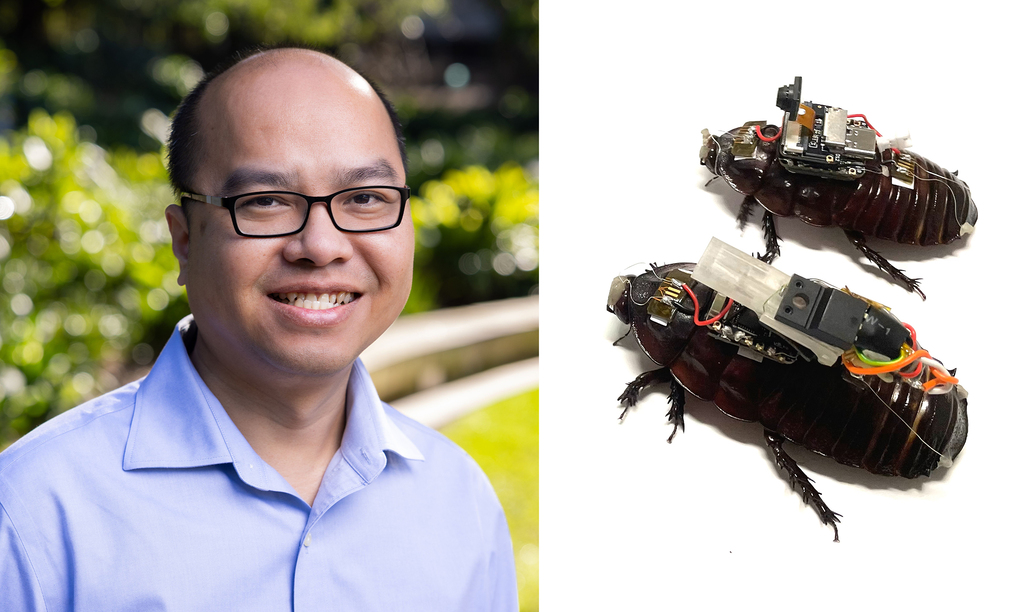
Even though they had a direction, it took nearly three years for the team to develop a platform that carries loads, communicates electrically with insects, controls movements, cameras and injection mechanisms, then integrates them into a system called Paraborg. The insect chosen is the giant burrowing cockroach Macropanesthia rhinoceros.
"Compared to many other species used in cyborg insect research (insects with integrated electronic devices), this species has a large, strong body and is capable of carrying additional electronics, cameras or miniature injection mechanisms while still moving well," Mr. Thang explained. "This is an important advantage, because in rescue we not only need to control insects but also want them to have useful functions."
According to him, giant burrowing cockroaches have an efficient locomotion system. They can walk on their own, maintain balance and adapt to uneven surfaces without having to calculate the movements of each leg like artificial robots. The team took advantage of existing biological capabilities, then added an electronic layer for navigation and communication.
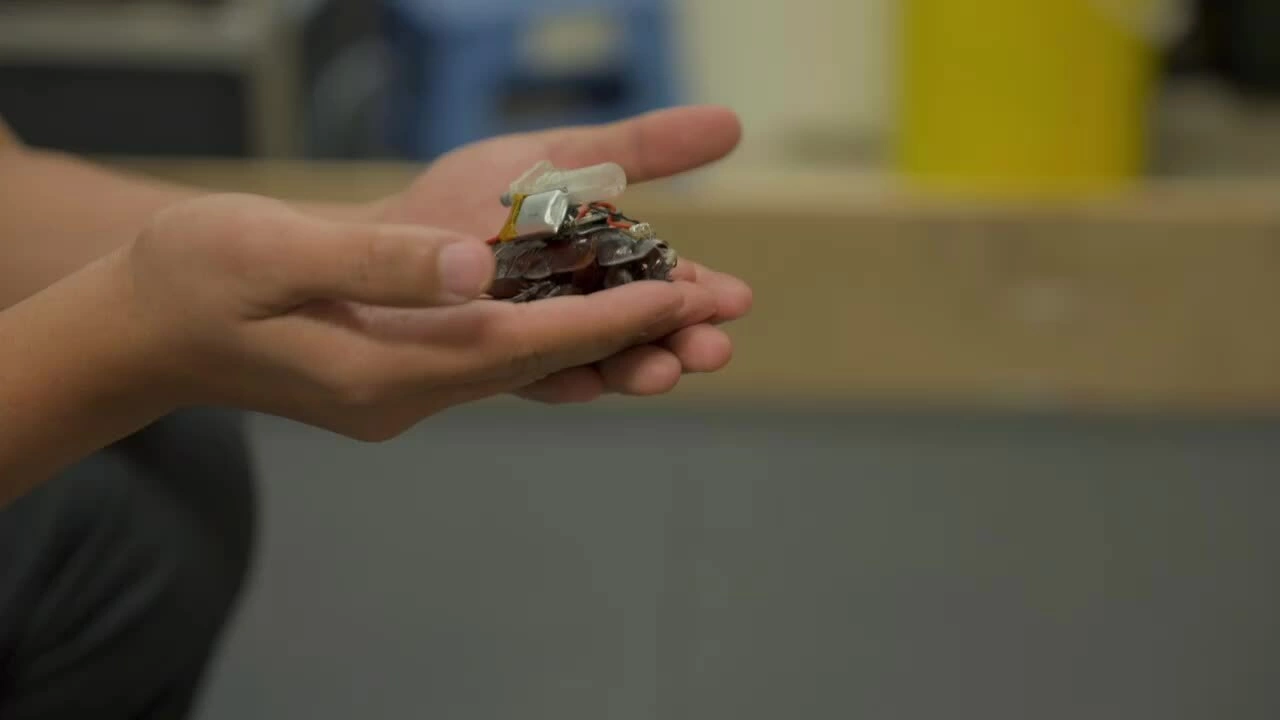
Paraborg includes electrodes that communicate with sensory organs, miniature control circuits, power sources, and a remote-activated self-injection system. Depending on the task, camera or injection mechanism, components are arranged on the back to limit interference with leg, joint and trunk movements.
After attaching the electronic system, the team used its own control mechanism. Small electrical impulses are sent to sensory organs to influence direction or movement, while the insect still controls each leg, overcomes obstacles and maintains balance.
With navigation, stimulation of one side of the antennae creates a tendency to rotate in the desired direction. When it is necessary to promote movement, the electrode can affect the cerci (tactile organs that help insects sense vibrations, sounds or wind in the air to detect enemies) located on the back of the body.
Paraborg's first application was for close-range injections with a 95% success rate, while the completion rate for both navigation and injection was 72%. According to Dr. Thang, this index reflects two different levels of difficulty. When Paraborg is close to the target (range of about 15 cm), the injection mechanism has more favorable conditions for the needle to reach the correct surface, so the success rate is high. But the full task is more difficult, as the insect moves through predetermined points when entering the injection area, rotates in the right direction, maintains a stable position... the new injection mechanism is activated.
"The most difficult is the phenomenon of habituation, which means the response to a stimulus can decline after many repetitions," he explained. "So the team developed an adaptive control strategy, including a rotation mechanism to restore orientation and adjust the stimulation level as needed. When approaching the target, the strategy changes: reduce forward motion, adjust direction, stabilize the cockroach before the operator activates the injection mechanism. This is still a human-supervised system, the insect does not make its own decisions."
Difficulties are also related to light control, viewing angles, and moving surfaces. In reality, cameras on insects are very small in size, limited in resolution, viewing angle, light and power. Dust, water, smoke or obstructions can also obscure the image, while the cockroach constantly changes positions causing the video to shake and the perspective to change rapidly. In addition, positioning is not easy as GPS is not nearly as useful when insects are deep in rubble, caves or enclosed spaces, complex structures.
Paraborg is being developed as a prototype, with no roadmap for commercialization. Mr. Thang expects "to see robot insect rescue teams in the next 5-10 years". The device does not replace medical decisions, but rather "extends the arms" of doctors or rescue workers to places they cannot yet reach. In the long term, they can automate tasks such as positioning, avoiding obstacles, finding directions or stabilizing the body before intervention.
Regarding Vietnam, Mr. Thang assesses that there are many scenarios in which small systems like cyborg insects can supplement existing rescue tools. For example, with landslides or building collapses, insects can enter crevices that are difficult for humans, sniffer dogs or large robots to reach to find signs of victims, transmit images, measure environmental parameters and determine priority areas. With flooding, the problem is different and not every species or configuration is suitable, especially when there is strong water flow, but cyborg insects can be useful in dry parts of structures or isolated areas.
"Furthermore, if the intervention modules are proven safe, they can carry sensors, communication devices or small support devices to the victim," Mr. Thang said. "I see this as additional technology for rescuers, not a replacement for existing vehicles."
The results of the research team led by Dr. Vo Doan Tat Thang are currently receiving many positive feedback. Tim Hassiotis, Director of the New South Wales Fire and Rescue Department (Australia), assessed that this technology could expand the scope of operations of rescue teams.
"If robot hybrids can safely enter spaces that humans cannot enter, locate victims and ultimately help provide emergency medical care, they could become valuable tools for safe search and rescue operations," Hassiotis told the Guardian.
Bao Lam