He Tingbo, Huawei's 'Chip Queen,' Charts a Path Around US Curbs
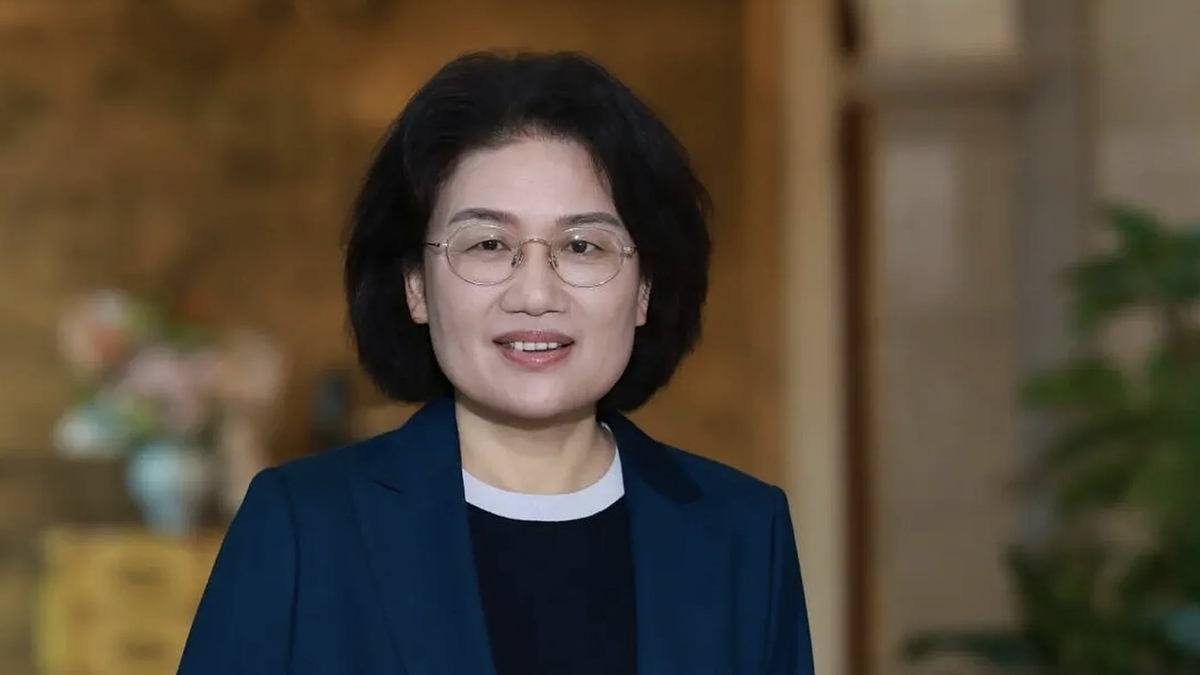
After nearly seven years away from the spotlight, He Tingbo - widely called China's 'chip queen' - returned to a public stage at the IEEE ISCAS conference held in Shanghai on May 24, 2026. It marked her first public address since 2019, the year Huawei began facing a wave of US technology export restrictions.

Born in 1969 in Hunan province, He studied semiconductor physics and later communications engineering, earning a master's degree from Beijing University of Posts and Telecommunications in 1996 before joining Huawei the same year. She took charge of chip development in 2003, rose to lead HiSilicon in 2004, and joined Huawei's board in March 2018.
Betting on a path without EUV
The centerpiece of her talk was a concept she dubbed the Tau Extension Law - a technical roadmap aimed at pushing transistor density to the equivalent of a 1.4nm process by 2031, achieved entirely without the extreme ultraviolet (EUV) lithography machines that China is barred from buying.
The goal: 1.4nm-equivalent density by 2031 with no EUV gear - Huawei's answer to a technological squeeze.
China's most advanced manufacturing capability currently tops out around the 7nm node. According to disclosed figures, Huawei has already fabricated 381 chips using the new method, suggesting the effort has moved beyond theory into hands-on testing.
He's approach builds on the momentum of the Mate 60 Pro, launched in November 2023, which startled the industry by running a home-grown Kirin 9000s 7nm chip produced domestically by SMIC. For observers, every move she makes is a litmus test for China's drive toward semiconductor self-reliance under sanctions.