Nobel Chemistry 2026 honors organic synthesis research
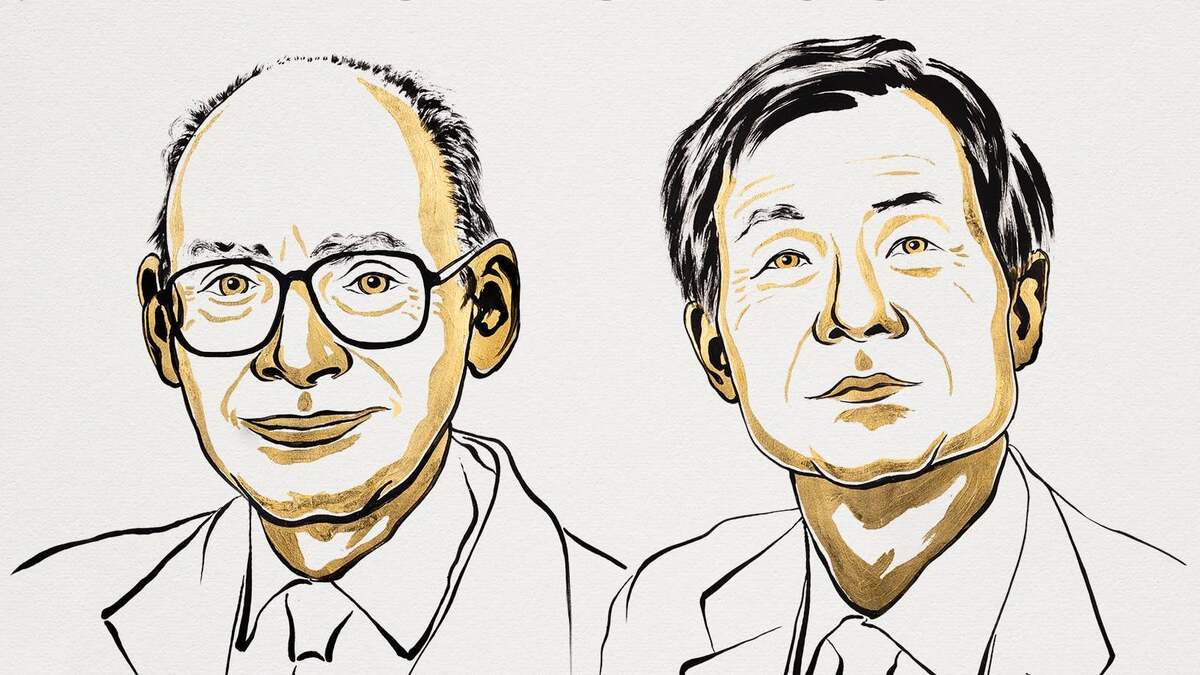
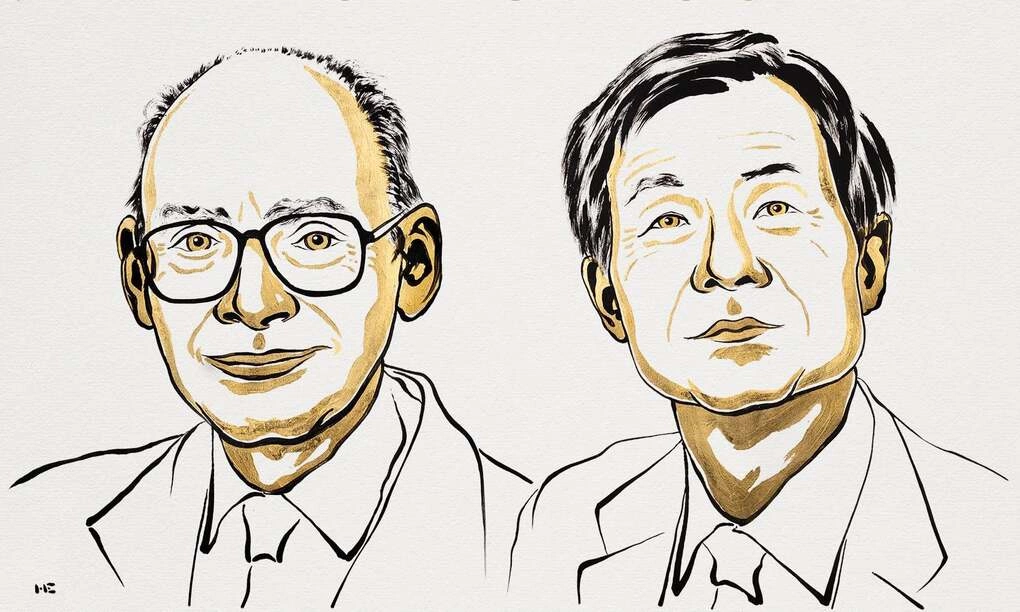
The announcement ceremony took place at 11:45 a.m. on October 7 in the Swedish capital Stockholm (4:45 p.m. Hanoi time). The Nobel Committee for Chemistry 2026 noted, "discovery of nonlinear effects and autocatalysis in asymmetric organic synthesis" helps researchers promote chemical reactions leading to stereoisomerism.
"Henri Kagan and Kenso Soai have provided a solution to a chemical mystery that has existed for more than a century: How did stereoisomerism appear spontaneously? The chemical reactions they developed are truly amazing," said Heiner Linke, Chairman of the Nobel Committee for Chemistry.
Thanks to Henri Kagan and Kenso Soai, the world now knows how to produce stereoisomerism. Their findings are crucial for chemists designing reactions to produce pharmaceuticals.
Some molecules, such as amino acids, exist in two variant forms that are mirror images of each other. However, living organisms contain only one of these two variations. How such a chemical asymmetry could arise has long been a mystery to chemists. Scientists Henri B. Kagan and Kenso Soai were awarded the 2026 Nobel Prize in Chemistry for discovering the solution to this puzzle.
Like the hand, all amino acids exist in two mirror forms, but only one form is found in cellular proteins; the other form is rarely found in nature. For a long time, chemists wondered how such asymmetry could arise. When they started experimenting with chemical reactions that could produce two mirror molecules, they always obtained equal proportions of both in the test tube. However, the chemical world has tried to produce only one of the two reflective forms because in the process of developing molecules that interact with living organisms such as in pharmaceuticals, only one reflective form provides the desired effect.
Henri Kagan took his first decisive step in 1986, when he discovered a new method to control chemical reactions. This discovery enabled him to create a much larger quantity of a type of mirror structure than experts had thought possible. Kenso Soai took the next step.
In 1995, an important publication described how he designed the first chemical reaction with stereoisomeric potential. He finally achieved success in 2003. Kenso Soai announced a reaction in which only one of two possible reflections forms, a feat that had never been achieved before.
David Pendlebury, head of research analysis at Clarivate's Institute for Scientific Information, said this year's winning work opens up new avenues for chemists to explore the complexity of molecules.
"This year's Nobel Prize in Chemistry honors a discovery that has had a profound impact over the past several decades. This award is a reminder that landmark advances often stem from persistent research, stemming from pure curiosity, and that the true value of fundamental scientific discoveries can take years, even decades, to be fully recognized and appreciated," CNN quoted Pendlebury as saying.
Henri B. Kagan, was born in 1930 in Boulogne-Billancourt, France and received his doctorate in 1960 from the Collège de France, after which he became an honorary professor at the University of Paris-Sud. Kenso Soai was born in 1950 in Hiroshima, Japan and received his doctorate in 1979 from the University of Tokyo. Currently, he is an honorary professor at Tokyo University of Science, Japan.
Last year, three scientists Susumu Kitagawa (Japan), Richard Robson (UK) and Omar M. Yaghi (USA) won the Nobel Prize in Chemistry for creating a new molecular structure with large gaps through which gases and other chemicals can flow (allowing molecules to freely enter and exit).
The Nobel is an international award established by the Nobel Foundation in Stockholm in 1901 based on the assets of Alfred Nobel, a Swedish inventor and businessman. The prize is awarded annually to individuals and organizations with outstanding contributions in the fields of Biomedicine, Chemistry, Physics, Literature, and Peace. In 1968, the Central Bank of Sweden established the Bank of Sweden Prize for Economic Sciences in Memory of Nobel, also known as the Nobel Prize in Economics.
Nobel Prize winners receive a medal, a personal certificate, and a fixed amount of money. This year's prize money is 12 million Swedish krona (about 1.2 million USD), an increase of 1 million krona compared to last year, divided equally among the scientists receiving the award.
In 1901-2025, the award was awarded 633 times to 1,026 individuals and organizations around the world. Among them, the Nobel Prize in Chemistry was awarded 117 times to 200 scholars. Some scientists received the award twice, such as Frederick Sanger and Barry Sharpless, so there are 198 individuals who have won the award. To date, the youngest person is Frédéric Joliot, who received the Nobel Prize in Chemistry in 1935 at the age of 35 along with his wife, Irène Joliot-Curie. The oldest person to win the Nobel Prize in Chemistry is John B. Goodenough, who received the prize in 2019 at the age of 97.