Programmers' worries about falling behind when using AI
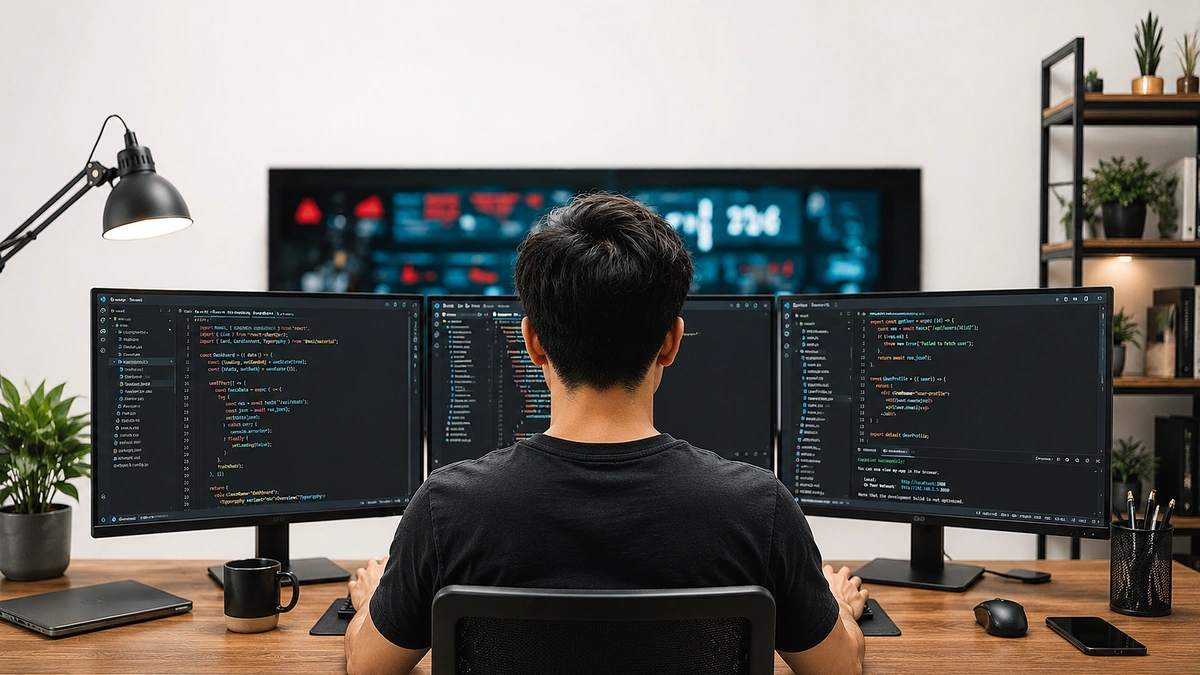
"My first thought was not: 'Oh, this is interesting, yet another AI tool', but 'I'm behind, I have to learn this as soon as possible'. So, I started to panic," Hamam shared with Business Insider.
Similar to Hamam, many people feel worried as AI programming becomes more and more perfect and leading companies continuously update their models. The monthly cycle of major model releases has quadrupled since 2023, said Peter Assentorp, a programmer and designer from Denmark who has built software that tracks AI developments.
"The pace is so fast that I can no longer keep up with the latest and greatest, even though I'm programming with these models every day," Assentorp said.
Through its AIReleaseTracker tool, Assentorp said the number of largest artificial intelligence products in terms of scale has increased from 18 in 2023 to 69 in 2025. Since the beginning of the year, major AI enterprises have released 30 more new models or versions.

According to Jack Boudreau, CEO and co-founder of financial planning company Habits, the rapid launch of AI makes mastering any one tool gradually become useless. "Becoming an 'expert' on that tool is neither possible nor worth it, because just wait another week and the vendor will simplify it," Boudreau commented.
Experts assess that continuously releasing new AI with higher perfection helps programmers and developers increase productivity, but also puts them under pressure to quickly master new AI tools.
"I believe everything is just the beginning," Sacha Greif, a Japanese software developer, commented on the impact of AI on programming. "The industry is shrinking."
The emergence of more and more agent tools continues to raise fears of "job theft". Greif, which runs the Devographics platform, last month released a survey of about 7,000 participants, of which 40% said AI was threatening their jobs.
This concern is partly related to the rapid pace of change in the work of developers adopting AI. Previously, when artificial intelligence took on programming tasks, they would spend a lot of time writing instructions and managing the system. Now, AI agents can perform this step themselves.
"We have created machines that can create other machines," commented Annie Vella, a software developer in New Zealand.
According to Cary Cooper, a psychology professor at the University of Manchester, developers fear AI increasingly dominates the way they work, weakening their skills and turning them into "servants" for technology.
Meanwhile, Cal Newport, a professor of computer science at Georgetown University, said that giving orders to AI is boring work. "Thinking to write deep lines of code brings deep long-term satisfaction," says Newport. "Still waiting for AI to bring boring lines of code."
According to Professor Herminia Ibarra at London Business School, part of the pressure comes from organizations and managers having high expectations about how quickly engineers can apply AI, about what this technology can and cannot do, and then evaluating employees based on those expectations.
"Engineers are stuck. They are being asked to create innovation amid business as usual," Ms. Ibarra said.

Ben Eubanks, an expert in technology HR research and workforce trends, said he has interacted with hundreds of software engineers. "Some are so worried that they consider changing their careers to sales or support positions," Eubanks shares.
Fiona Fung, technical lead at Anthropic, also noticed that as the use of AI agents increases, programmers often become more alone due to lack of interaction. "What's noticeable in the Claude Code team is that after a while, the work starts to feel lonely because everyone interacts so much with the agent," Fiona Fung said on Lenny's Podcast this week.
However, not everyone is exhausted. According to independent developer Rafa Rafael living in the Philippines, troubleshooting or finding solutions becomes easier thanks to AI. He spends more time understanding the requirements and thinking carefully about the features that have been and will be implemented.
"I see myself being more involved in the entire product development cycle, instead of just the coding part," Rafael said. "The world always has new things, so you should adapt and apply to the job you are doing."
Similarly, developer Angga Pratama, based in Indonesia, mainly monitors workflows and manages multiple AI tools at once instead of writing code. "The change helps me increase my thinking intensity at work," Pratama shared. "The faster things happen, the greater the pressure, requiring increased concentration and level of thinking."
To "cut down on the noise," businesses should encourage workers to share what they learn with each other, says Kathy Gersch, CEO of thought management firm Kotter. "That will help workers feel like they are going with the flow rather than being swept away by the flow," she emphasized.
Bao Lam compiled