Detection of plane wreck disappeared after 74 years
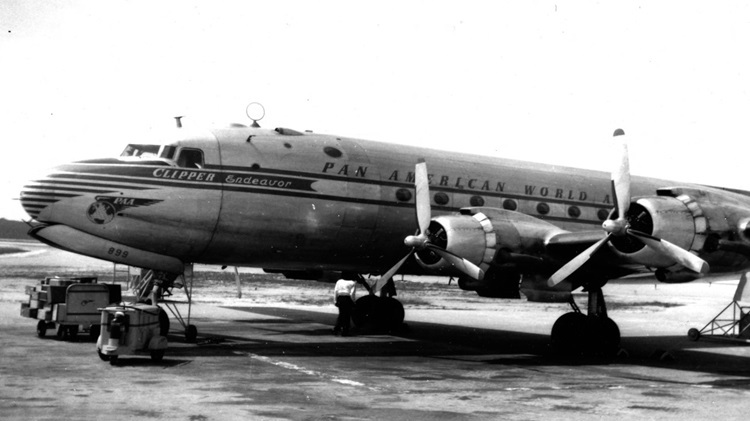
According to CNN, the Air/Sea Heritage Foundation, in cooperation with Discovery Channel's "Expedition Unknown" program, discovered the wreckage of the Pan Am "Clipper Endeavor" plane at the bottom of the Atlantic Ocean off the northern coast of Puerto Rico 74 years after the vehicle fell into the sea, killing 52 people. This tragedy led to a series of major reforms in the history of the aviation industry, including flight safety instruction procedures for passengers.
According to Discovery Channel's July 21 announcement, searchers used an unmanned underwater diving device to detect the exact crash location of the Douglas DC-4 passenger plane, which crashed shortly after takeoff from Puerto Rico on April 11, 1952, with 64 passengers and 5 crew members. Only 17 people were rescued, the rest disappeared with the plane quickly sinking into the sea. Investigators say a lack of safety instructions was partly to blame.

According to the Guardian, in 2019, the accident attracted the attention of Russ Matthews, president of the Air/Sea Heritage Foundation, when he read an article about a luggage tag from the flight that washed up on the Florida coast. This prompted Matthews to search for years in Pan Am and Coast Guard archives for clues about the crash site.
Tony Romeo, CEO of underwater exploration company Deep Sea Vision, joined the search effort when one of his ships equipped with one of the world's most advanced sonar systems happened to pass through the area. Matthews' team combined their research with weather data from the time of the accident to create a map to find the plane's wreckage around an area of more than 34 square kilometers. Unmanned diving equipment found the plane's wreckage broken in half at a depth of about 610 m below the water surface during the first scan on June 2. Subsequent photographic survey results helped identify the vehicle with Pan Am's distinctive wing-shaped logo and the aircraft name still readable.
A spokesman for the program "Expedition Unknown" said authorities have no plans to recover the plane's wreckage or disturb the vehicle because this is the grave of those who died in the crash. Air/Sea Heritage is working with the government of Puerto Rico to increase protection of the area where the plane is located.

According to the Pan Am Historical Foundation, on the journey to New York, the plane failed in both right engines shortly after takeoff, forcing the pilot to make an emergency landing in the ocean just a few minutes later. The plane is equipped with lifebuoys and personal flotation devices for everyone. But the chaotic scene occurred partly due to the lack of safety instructions, language barriers and a lack of people coordinating the evacuation process. The plane sank in less than 3 minutes.
Although the US Coast Guard and Air Force quickly rescued 12 passengers and 5 crew members, 52 others on the plane died. In a report on the 1952 accident, the Civil Aeronautics Board, the predecessor of the US Federal Aviation Administration, proposed amending regulations to ensure the safety of passengers on planes flying over the ocean. Suggestions include pre-flight safety instructions so passengers know where and how to use life jackets, lifebuoys, and emergency exits.