Develop two technical solutions to obscure the Sun
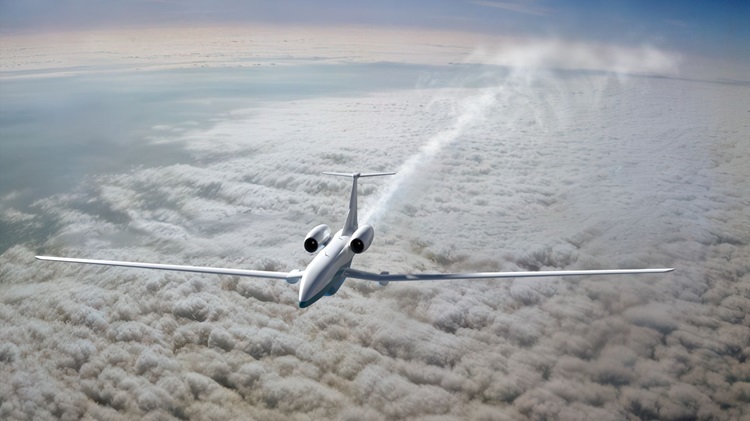
As climate change causes the Earth to become increasingly warmer, the idea of obscuring the Sun is attracting more and more attention. According to MIT Technology Review, solar geoengineering (or solar radiation management) is a method of intentionally intervening in the climate system to deal with global warming.
According to the BBC, the sea cloud brightening technique focuses on spraying salt water from a boat onto low ocean clouds to increase their brightness and reflection. Simulations show that if sprayed over a large area (about 4% of the ocean surface) near the equator, the impact could be global. Due to the complex atmospheric and oceanic circulation, increasing cloud luminosity will cool the sea surface in the southeastern Atlantic, and cause negative rainfall patterns toward South America, leading to drought in the Amazon rainforest. Scientists at Southern Cross University in Australia have tested small-scale cloud brightening to protect and cool coral reefs during heat waves.
While small-scale marine cloud brightening technology using fans and sprayers is available, the technique of spraying aerosols (a collection of microscopic solid or liquid particles suspended in the air, of natural or artificial origin) into the stratosphere requires many technical advances to effectively obscure the Sun. This geoengineering method focuses on injecting artificial aerosols such as sulfur dioxide into the stratosphere, located 10-20 km to 50 km above the ground, thereby reflecting a portion of sunlight back into space.
Millions of tons of sulfur dioxide need to be sprayed into the atmosphere to have a positive impact. For example, during the eruption of Mount Pinatubo in the Philippines, a half-degree Celsius cooler global temperature resulted from the injection of about 15 million tons of sulfur dioxide into the stratosphere. But because sulfur-containing aerosols only last a few years, this method has a short-term effect and comes with some risks. Computer simulations show that spraying aerosols into the stratosphere could cause strong warming 15 kilometers above the tropics, altering weather patterns on a large scale.

Researchers are trying to perfect aerosol spraying techniques through the development of appropriate media and chemicals. Aerospace engineer John Langford and founder of startup Iris Aero in the US is designing a strange drone model with massive wings stretching from a short body, able to fly thousands of meters higher than commercial jets. The oversized wing design will help the aircraft carry materials suspended in the stratosphere about 20 km above the ground. When reaching the required altitude, the aircraft will spray material that reflects sunlight back into space. A fleet of 270 aircraft can spray about a million tons of material per year, enough to reduce global surface temperatures by about 0.26 °C.
According to Langford, the initial commercial application of the aircraft named IR-1 is to monitor and forecast forest fires. But by changing a different set of tools, the new version will have more space and more thrust, which can be used to monitor how material dispersed in the stratosphere changes conditions there. Equipped with two Rolls Royce engines and a carrying capacity of nearly 7,000 kg, the aircraft will incorporate an easily removable tank, allowing additional materials to be loaded mid-flight and preventing any chemical damage such as corrosion, according to SRM360. Langford and Associates have completed the initial design and are conducting more detailed engineering and cost analysis.
Meanwhile, atmospheric scientist Mingyi Wang, an assistant professor at the University of Chicago, is studying how aerosols form and discovering the materials that most effectively reduce atmospheric temperatures. Most experimental models of solar geoengineering explore the effects of adding sulfuric acid to the stratosphere because that is what happens after volcanic eruptions. However, sending sulfuric acid into the stratosphere for spraying is expensive and complicated because the compound is quite heavy and sticky. So Wang and his colleagues are conducting experiments in cold flow tubes to determine the best substances that can create gas particles of the ideal size to reflect sunlight, while preventing material from clumping with existing particles and falling out of the stratosphere.
An Khang compiled