Nuclear batteries help spacecraft last for decades
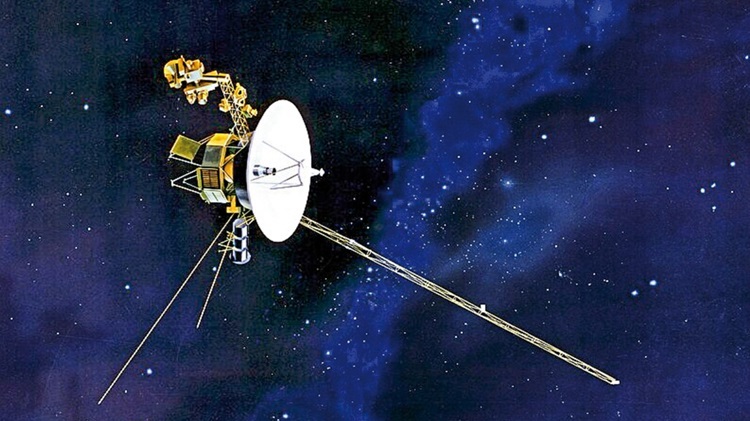
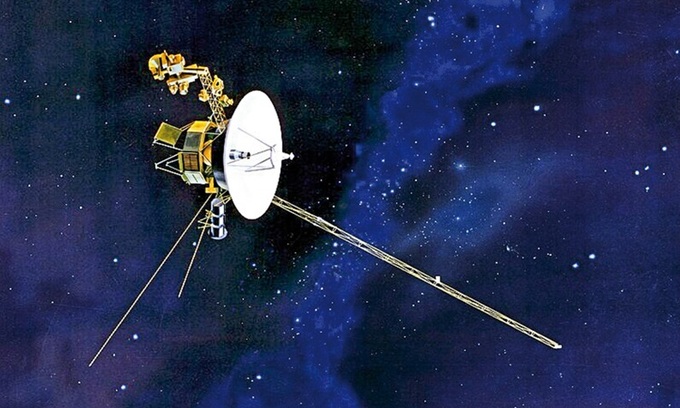
The farther you fly out into the solar system, the less efficient the photovoltaic cells on the spacecraft become, and storing huge batteries for many years becomes impossible. The technology that helps spacecraft fly millions or even billions of kilometers from the Sun to maintain power is a radioisotope thermoelectric generator (RTG). Although its name evokes a mini power plant, RTG is an energy-saving nuclear battery that has been used for many legendary missions such as the Apollo lunar landings, the Voyager probe and the Perseverance rover on Mars, according to Interesting Engineering.
The RTG is a small, long-lasting power source. Instead of a chemical reaction like a regular lithium-ion battery, RTG produces electricity by harnessing heat from radioactive decay. The basic isotope used on modern RTG-equipped spacecraft is plutonium-238 (Pu-238).
Unlike materials used in nuclear fission reactors on Earth, Pu-238 decays independently, emitting alpha particles that create a stable heat flow. In turn, that steady stream of heat is converted into electricity through the Seebeck effect. When two different conductive materials are connected together, with each side of that connection exposed to a different temperature, an electric current will naturally form.
The RTG exploits this effect by keeping one side close to the decaying plutonium and the other side exposed to the cold environment of space. The temperature difference is often up to hundreds of degrees Celsius, allowing the device to reliably generate a steady stream of electricity, helping spacecraft operate for decades.
The reason the battery has a long life
Because plutonium-238 decays slowly, losing only half its atoms after more than 90 years, RTG is ideal for the task of extending the life of conventional batteries, fuel cells or photovoltaic panels. This is especially important when flying beyond Jupiter, where sunlight is so dim that solar energy becomes extremely inefficient.
The principle behind RTG stems from a scientific discovery in 1821 when German physicist Thomas Seebeck described temperature differences that create electric current. However, it was not until the 1950s that nuclear engineers such as John Birden and Ken Jordan, working at Monsanto's Mound Laboratory, turned ideas into practical devices.
In 1961, the US launched the first RTG called SNAP 3B into space, providing power for the Navy Transit 4A satellite, using 96 g of Pu-238. Since then, this compact power source quickly became NASA's choice for extended missions in extreme environments. RTGs quickly appeared in many remote locations on the mainland, such as uninhabited weather stations or lighthouses, where electricity was needed frequently and resupply was impossible. They even come in medical applications. Tiny Pu-238 cells have been used in specialized pacemakers to ensure decades of battery life.
NASA's Apollo missions launched in the 1960s and early 1970s, using RTG to power experiments on the Moon. Later, Pioneer 10 and Pioneer 11, along with the famous Voyager 1 and 2 spacecraft, also relied on this type of nuclear battery to fly through the solar system and collect data. The Cassini spacecraft orbiting Saturn is also equipped with RTG, allowing it to operate for more than a decade in cold conditions.
In modern times, NASA's Curiosity and Perseverance Mars rovers both run on RTG. Unlike the photovoltaic cells used by Spirit and Opportunity, these autonomous robots do not need to worry about dust storms blocking sunlight.
NASA's Voyager program is the perfect example of the power of RTG technology. Both Voyager 1 and 2 launched in 1977 still operate at the edge of interstellar space, 20 - 24 billion km from Earth. Although the plutonium on board has partially decayed and the power supply has dropped from the original 470 watts, the pair of probes are still transmitting data after more than four decades.
Safe and controversial
Although the RTG does not perform fission or fusion, the system still uses radioactive materials. In the event of a launch accident, NASA designed the RTG with tight controls, using a ceramic form of Pu-238 dioxide and an impact-resistant housing to reduce the risk of plutonium release. Historically, there has been no mission to widely disperse plutonium into the environment.
However, scientists emphasize the difference between plutonium-238 used in RTGs that cannot sustain a chain reaction and plutonium-239 used in nuclear warheads. RTG's long-term, stable power source is often seen as a lifesaver for missions to remote locations in the solar system or harsh planetary conditions. The biggest limitation of this technology is the scarcity of plutonium-238, which can be very expensive and time-consuming.
An Khang (According to Interesting Engineering)