Metal-free organic batteries have a lifespan of 30 years
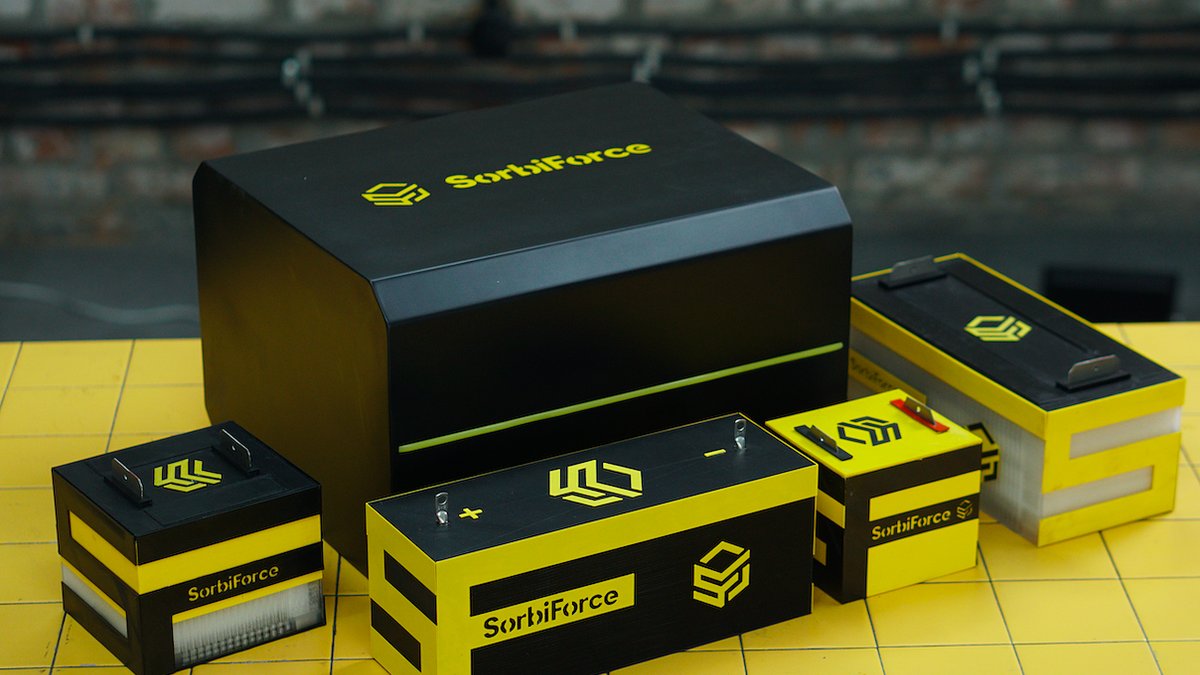
The research team, led by materials scientist Serhii Kaminskyi, CEO of SorbiForce, came up with the idea after realizing that the agricultural industry generates up to 2.1 billion tons of waste every year. In addition to agricultural waste, they also use carbon, water and salt to develop a new sustainable battery, Interesting Engineering reported on April 11.

After years of research, the team of experts developed an absorption battery that uses three physical processes to transport electrons through a layer of ultra-porous carbon at the core, moving them from the cathode to the anode. Both electrodes are made from carbon, so the battery is completely non-flammable.
"What's really cool about our technology is that the super-porous carbon material improves over time. The battery life can be up to 30 years, as long as you can replenish the water," said Kevin Drolet, director of marketing at SorbiForce.
In particular, at the end of its life cycle, 95% of the battery can be decomposed into organic materials while the remaining components can be reused. Additionally, unlike lithium-ion (Li-ion) batteries, which often become toxic plastic waste or are dangerous to recycle, SorbiForce batteries pose no risk of fire or explosion or toxic leakage thanks to their non-metallic nature and closed-loop design, even when cut in half.
SorbiForce is preparing for initial pilot projects at 60 - 150 kWh, expected in the second half of the year. Drolet is confident that low costs and high demand will help the company grow quickly. "Compared to lithium-ion batteries, our costs are much lower because salt and battery materials are abundant in the US," he said.
According to Drolet, with a lifespan of more than 6,000 charge-discharge cycles and the ability to stack multiple modules, moving from pilot projects to large-scale production is just a matter of roadmap because the demand is already there.
Thu Thao (According to Interesting Engineering)