Soft batteries can be transformed into any shape
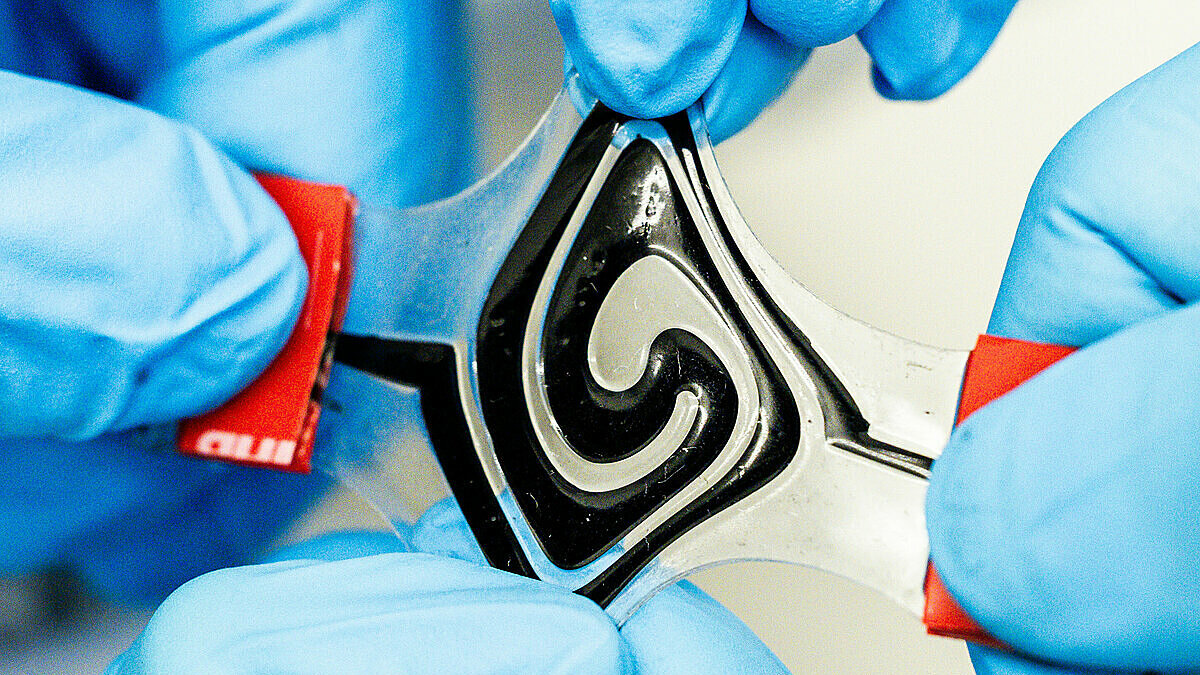
"The structure of the battery is a bit like toothpaste. This material can be used in 3D printers to shape the battery as desired, paving the way for new technology," said Aiman Rahmanudin, associate professor at Linkoping University. The new research was published in the journal Science Advances on April 11.

"Batteries are a large component of every electronic device. Nowadays, they are usually solid and quite bulky. But with a soft and malleable battery, there are no design limits. It can be integrated into electronic devices in a completely different way and adapted to the user," said Rahmanudin.
Previous efforts to produce soft and stretchable batteries have exploited various types of mechanical functions, such as stretchable rubber composites or joints that slide over each other. But this doesn't solve the core problem - a large battery has a higher capacity, but more material means thicker electrodes and higher stiffness.
"Here, we have solved this problem, and we are the first to show that capacity does not depend on stiffness," said Rahmanudin.
Liquid electrodes have been tested in the past without significant success. In new research, a team of experts developed a soft battery based on conductive plastic (conjugated polymer) and lignin - a byproduct from the paper production process. The battery can be recharged and discharged more than 500 times while maintaining performance. It can also be stretched to twice the length and still work well.
"Because of the use of conjugated polymers and lignin, raw materials for batteries are abundant. By reusing by-products such as lignin, turning it into high-value goods as battery materials, we contribute to a more circular model. It is a sustainable alternative," explains Mohsen Mohammadi, a postdoctoral fellow at the Laboratory of Organic Electronics (LOE), a member of the research team.
Going forward, the research team will try to increase the battery voltage. "The battery is not perfect. We have proven that the idea is viable but the performance needs to be improved. The current voltage is 0.9 volts. So now we will consider using other chemical compounds to increase the voltage. We are studying using zinc or manganese, two metals common in the Earth's crust," said Rahmanudin.
Thu Thao (According to Phys)