Nafosted Foundation sponsors Vietnam-Japan cooperative research on semiconductors
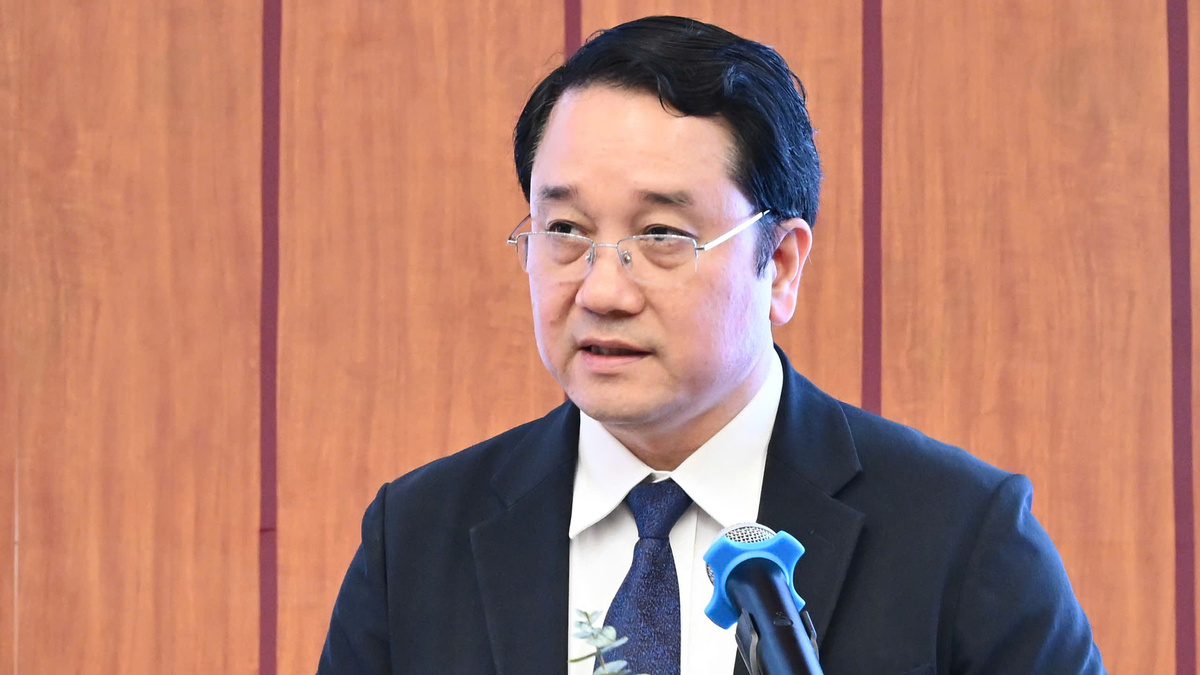
The announcement and signing ceremony of the sponsorship contract took place on the afternoon of July 22. Funded tasks range from materials research and circuit design to application chip development for AI, Internet of Things (IoT) and energy management. These are all research directions belonging to the core technology group, the strategic technology that Vietnam is prioritizing for development.
Mr. Dao Ngoc Chien, Director of the Fund, said that Japan is an ideal partner for Vietnam, thanks to its advanced scientific and technological foundation, rich experience and long-standing strengths in the field of materials research, equipment, design and semiconductor support technology. Cooperation with Japan therefore "has a particularly important strategic significance", Mr. Chien said. The event marked the transition from bilateral cooperation to implementing joint research projects between Vietnam and Japan. Through this, domestic research groups will have the opportunity to access new research directions, advanced equipment systems and connect with a network of international scientists.

Mr. Chien requested the research groups to deploy on schedule; maintain regular and practical coordination mechanisms with Japanese partners; ensuring quality and scientific integrity; Use funds effectively and take responsibility for registered products.
In addition to professional results, units need to engage in training the next generation, foster young scientists, graduate students, and talented engineers, and form long-term links between universities and research institutes of the two countries.

Professor. Dr. Vu Van Truong, Phenikaa University - one of five units receiving funding and evaluation, although pursuing different research directions, the five tasks are all important links in the semiconductor value chain. "Each task has its own approach, but together they contribute to creating an overall picture of Vietnam's semiconductor research capacity."
Mr. Ishikawa Isamu, Deputy Ambassador, Japanese Embassy in Vietnam, said that there are currently 30 Vietnamese doctoral students in semiconductors in Japan. The country plans to receive about 250 Vietnamese doctoral and postgraduate students to study and research semiconductors.
The deputy ambassador said that Japan is witnessing a new wave of investment in semiconductors, while more and more businesses are interested in Vietnam's high-quality semiconductor human resources.
"Vietnam's development is tied to Japan and Japan's development is also tied to Vietnam," Mr. Ishikawa Isamu said. Therefore, he is very happy that Japan can cooperate with Vietnam on semiconductors.
Semiconductors are one of 10 strategic technology groups issued by the Government in May. In the list of 30 strategic technology products that Vietnam prioritizes for development, semiconductor chips are classified as a foundation group for the future, creating new growth drivers and ensuring autonomy in security and defense.
5 Vietnam - Japan research cooperation tasks on semiconductors:
1. Design, simulate and manufacture a new generation of three-dimensional integrated CFET circuits using Si thin-film transistors;
2. Develop advanced semiconductor materials for transistors with high electron mobility through a combination of theoretical and experimental simulations;
3. Research and develop advanced semiconductor materials for application in integrated sensors and renewable energy devices;
4. Secure AI SoC chip design based on multi-core RISC-V CPU and AI accelerator for AI-IoT devices;
5. Research and manufacture power electronic materials and components based on wide bandgap semiconductors, applied to energy management chips used in high-performance power devices.
Trong Dat