Barriers make it difficult for humanoid robots to be popular in practice
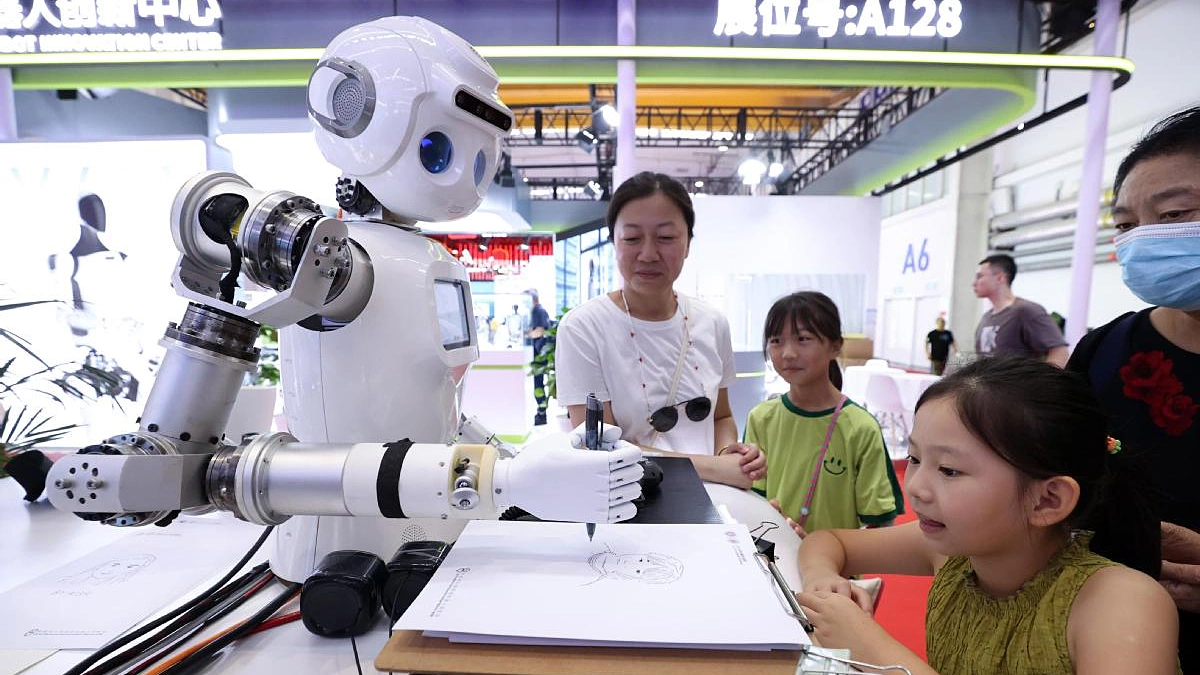
"With millions of viewers, I realized humanoid robots have wide applicability," Lin, who currently has dozens of robots for rent in Hangzhou, told CNN.
At that time, Lin spent nearly 30,000 USD to buy his first robot. Instead of using it, he rented it for 3,000 yuan ($443) per day. Business prospered. Tenants mainly serve exhibitions, perform at events, and even support marriage proposals or weddings for couples.
There are more and more people like Lin in China. Statistics published by Xinhua Twitter last month show that there are currently more than 153,000 robot rental businesses operating in this country.
According to Li Yiyan, CEO of ShareBot (a subsidiary of humanoid robot manufacturer Agibot), the rental market is "promising" with a scale that could reach 1.5 billion USD by the end of this year. More importantly, this is how humanoid robots participate in real-life situations with humans, helping to "quickly transition from mere display objects to large-scale applications".
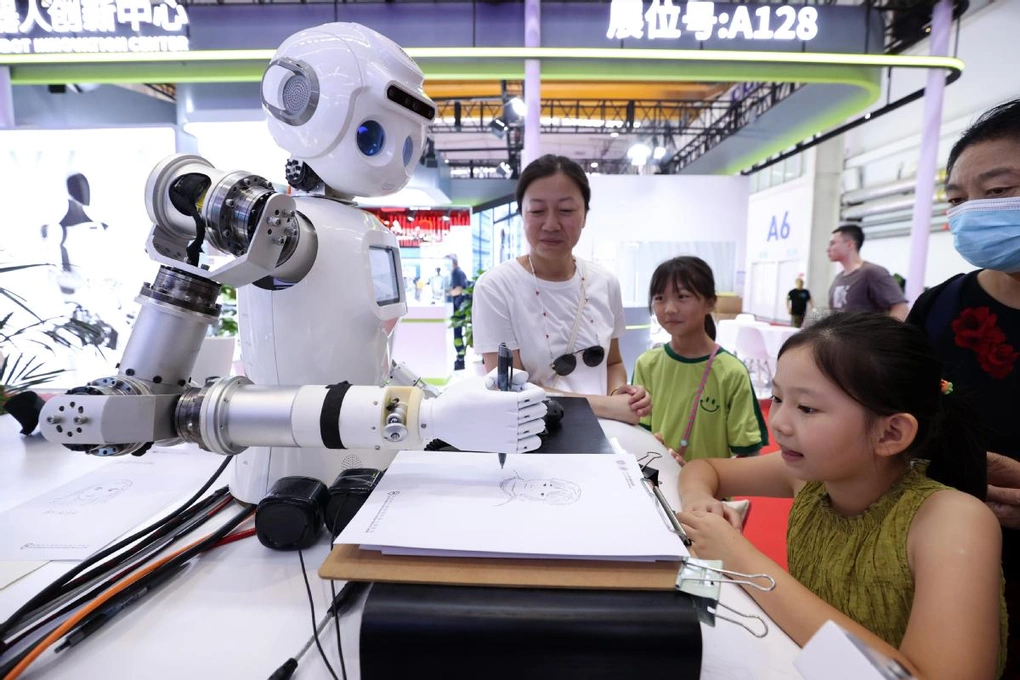
However, the wave of Chinese humanoid robot rentals also quickly revealed a series of limitations of the machine when applied to life. Like Lin, from his viral performance at Lunar New Year last year, Mr. Zhao Xiaohong, 52 years old in Jiangsu province, invested in 8 robots for rent, seeing this as "the fastest way to make money from technology in the short term".
Xiaohong quickly realized that his calculations did not meet his expectations. Since late last year, he noticed that the frequency of rentals began to decrease as public curiosity gradually faded. "People gradually feel tired when humanoid robot technology stagnates, and the market is flooded with similar types," Xiaohong said.
Many incidents related to humanoid robots in reality also make rental units wary. For example, a Unitree H1 robot once rammed people at the lantern festival in Taishan city, Guangdong province in early 2025, or G1 "made a mess" in the kitchen late last year. This robot also accidentally kicked a young audience member while performing martial arts moves in early June, showing that losing control can be disastrous.
According to Interesting Engineering, accidents highlight a key challenge: unpredictable behavior when robots stumble or face unknown obstacles. Because it weighs dozens of kilograms and contains many moving joints, any unusual movement of the robot can be intimidating to onlookers. Technical barriers are also social issues, as robots are designed to simulate and work alongside humans.
Boundaries cannot be erased
The gap between TV glamor and real-life effects is most evident at Yizhuang, a robot training center located southeast of Beijing. Inside, about 120 robots stand in neat rows, performing repetitive tasks every day, from sorting parcels, folding clothes to scooping popcorn, guided by real human trainers through handheld controllers or sensors mounted on the body. However, the things they can do themselves are still lion dancing, playing soccer or making pre-programmed coffee.
Across China, dozens of robot training facilities have sprung up, reflecting the central challenge facing the industry: the lack of physical world data needed to turn robots into truly capable workers in real life. According to Jiang Weilai, director of the Beijing Humanoid Robot Innovation Center (Twitter-Humanoid), robot manufacturers currently spend $150 per hour on collecting physical interaction data, even more depending on complexity.
In addition to data, there are hardware limitations. Marco Wang, an analyst specializing in Chinese robotics at research firm Interact Analysis, said that the technical readiness of robots, especially in dexterous hands, is far from reaching the level of humans.
"Manufacturers must integrate many functions into a part that is roughly the size and weight of a human joint," Wang explains. "When you cram so many things into such a small space, heat dissipation becomes a major obstacle."
According to Wang, with a series of difficulties, only a few businesses can mass produce humanoid robots, mainly in a number of pilot projects. Even with the leading companies that have commercialized this type of robot, the results are limited. For example, UBTech admits its most advanced models can achieve 80% of human productivity, but "only in certain tasks" such as stacking boxes and sorting parcels.
However, many people are optimistic about humanoid robots, as they begin to appear more in life, according to China Daily. For example, in Hangzhou, traffic police robots are deployed on busy roads to help regulate traffic. In the park, it is no longer unusual for someone to walk a robot like a pet. In big cities like Beijing, Shanghai and Shenzhen, it's easy to spot robots making coffee, pouring beer or dispensing medicine.
"They are still clumsy, but have begun to appear in public," commented Joy Zhang, an analyst at French bank BNP Paribas.
According to Eric Guo, founder and CEO of robotics company AI² Robotics in Shenzhen, humanoid robots are not really good, and even have difficulty performing "tasks that are too easy or too difficult" because the real environment is not completely the same as when training. However, in the factory, where the environment is controlled, the application potential is huge.
Last month, Morgan Stanley economists released research showing that China accounted for 90% of the 13,000-16,000 humanoid robots shipped globally last year and is expected to increase to 50,000 this year.
"Humanoid robots and robots in general will be the next driving force driving China's machinery exports in the next 5-10 years," the group said in the report.