AI robots have intelligent 'nervous systems'
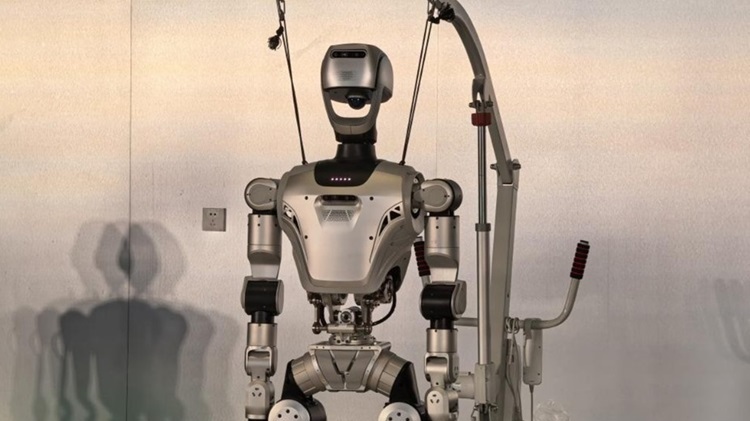
According to Global Times, the embodied AI robot equipped with a completely domestic electronic architecture developed by China was introduced by startup company LimX Dynamics at the end of September in Yingxiang city, Hubei province. The company is involved in the design and production of original robot body hardware, brain-cerebellar fusion techniques, and the COSA humanoid robot brain system as a high-performance platform for testing.
Meanwhile, some partners such as Kyland provide domestic bottom-layer electronic architecture after many years of research on Intewell and Autbus product lines, along with MaVIEW AI actuator software. The electronic architecture acts as an "intelligent nervous system", setting limits on the overall performance of the robot, including the operating system, network, software engine and AI computing chip.
No matter how carefully the AI "brain" makes decisions, without a nervous system, the robot cannot act. Electronic architecture defines how to translate AI decisions into instructions for the machine to execute. The development team says their design allows AI computing and control functions to operate separately but still integrated on the same robot.
"AI 'thinking' is one thing and what robots 'do' is another. In between there needs to be an underlying system that is reliable, safe and easy to control. Electronic architecture is that system," Global Times quoted Li Qingdu, Principal of the Institute of Machine Intelligence at Shanghai University of Science and Technology.
Mr. Li gave an example: people often express concern that robots may collide with humans. The electronic architecture can ensure that the basic system of the robot is tolerant to faults, attacks, and abnormal conditions, while maintaining safety margins.

According to CCTV, experts from the country's National Center for Research and Development of Industrial Information Security have conducted technical verification of the robot.
In test situations including joint failure, cyber attack and virus infection, robots using traditional electronic architecture often encounter circuit failures, sudden shutdowns and loss of system control. Meanwhile, robots equipped with Chinese solutions pass strict tests and maintain safe operation.
EEE World stated that the test results show that the new robot's ability to react quickly, isolate errors and protect the system when problems occur, plays an important role when it works near humans.
According to Interesting Engineering, the birth of AI robots using domestic electronic architecture reflects a major shift in the Chinese robot industry from producing individual parts domestically to developing solutions to connect them. China's Ministry of Industry and Information Technology is calling for the establishment of a safe, reliable industrial and supply chain system by 2027.
The electronic architecture connects the decision-making capabilities of AI with the physical actions of real-world robots, providing a domestic alternative to foreign technology as China seeks to increase control over the systems behind its growing robotics industry.