Robots 'herd' pigs, floating nets help shrimp overcome floods
In a newspaper providing information for the preparation of the annual report on Innovation 2026, the Department of Science and Technology, Ministry of Agriculture and Environment, said that in the period 2021-2025, the agricultural sector has deployed more than 1,000 production models applying science and technology, many of which help increase economic efficiency by 10-30%.
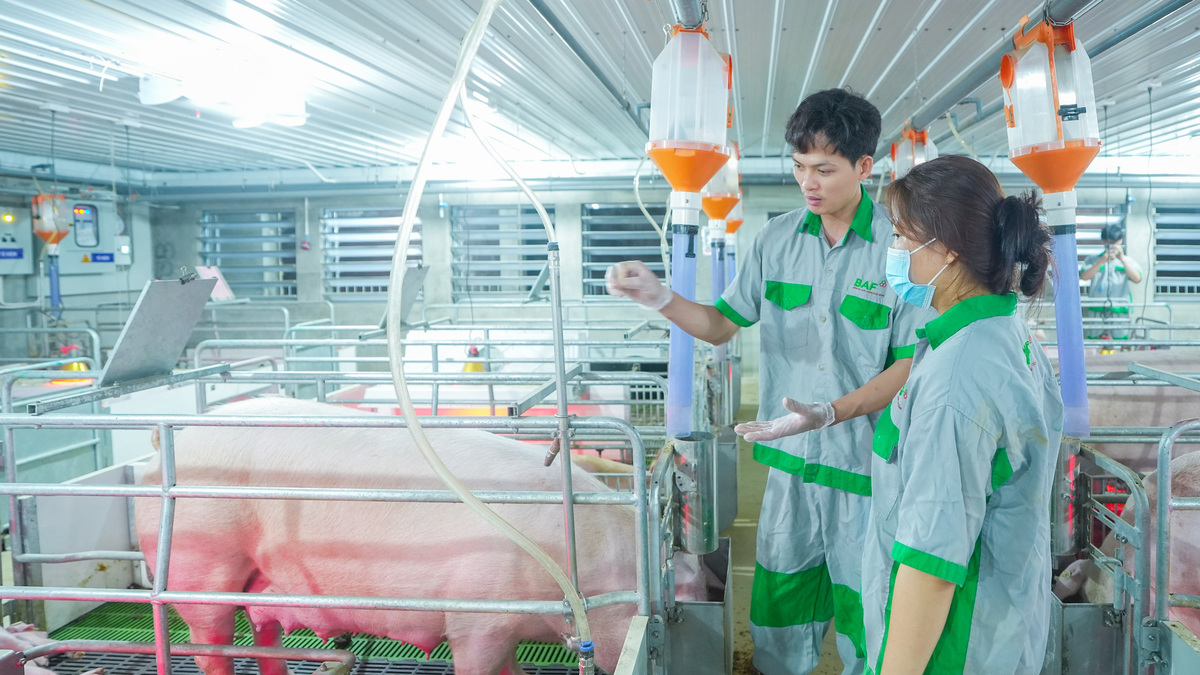
At the BAF farm, Mr. Nguyen Van Minh, Deputy General Director of BAF Vietnam, said that when market demand and the ability to expand to meet it create a double impact, high technology becomes a shifting trend of the industry.
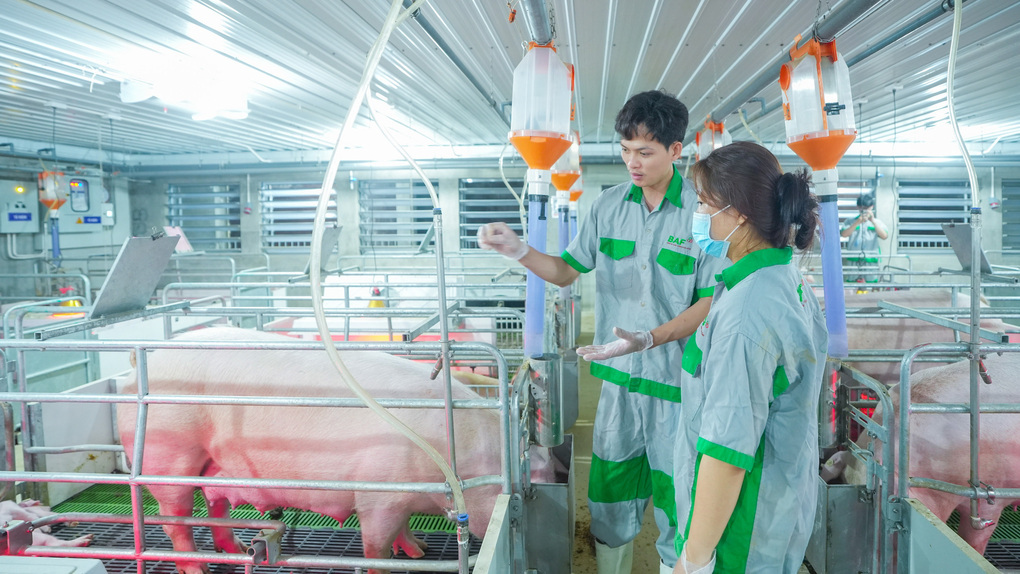
Tay An Khanh Farm, Tay Ninh, is the first high-tech livestock project that BAF brings models and technology from the world's largest livestock group Muyuan to Vietnam, going into operation from the second quarter of 2026. Here the entire system is upgraded, equipped with AI robots and sensor systems to help monitor cages, pig herd health and identify abnormal expressions.
Based on the data obtained, the feeding and water supply systems adjust automatically. The entire air environment is controlled by a 4-layer filtration system, preventing pathogens from entering and limiting odors to the environment.
According to BAF, initial results show that labor requirements are reduced by about 20% compared to the conventional operating model. The death rate of pigs during the meat raising period is below 3%, compared to the reference level of about 6%. The treatment system eliminates over 90% of odors, reducing impact on surrounding areas.
In the first batch of pigs, the company obtained 15,000 pigs with an average weight of 110 kg. Notably, pigs reached slaughter weight at 22 weeks of age, 3 weeks shorter than the reference mark. On the scale of 40 farms and nearly 800,000 animals sold in 2025, the farming time will be shortened by more than 10%, significantly impacting productivity.
The company plans to expand the model with a high-rise livestock project in Tay Ninh. The new farm uses similar technology but with a higher level of centralization, helping to save 70%-80% of the land area, with a total investment of about 12,000 billion VND, creating 1.6 million pigs per year. According to plan, the project will start construction in the third quarter and go into operation a year later.
In the poultry industry, De Heus Group combined with Hung Nhon Group to build a series of projects of 15 seed farms, animal feed factories, slaughterhouses and poultry processing complexes for export in Tay Ninh, Dak Lak and the Central Highlands region. The chain plans to supply 25 million chickens for export each year with a revenue of 2 billion USD.
In Ben Tre, Huy Thuan Company built a model of intensive white-legged shrimp farming using micro-sized oxygen bubble generation technology and environmental management processes. The results recorded a 10% increase in shrimp survival rate and a minimum 10% reduction in production costs compared to conventional methods.
Automatic floating buoy net in shrimp farming
A typical innovative model from local people is raising giant freshwater prawns through the flood season in Hac Hai lagoon, Quang Tri. This is a combined rice-shrimp production area that brings high economic value, but a major limitation is irregular rain and floods. When water rises quickly, shrimp can be swept away, so people often have to harvest early when the seafood has not reached optimal size.
To respond, Loc Phat Cooperative has developed an automatic floating buoy net system. Before the flood comes, shrimp are transferred from rice fields to ponds with a buoy and net system that changes according to water level, then returned to the fields when the water recedes. Shrimps that survive the flood season prolong their growth period and are 2-3 times larger in size, increasing their commercial value.

In the trend of innovation associated with green transformation, up to now, more than 175,000 households in the Mekong Delta have participated in the project of one million hectares of high-quality, low-emission rice. According to preliminary results in March 2026, pilot models - using measurement procedures and solutions developed by the Ministry of Agriculture and Environment - have reduced input costs by about 40% while productivity increased by about 12%. The average profit per hectare in a crop increased by 6 million VND, while greenhouse gas emissions decreased by 3-4 tons.
Applying high technology helps "reduce seeds, fertilizers, pesticides and irrigation water to help reduce costs, increase profits and use resources more effectively", according to a report by the Department of Science and Technology.
The Ministry of Agriculture and Environment's 2026-2030 science, technology and innovation plan aims to transform the growth model to ensure food security, sustainable management of resources and response to climate change. Production and deep processing systems of products, by-products and biomass are also identified as one of Vietnam's strategic technology products.
Nam Nguyen