Can humanoid robots replace industrial robots?
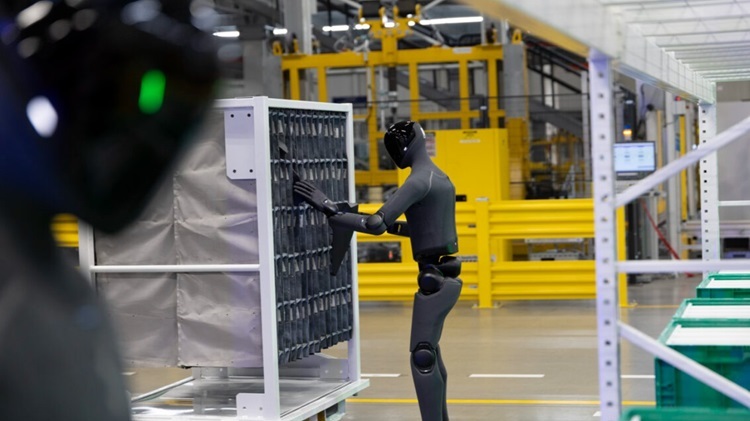
According to Interesting Engineering, humanoid robots are gradually becoming a new symbol of factory automation technology thanks to their ability to move between work stations, collect components and operate equipment instead of humans. However, traditional industrial robots still perform the majority of automation work in factories. While humanoid robots provide flexibility, industrial robots provide practical value rather than productivity.
The overwhelming advantage of industrial robots
Industrial robots have been popular for decades. According to the International Federation of Robotics (IFR), factories will install 542,000 industrial robots by 2024, while the number of robots operating worldwide will reach about 4.66 million. Annual installations exceeded 500,000 for 4 consecutive years. This large equipment base creates a complete ecosystem of manufacturers, programmers, component suppliers, safety experts and maintenance technicians. Companies can calculate the profit on a robotic arm used for welding, painting, packing or assembly.
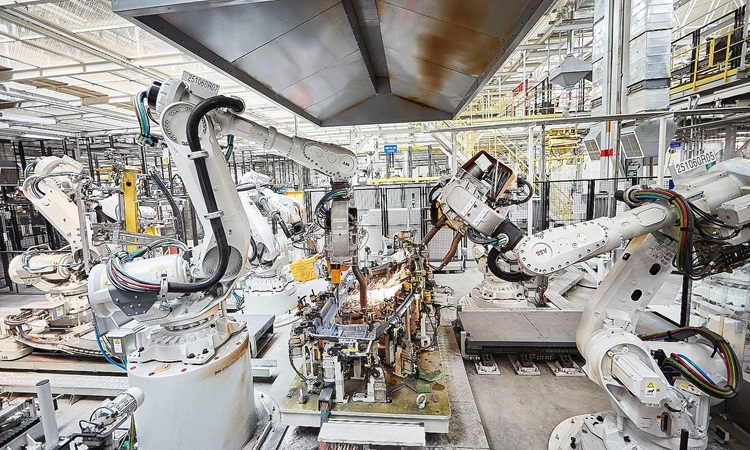
Specialized robots also have mechanical advantages. The fixed arm does not require movement, balance or understanding of the entire plant. It just needs to perform a set movement quickly and accurately, sometimes up to thousands of times per day. When production tasks rarely change, high specialization is more effective than flexibility. Machines optimized for one activity are often faster, more reliable, and easier to maintain than general-purpose humanoid robots.
Collaborative robots, industrial robots designed to work safely alongside humans, can be closer to humans and reprogrammed for a variety of tasks. According to the IFR report, collaborative robots account for 10.5% of industrial robot installations by 2023.
Strengths of humanoid robots
Industrial robots are effective when performing repetitive work on fixed lines. However, if the work is too complex or changes continuously, making repairing the entire line costly and time-consuming, using this type of robot will not bring economic efficiency. Factories are filled with stairs, carts, shelves, tools and work stations designed to fit the human body. Humanoid robots can operate in that environment without the need for new conveyors, protective cages or major structural changes.
A robot can also perform multiple tasks such as delivering parts, maintaining machines, and inspecting parts at different locations during a shift. If manufacturers can add new capabilities through software, one hardware platform can replace multiple specialized systems.
According to the New York Times, in 2021, Hyundai acquired Boston Dynamics, a company that develops humanoid robots. The automaker initially planned to use robots to arrange components in a certain order before workers installed them in the car. This is also the basic task of robots produced by Figure AI working at the BMW factory in Spartanburg, South Carolina. Mercedes-Benz, which is testing Apptronik's robots in Austin, Texas, also plans to use them for material handling and sorting. Automakers say they have difficulty retaining workers to perform such basic tasks.
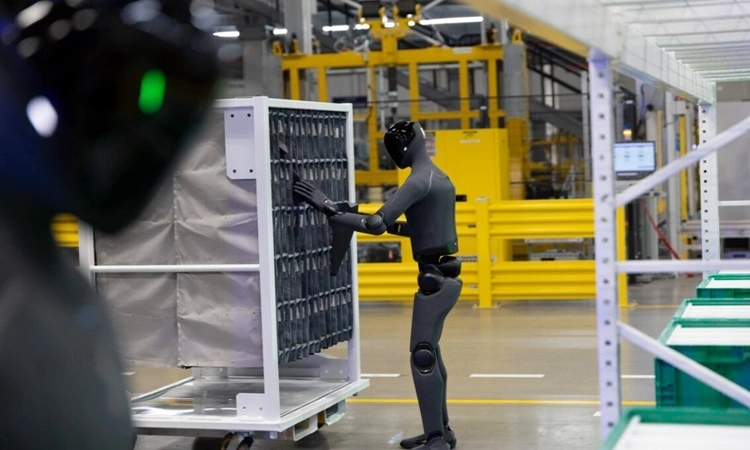
According to Forbes, Jeff Burnstein, president of the American Association for the Promotion of Automation, said most humanoid robots work in factories under pilot projects with efficiency at 20-50%. But customers need 99% efficiency to be sure to use that technology.
The final choice depends on economic value
The human-like design of humanoid robots only comes into play when actual work requires that appearance. The legs consume energy and there is a risk of falling. Skillful hands increase mechanical complexity, while automated software must maintain high reliability throughout the production process. Battery life is another obstacle. According to Agility Robotics, the upgrades have extended the Digit robot's operating time by up to 4 hours. However, to perform continuous work at the factory, the robot may still need to be charged, have its batteries changed, or change shifts.
Factories evaluate the efficiency of machines through output, uptime, safety and costs. Therefore, industrial robots will be the first factor to change the way factories operate thanks to their ability to operate on a large scale and be more suitable for stable processes that require large volumes of processing. Humanoid robots are suitable for jobs that require the ability to move, adjust and interact with the surrounding environment. Future factories may use a combination of many types of robots. Stationary robots dominate repetitive manufacturing, mobile robots will transport goods, collaborative robots will share workstations with humans, and humanoid robots can tackle difficult tasks that other types of robots cannot perform.