Humanoid robots exposed many weaknesses at the Olympics
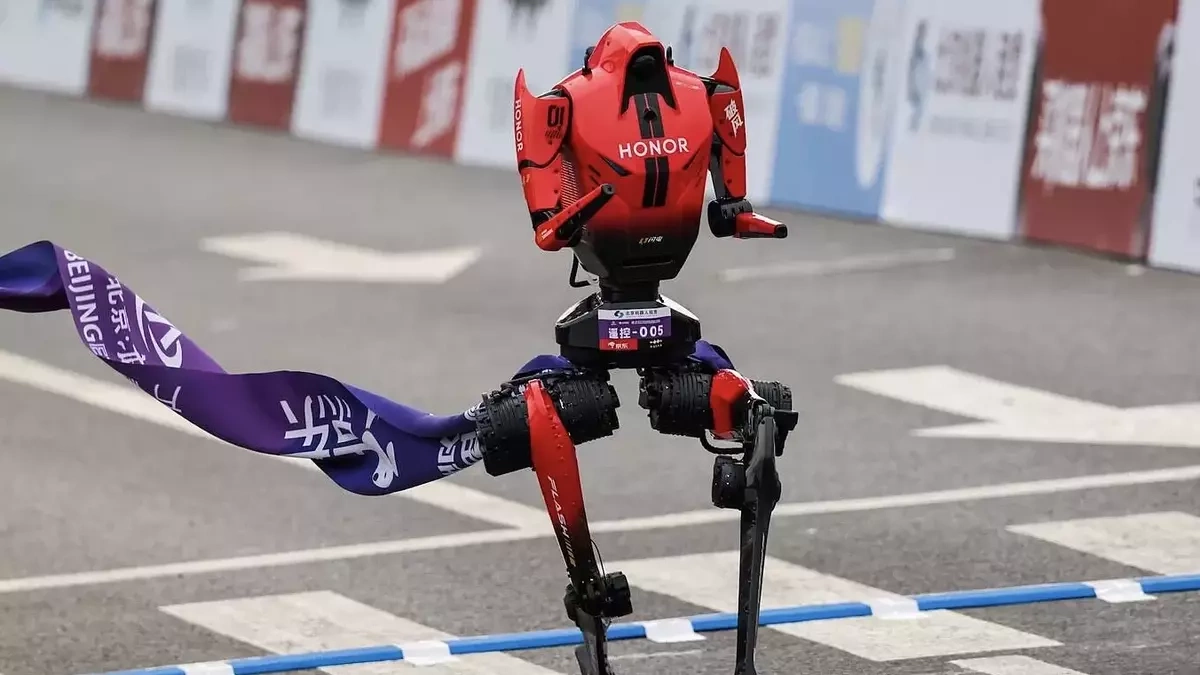
At the 2026 World Humanoid Robot Games held in Beijing, from August 22-26, more than 2,000 robots from 16 countries competed in many events such as running, football, table tennis and real work simulation tests. Human-sized robots have broken athletes' records in sprinting and high jumping. According to Nature, the Olympics show that robotics technology is progressing rapidly, but there is still a long way to go before it can be used in real life.
A robot from Beijing-based company Twitter-Humanoid won the gold medal in the 100m sprint with a record of 8.64 seconds, nearly a second faster than Olympic athlete Usain Bolt's record-setting race in 2009. The same robot won the 100m event at last year's games with a record of 21.5 seconds, showing that the technology has improved significantly. According to Global Times, another Twitter-Humanoid robot jumped vertically from 3.4 meters at this year's convention, breaking a human record set in 1993.
However, for humanoid robots, performing an everyday task like folding clothes is the really difficult problem, according to Karen Liu, a computer scientist at Stanford University (USA).
Liu explained that humanoid robots will have very high performance in events such as athletics and jumping because they are able to effectively convert energy into acceleration. These movements all follow a predetermined trajectory without needing to think.
Meanwhile, tasks requiring high dexterity are still challenging. For example, it's difficult to create "grippers" so robots can simulate the strength and coordination of a human hand. Teaching robots to use tools is even more difficult, because the grippers have difficulty creating enough area and a firm grip when in contact with the tool to apply force. Evidence is that robots at the Olympics had difficulty nailing the board, even when they were controlled by humans.
According to researchers, the ability to perform real tasks is the value of humanoid robots, such as doing housework or performing operations in dangerous situations such as environments with high radiation levels. Currently, humanoid robots still have too many errors to be widely deployed in real environments, according to Aya Durbin, who is in charge of developing the Atlas humanoid robot at Boston Dynamics (USA).
The size and materials of the robot are also potentially dangerous. Robots can injure people around them if they encounter problems and fall, according to Chris Atkeson, a robotics researcher at Carnegie Mellon University (USA). He envisions future robots that will be lighter, softer and able to interact with humans with less risk of injury. Atkeson's ideas were the inspiration for the "balloon" robot Baymax in Disney's Big Hero 6.
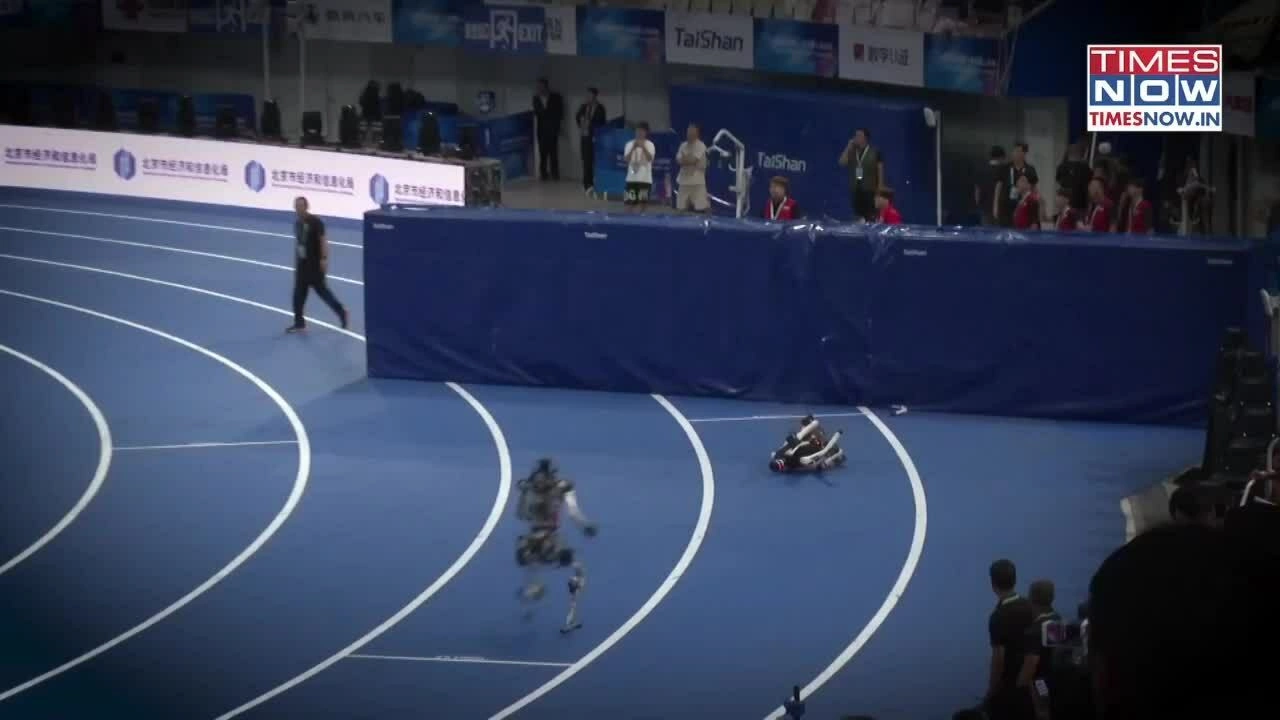
Durbin also believes that applying robots in practice currently has potential risks. Robots need to be improved so that when they encounter problems, they can be lowered to the ground in the "safest and most controlled way", instead of simply falling over or crashing into obstacles. At the Olympics, a series of robots crashed into walls, tripped over their own feet, fell down, and even caught fire right at the finish line.
The price of these robots is also very high. One of the cheapest humanoid robots on the market today is a basic model sold by the Chinese company Unitree for about 5,000 USD. More advanced models cost over $100,000.
Still, Durbin thinks the 2026 Humanoid Robot Olympics is still an interesting way to help the public gradually feel more comfortable with the prospect that one day, after improvements, robots will enter everyday life.