'Humanoid robots in Vietnam are mainly used for demonstration'
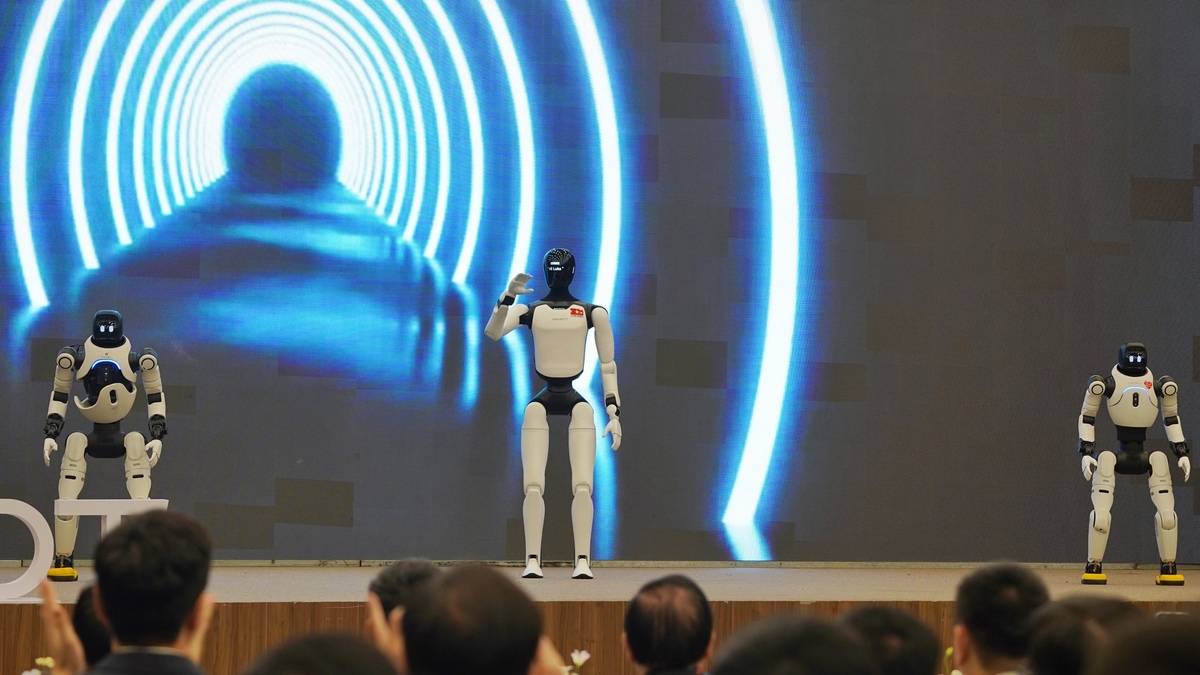
At the Vietnam Embodied AI Conference, October 2 in Hanoi, Mr. Lam Thien, robot distributor of AgiBot (China), commented that the development of the humanoid robot market is divided into three main stages. The first phase is demonstration, education and research. Next is the introduction of industry and logistics, which is also the stage with the strongest development. When the development of robots has matured, it will be possible to use them in the home.
According to that arrangement, he said markets like Vietnam are currently in phase one. Robots can be used to demonstrate movement, such as walking, dancing, and martial arts, and become tools for education and research. These are also scenarios with lower requirements than introducing robots into production lines, logistics or home environments.
Meanwhile, the Chinese market, considered the most developed place for this device, has approached phase two and has trials for phase three.
As a distributor, he also assessed that "customers do not buy robots, but buy results". The issue of concern is not technical parameters such as number of degrees of freedom, sensors or camera resolution, but they are interested in how the robot can increase productivity or reduce costs. "Robots should only be considered as vehicles, and application scenarios as products," he said.
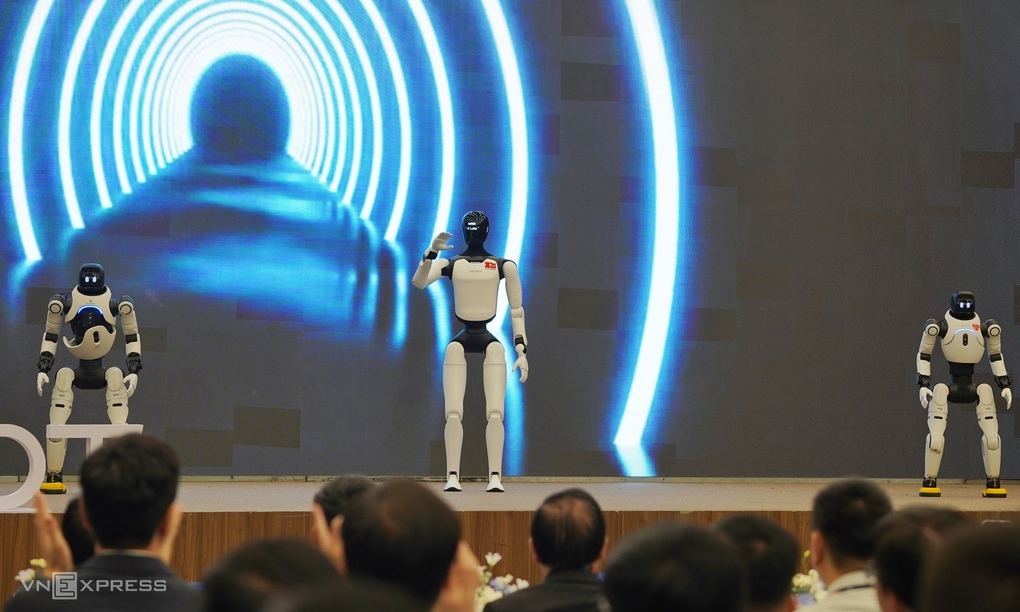
Citing statistics from Counterpoint Research, Mr. Thien said that the number of humanoid robot shipments in the first half of 2026 increased by nearly 300% with more than 22,000 products. The top 5 manufacturers account for 86% of the market and all come from China, of which AgiBot has the largest shipments, accounting for 43.1%, higher than Unitree's 31%.
At the event, Mr. Abel Deng, in charge of Agibot's Middle East and Asia-Pacific region, assessed that AI is moving from the digital environment to the physical world.
Three factors are said to help promote the development of the industry including large language models that help robots better understand people and the environment; robot bodies are increasingly reliable thanks to advances in materials, batteries, joints and hardware; and data, as more robots are deployed, more data is generated, thereby helping to train and optimize the AI model, then opening up more application scenarios.
According to Mr. Abel, embodied AI is only in its early stages but has a large market space. There are two directions for developing robots or embodied AI: making robots move more and more like humans, creating initial value in research, education, performance and entertainment; and making robots able to "work like humans", entering factories, warehouses and real production environments.
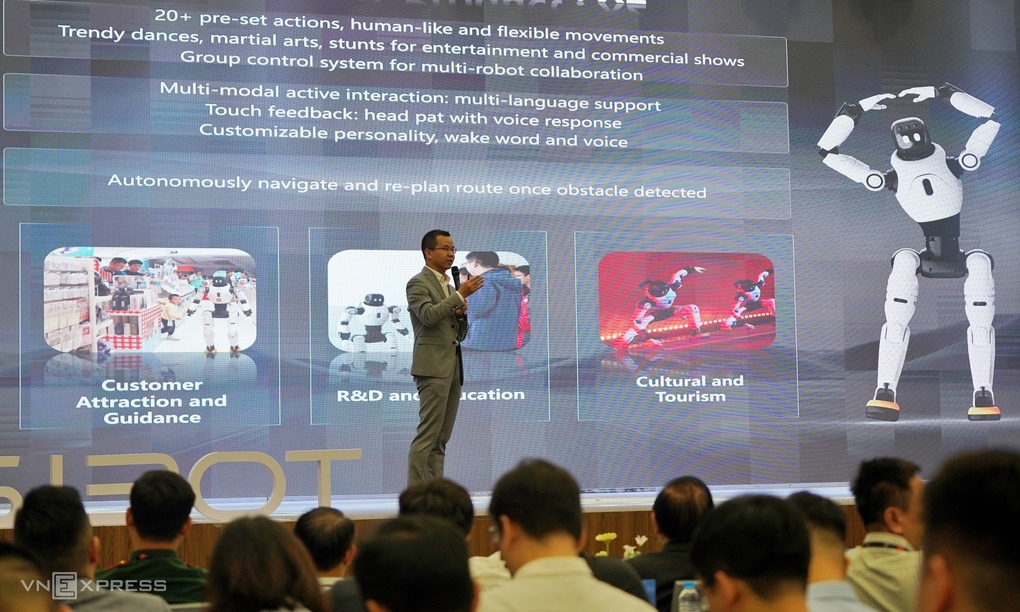
From a policy perspective, Mr. Do Tien Thinh, Deputy Director of the National Innovation Center (NIC), said that embodied AI is not a new concept in Vietnam. Robots have been used in medicine, during the Covid-19 period and in some tests at businesses. However, he assessed that the field is developing significantly slower than AI applications on digital platforms, such as chatbots or tools based on large language models.
Emphasizing that Vietnam has formed a relatively complete policy for AI and robotics, he said the potential of the field in Vietnam is very large, with many specific applications.

Accordingly, robots can be applied in electronics, textiles, food processing, seaports, logistics and agriculture, contributing to increasing labor productivity. The second is to participate in the value chain, from components, precision mechanics, specialized chips to integrated software, training data and operation and maintenance services. Third is attracting new generation FDI, with smart factories and R&D centers of technology corporations. According to him, Vietnam's AI human resource advantage can be the foundation for developing this ecosystem.
Luu Quy