Humanoid robot delivers the ball in the Brazil - Norway match
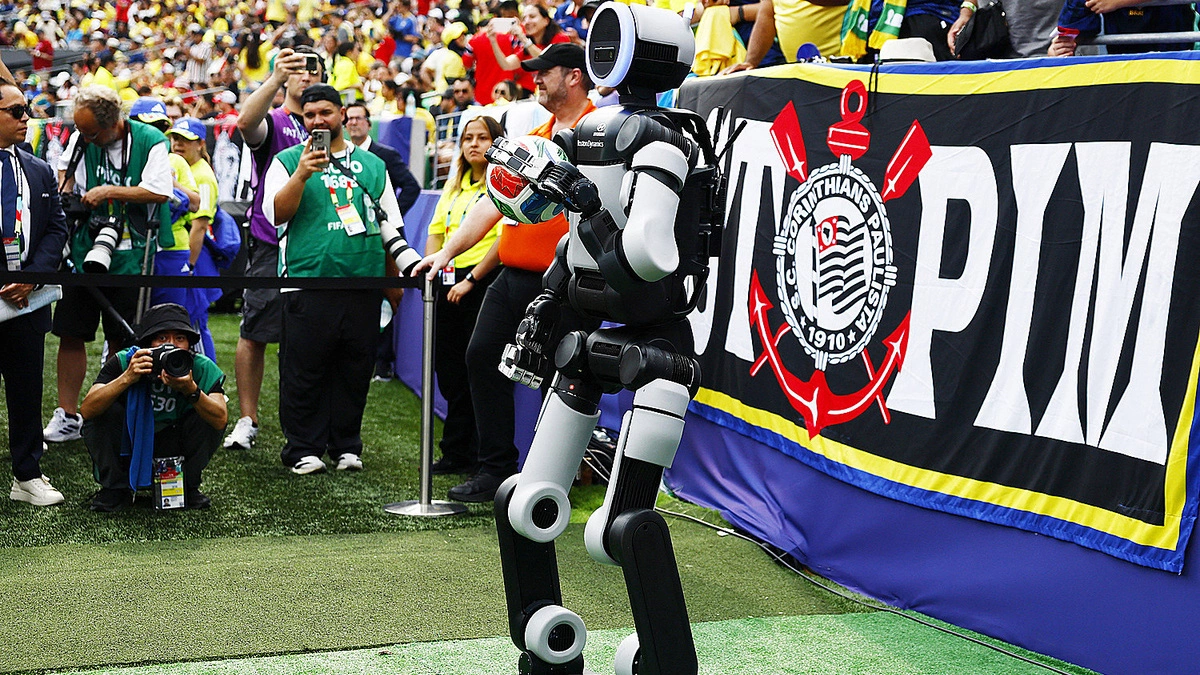
Atlas celebrated the goal in the style of players Harry Kane, Erling Haaland, Matheus Cunha, Son Heung-min, then walked towards the referee to hand over the match ball. "We always consider human skills as the driving force and challenge to expand the capabilities of robots," Alberto Rodriguez, director of robot behavior at Boston Dynamics, maker of Atlas, told Reuters.
According to Fortune, humanoid robots performing and handing the ball at halftime have never happened in World Cup history. Before doing so in front of 80,000 fans at MetLife Stadium and a massive global television audience, Atlas had to go through a years-long development process.
"By placing Atlas at the center of football's most sacred ritual, we made a statement like no other advertisement could. The moment of handing over the ball marked the first time Atlas entered the public consciousness, beginning its journey to become a partner that empowers people in meaningful ways," Sungwon Jee, Executive Vice President and Global Chief Marketing Officer of Hyundai Motor, which owns Boston Dynamics and has sponsored FIFA for 27 years, told Fortune.
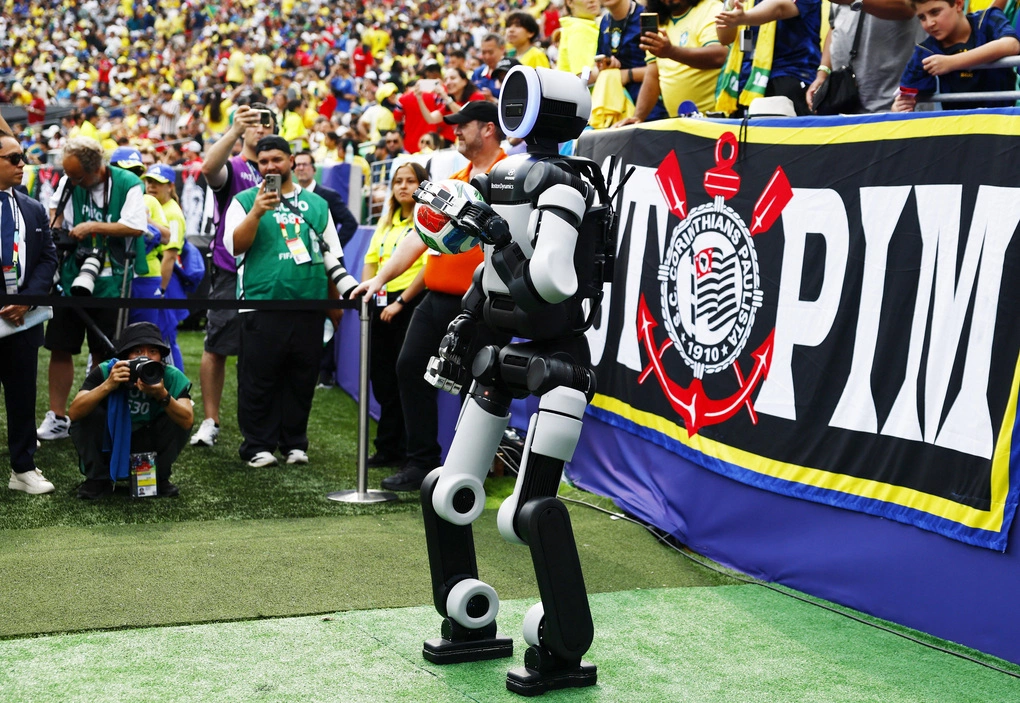
To get Atlas ready for the 2026 World Cup, the development team must solve a problem that doesn't happen in a lab or factory. For example, regular wifi communication became impossible because there were tens of thousands of spectators using mobile phones on the field, so they had to establish a new communication channel using a radio device mounted on the robot's back.
Another problem is the pitch. "Grass has the interesting property of sometimes making you slip, sometimes making your feet get stuck. We had to change the training regimen so that Atlas learned how to walk and run so that he could work well on both concrete and complex surfaces like grass," Rodriguez explained.
First, the engineering team recorded human movements for documentation. Atlas then repeated the task many times in a simulated environment with a series of difficult conditions, such as the friction of the field changing without warning, or the ball appearing in the wrong position. Robots will have to find ways to adapt and manage to complete the task. As a result, it achieves "muscle memory" - simple actions that happen too quickly to be thought about, and are therefore performed based on trained instincts.
"We demonstrate that this completely new humanoid robot can operate in the harshest environments, operate reliably at record high temperatures, and perform exciting and exciting sports performances," said Rodriguez. He said that directly witnessing actions that were once considered impossible with robots will help people prepare better when they gradually become a part of daily life.
The current version of Atlas is approximately human-sized with a height of 1.5 m, running entirely on electricity. The robot has 56 degrees of freedom, a reach of 2.3 m, and can lift objects weighing up to 50 kg. The robot was originally designed for heavy industrial tasks and can automatically change batteries for continuous work.