Soft robots help rescue victims in the rubble
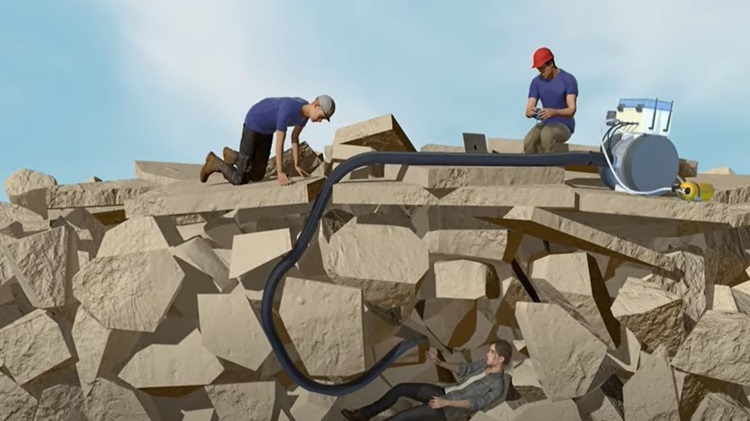
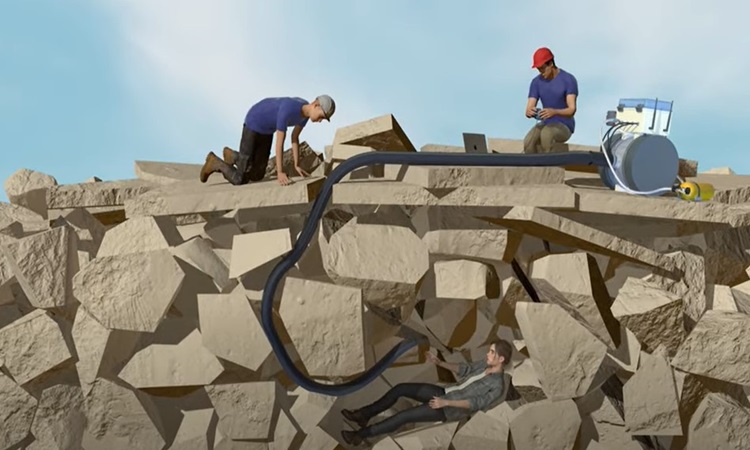
When major disasters occur and structures collapse, people are trapped under the rubble. Victims in this toxic environment can be in danger and exhausted. To help rescue teams search through the rubble, the Massachusetts Institute of Technology's Lincoln Laboratory collaborated with a research team at the University of Notre Dame to develop a robot called the Soft Pathfinding Robotic Observation Unit (SPROUT). SPROUT is a vine robot, a soft robot that can grow and overcome obstacles or squeeze into small spaces. Rapid response teams can deploy SPROUT under collapsed structures to probe, map and find optimal entry routes through piles of debris, Phys.org reported on April 2.
"Urban search and rescue environments can be harsh and challenging, where even the most rugged technology has difficulty operating. The basic way the vine robot operates helps mitigate many of the challenges other platforms face," said Chad Council, a member of the SPROUT project led by Nathaniel Hanson.
Rapid response teams regularly integrate technology such as cameras and sensors into their workflows to understand complex operating environments. However, many of these technologies have limitations. For example, cameras made specifically for search and rescue operations can only probe in straight lines inside collapsed structures. If a team wants to search further through the rubble, they need to create a hole to get to the next area. Robots are very suitable for exploring above piles of rubble, but are not suitable for searching in cramped structures that are unstable and can be expensive to repair if damaged. The challenge SPROUT aims to solve is how to get underneath collapsed structures using low-cost, easy-to-operate robots that can carry cameras and sensors, and negotiate winding roads.
SPROUT consists of an inflatable tube made of airtight material that opens from a fixed base. The tube inflates with gas and a control motor deploys the robot. As the tube reaches deep into the rubble, it can bend around corners and squeeze through narrow passages. A camera and other sensors located at the tip of the tube take pictures and map the environment in which the robot is navigating. The operator controls SPROUT with the direction stick, monitoring the data display from the robot's camera. Currently, SPROUT can reach up to 3 meters and the team is looking to expand it to 7.6 meters.
While building SPROUT, the team overcame a number of challenges related to the robot's flexibility. Because robots are made of deformable materials that can bend at many points, predicting and controlling the shape of the robot when it is deployed in the environment is difficult. Determining how to use air pressure inside the robot for navigation is essential for systems used by emergency response teams. In addition, the research team had to design the tube to minimize friction as the robot lengthened and the engineer controlled the direction.
While the remote control system is a good start to assess the risk from the rubble, the team is also looking at new ways to apply robotic technology such as using data collected by the robot to map the voids under the rubble. To solve the problem, Hanson and his colleagues created simulations that allowed them to create realistic illustrations of collapsing structures and develop algorithms to map voids.
Lincoln Laboratory tested SPROUT with the rapid response team at the Massachusetts Task Force 1 training area in Beverly, Massachusetts. Testing allows researchers to improve the robot's durability and mobility, and learn how to deploy and control the robot more effectively. They are planning a larger field study this spring. Sensors in confined spaces are not just a disaster response team's problem. The research team predicts their technology could be used in maintenance, military systems or critical infrastructure in this difficult-to-reach location.
An Khang (According to Phys.org)