Samsung uses Qualcomm chips for the first time for Galaxy Watch
Samsung uses Qualcomm chips for the first time for Galaxy Watch

During the Galaxy Unpacked event held in London on July 22, Samsung introduced two versions of the Galaxy Watch 9 and Watch Ultra 2 watches. Meanwhile, the Classic model did not appear due to the bi-annual upgrade schedule. Both do not change the overall design but have many design tweaks and hardware improvements.
During the Galaxy Unpacked event held in London on July 22, Samsung introduced two versions of the Galaxy Watch 9 and Watch Ultra 2 watches. Meanwhile, the Classic model did not appear due to the bi-annual upgrade schedule. Both do not change the overall design but have many design tweaks and hardware improvements.

Galaxy Watch Ultra 2 is Samsung's most advanced watch, with a different design with a nearly square frame but a round watch face. Samsung said it used AI to analyze millions of biometric data samples to create a new molding technique, bringing a more comfortable wearing feeling to the Ultra 2. The 47 mm titanium frame is optimized to be 12% thinner than the first generation.
Galaxy Watch Ultra 2 is Samsung's most advanced watch, with a different design with a nearly square frame but a round watch face. Samsung said it used AI to analyze millions of biometric data samples to create a new molding technique, bringing a more comfortable wearing feeling to the Ultra 2. The 47 mm titanium frame is optimized to be 12% thinner than the first generation.
Galaxy Watch Ultra 2 is Samsung's most advanced watch, with a different design with a nearly square frame but a round watch face. Samsung said it used AI to analyze millions of biometric data samples to create a new molding technique, bringing a more comfortable wearing feeling to the Ultra 2. The 47 mm titanium frame is optimized to be 12% thinner than the first generation.

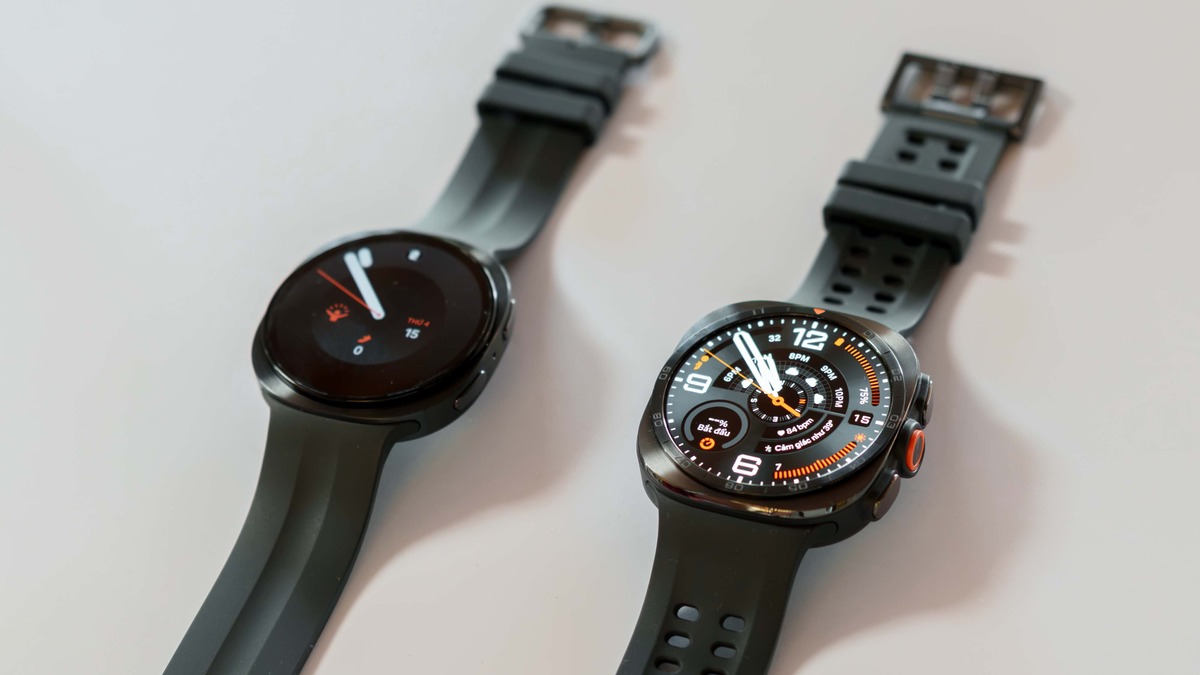
The 1.5-inch OLED screen of Watch Ultra 2 (right) increases the maximum brightness to 5,000 nits compared to 3,000 nits of the previous generation (left), helping to display clearly under high intensity sunlight and without reflection. This watch model meets the highest 10 ATM and IP69K water resistance standards today. Familiar features such as night vision mode that turns the screen to red are still retained.
The 1.5-inch OLED screen of Watch Ultra 2 (right) increases the maximum brightness to 5,000 nits compared to 3,000 nits of the previous generation (left), helping to display clearly under high intensity sunlight and without reflection. This watch model meets the highest 10 ATM and IP69K water resistance standards today. Familiar features such as night vision mode that turns the screen to red are still retained.

The significant changes in Samsung's two new smartwatch models lie in the hardware. The company first switched to using Qualcomm's Snapdragon Wear Elite, replacing the previous Exynos W1000. The new processor chip is manufactured on a 3 nm process with a specialized AI NPU, helping to improve performance, optimize artificial intelligence processing tasks and save more energy.
The Watch Ultra 2 has 2 GB RAM and 64 GB internal memory, while the Watch 9 has a smaller 32 GB internal memory.
The significant changes in Samsung's two new smartwatch models lie in the hardware. The company first switched to using Qualcomm's Snapdragon Wear Elite, replacing the previous Exynos W1000. The new processor chip is manufactured on a 3 nm process with a specialized AI NPU, helping to improve performance, optimize artificial intelligence processing tasks and save more energy.
The Watch Ultra 2 has 2 GB RAM and 64 GB internal memory, while the Watch 9 has a smaller 32 GB internal memory.

Another upgrade of the new Watch Ultra model is the 800 mAh silicon-carbon battery, 35% higher than the previous generation. Thanks to that, Samsung focuses on trail running and scuba diving features with new products.
In particular, the trail feature shows route details, elevation, and also assists users in navigating the route, giving climbing instructions and has the ability to warn users to rehydrate. As for the diving feature, Samsung cooperated with Mares, the world's leading diving equipment brand, to integrate into Watch Ultra 2 the ability to measure depth, temperature, and diving time.
Another upgrade of the new Watch Ultra model is the 800 mAh silicon-carbon battery, 35% higher than the previous generation. Thanks to that, Samsung focuses on trail running and scuba diving features with new products.
In particular, the trail feature shows route details, elevation, and also assists users in navigating the route, giving climbing instructions and has the ability to warn users to rehydrate. As for the diving feature, Samsung cooperated with Mares, the world's leading diving equipment brand, to integrate into Watch Ultra 2 the ability to measure depth, temperature, and diving time.

The Galaxy Watch 9 model remains unchanged in design with two sizes of 40 and 44 mm, using SuperAMOLED screens of 1.34 and 1.47 inches respectively, protected by sapphire glass. The device maintains a thickness of 8.6 mm but is 25% lighter and the battery is 20% larger than the previous version thanks to the use of silicon-carbon technology. Screen brightness increased to 3,000 nits. The device is still IP68 and 5ATM water resistant.
The Galaxy Watch 9 model remains unchanged in design with two sizes of 40 and 44 mm, using SuperAMOLED screens of 1.34 and 1.47 inches respectively, protected by sapphire glass. The device maintains a thickness of 8.6 mm but is 25% lighter and the battery is 20% larger than the previous version thanks to the use of silicon-carbon technology. Screen brightness increased to 3,000 nits. The device is still IP68 and 5ATM water resistant.

Health monitoring continues to be the focus of product upgrades. Galaxy Watch 9 and Watch Ultra 2 add Vitals watch faces that support monitoring 5 important vital indicators: heart rate, heart rate variability, blood oxygen, skin temperature and respiratory rate in real time. However, users need to wear it continuously for at least 5 days for the device to calculate the index.
In addition to the built-in sleep and energy level scoring system, the device also improves sleep apnea detection and integrates a personal running coaching tool.
Health monitoring continues to be the focus of product upgrades. Galaxy Watch 9 and Watch Ultra 2 add Vitals watch faces that support monitoring 5 important vital indicators: heart rate, heart rate variability, blood oxygen, skin temperature and respiratory rate in real time. However, users need to wear it continuously for at least 5 days for the device to calculate the index.
In addition to the built-in sleep and energy level scoring system, the device also improves sleep apnea detection and integrates a personal running coaching tool.
Health monitoring continues to be the focus of product upgrades. Galaxy Watch 9 and Watch Ultra 2 add Vitals watch faces that support monitoring 5 important vital indicators: heart rate, heart rate variability, blood oxygen, skin temperature and respiratory rate in real time. However, users need to wear it continuously for at least 5 days for the device to calculate the index.
In addition to the built-in sleep and energy level scoring system, the device also improves sleep apnea detection and integrates a personal running coaching tool.

Samsung's smartwatches also have health monitoring features such as sleep apnea alerts, energy and sleep scoring. Besides, Watch 9 has an interesting feature of hearing protection. The microphone on the watch will measure the noise level of surrounding sounds. When the sound is too loud and can be dangerous to the human ear, the device will display a notification.
Samsung's smartwatches also have health monitoring features such as sleep apnea alerts, energy and sleep scoring. Besides, Watch 9 has an interesting feature of hearing protection. The microphone on the watch will measure the noise level of surrounding sounds. When the sound is too loud and can be dangerous to the human ear, the device will display a notification.

Samsung's two new smartwatch models run One UI 9 Watch customized from Google's Wear OS 7 operating system. Wear OS 7 manages RAM and background tasks more effectively, helping the watch run smoothly and without consuming much power. The new processor chip is optimized for better AI tasks, helping to use the Gemini virtual assistant quickly and process voice commands faster.
Samsung's two new smartwatch models run One UI 9 Watch customized from Google's Wear OS 7 operating system. Wear OS 7 manages RAM and background tasks more effectively, helping the watch run smoothly and without consuming much power. The new processor chip is optimized for better AI tasks, helping to use the Gemini virtual assistant quickly and process voice commands faster.
Huy Duc